Golden Thistle
Scolymus hispanicus · Accepted scientific name
Scientific literature: Very Sparse (14 studies) · ★☆☆☆☆
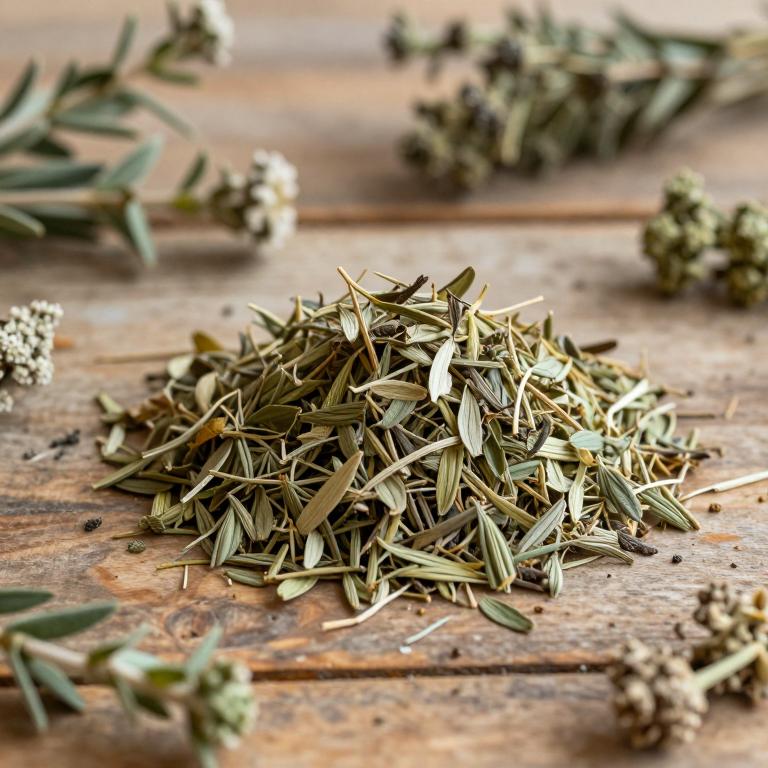
Golden Thistle, scientifically known as Scolymus hispanicus, is a resilient perennial herb native to the Mediterranean region. Characterized by its prickly leaves and vibrant yellow blooms, this plant is prized in traditional medicine for its antioxidant and anti-inflammatory properties, offering therapeutic benefits for digestive and metabolic health support.
- Family
- Asteraceae
- Native range
- Europe
- Parts used
- Not available
- Common names
- Golden Thistle · Spanish Oysterplant · 3 more
- Scientific synonyms
- Not available
Names and Synonyms
Common Names
- Golden Thistle
- Spanish oysterplant
- Spanish salsify
- sunnariah
- common golden thistle
Scientific Names
Accepted name
Scolymus hispanicusRegional and Traditional Names
Spanish:
- cardillo
- cardo de olla
- tagarnina
- cardillo
- tagarnina
German:
- Spanische Golddistel
- Goldwurzel
- spanische Golddistel
French:
- Chardon d'Espagne
- carduille
- scolyme d'Espagne
- épine jaune
- Chardon d'Espagne
Sources: Wikidata, Catalogue of Life
Taxonomical Classification
This plant, known scientifically as Scolymus hispanicus, belongs to the kingdom Plantae and the phylum Streptophyta. Within the class Equisetopsida and subclass Magnoliidae, it is classified under the order Asterales. Finally, it is a member of the family Asteraceae and falls under the genus Scolymus.
| Rank | Classification |
|---|---|
| Kingdom | Plantae |
| Phylum | Streptophyta |
| Class | Equisetopsida |
| Subclass | Magnoliidae |
| Order | Asterales |
| Family | Asteraceae |
| Genus | Scolymus |
Sources: The World Checklist of Vascular Plants (WCVP)
Distribution
This plant exhibits a diverse geographical distribution across several regions of Europe. In Northern Europe, its presence can be documented in Great Britain. Moving into Middle Europe, it is found within the borders of Germany. The species also inhabits the mountainous landscapes of Switzerland. Finally, its range extends to Southwestern Europe, specifically appearing in the Baleares and Corse.
| Region | Area |
|---|---|
| Northern Europe | Great Britain |
| Middle Europe | Germany |
| Middle Europe | Switzerland |
| Southwestern Europe | Baleares |
| Southwestern Europe | Corse |
| Southwestern Europe | France |
| Southwestern Europe | Portugal |
| Southwestern Europe | Sardegna |
| Southwestern Europe | Spain |
| Southeastern Europe | Albania |
Sources: The World Checklist of Vascular Plants (WCVP)
Botanical Identification
Ecology
The ecology of Scolymus hispanicus is characterized by its significant adaptability to diverse environmental conditions and varied terrain. It occupies an elevational range spanning from sea level (0 m AMSL) up to a maximum altitude of 1500 m AMSL. This species is frequently found in a wide array of habitats, including gardens, along riverbanks, in sandy substrates, along shores, and within stony places, demonstrating a high tolerance for different soil types and moisture levels. Furthermore, the plant exhibits active defense mechanisms, which assist it in navigating its ecological niche and surviving herbivory or environmental stressors.
- Defense :
- yes
- Elevational range max:
- 1500 m AMSL
- Elevational range min:
- 0 m AMSL
- Habitat :
- garden,rivers,sand,shores,stonyplaces
Life history
The life history of Scolymus hispanicus is characterized by a lifecycle that is primarily biennial, though it can exhibit variable growth patterns depending on environmental conditions. As a plant, it functions as a hemicryptophyte, meaning its perennating buds are located at the soil surface, protected by leaf litter or ground debris. This life form, classified under both hemicryptophyte categories, allows the species to persist through unfavorable seasons by utilizing its subterranean structures to facilitate regrowth or complete its reproductive cycle.
- Life form :
- hemicryptophyte
- Lifecycle :
- biennial
Morphology
The morphology of Scolymus hispanicus is characterized by its growth form as a non-woody herb and forb. This terrestrial species is an independent plant, neither acting as a parasite nor an epiphyte, and it is strictly self-supporting rather than being a climber or liana. The plant exhibits an erect shoot orientation, reaching a minimum height of 0.15 m and a maximum height of 0.9 m.
- Aquatic :
- terrestrial
- Climber :
- self-supporting
- Epiphyte :
- terrestrial
- Growth form :
- herb
- Growth form :
- forb
- Parasite :
- independent
- Plant height max:
- 0.9 m
- Plant height min:
- 0.15 m
- Shoot orientation :
- erect
- Woodiness :
- non-woody
Physiology
The physiology of Scolymus hispanicus is characterized by a C3 photosynthetic pathway, which dictates its metabolic processes and carbon fixation efficiency. The vegetative structure is defined by an alternate leaf arrangement, featuring leaves that exhibit a distinct pinnatifid form. These leaves vary significantly in dimensions, with a minimum length of 4 cm and a maximum length reaching up to 20 cm, while their width ranges from a minimum of 1.5 cm to a maximum of 7 cm.
- Leaf arrangement :
- alternate
- Leaf form :
- pinnatifid
- Leaf length max:
- 20 cm
- Leaf length min:
- 4 cm
- Leaf width max:
- 7 cm
- Leaf width min:
- 1.5 cm
- Photosynthetic pathway :
- C3
Reproduction
The reproduction of Scolymus hispanicus is characterized by a bisexual sexual reproductive system that relies on biotic pollination. The plant produces yellow flowers that are primarily pollinated by insects, and it does not exhibit self-fertilization, ensuring genetic diversity through cross-pollination. The flowering period is highly variable, typically beginning around April and potentially extending through to January. Following successful pollination, the plant develops indehiscent fruits classified as achenes. These fruits are relatively small, with lengths ranging from a minimum of 0.3 cm to a maximum of 0.4 cm. A remarkable feature of this species is its high reproductive output, producing a prolific quantity of seeds, often exceeding 1000 seeds per fruit. The individual seeds are lightweight, with a mean mass of approximately 0.00465 g, a minimum mass of 0.0022 g, and a maximum mass of 0.00565 g. Dispersal of these seeds is described as unspecialized, though it also exhibits anthropochorous tendencies, meaning dispersal can be influenced by human activity.
- Dehiscence :
- indehiscent
- Dispersal syndrome :
- unspecialized
- Dispersal syndrome :
- anthropochorous
- Flower colour :
- yellow
- Flowering time :
- Apr
- Flowering time :
- Jan
- Fruit length max:
- 0.4 cm
- Fruit length min:
- 0.3 cm
- Fruit type :
- achene
- Pollination syndrome :
- insect
- Pollination syndrome :
- biotic
- Reproduction sexual :
- bisexual
- Seed mass max:
- 0.00565 g
- Seed mass mean:
- 0.0046533335 g
- Seed mass min:
- 0.0022 g
- Seeds_per_fruit :
- >1000
- Self fertilization :
- absent
Sources: Global Inventory of Floras and Traits (GIFT)
Chemicals
Scolymus hispanicus has 3 reported phytochemicals identified across 0 scientific publications and several other databases. The most consistently reported chemicals include 5-O-Caffeoylquinic acid, Suillin, Taraxasteryl acetate.
| Chemical | Supporting sources | Consensus |
|---|---|---|
| 5-O-Caffeoylquinic acid | 1 supporting sources | ★☆☆☆☆ |
| Suillin | 1 supporting sources | ★☆☆☆☆ |
| Taraxasteryl acetate | 1 supporting sources | ★☆☆☆☆ |
5-O-Caffeoylquinic acid
- Food science & nutrition
Suillin
- Journal of natural products
Taraxasteryl acetate
- Planta medica
Activities
Scolymus hispanicus has 5 reported activities identified across 0 scientific publications and several other databases. The most consistently reported activities include Antidiabetic, Antioxidant, Antispasmodic, Hypoglycemic, Spasmogenic.
| Activity | Supporting sources | Consensus |
|---|---|---|
| Antidiabetic | 1 supporting sources | ★☆☆☆☆ |
| Antioxidant | 1 supporting sources | ★☆☆☆☆ |
| Antispasmodic | 1 supporting sources | ★☆☆☆☆ |
| Hypoglycemic | 1 supporting sources | ★☆☆☆☆ |
| Spasmogenic | 1 supporting sources | ★☆☆☆☆ |
Antidiabetic
- Food science & nutrition
Antioxidant
- Evidence-based complementary and alternative medicine : eCAM
Antispasmodic
- Planta medica
Hypoglycemic
- Evidence-based complementary and alternative medicine : eCAM
Spasmogenic
- Planta medica
Conditions
Scolymus hispanicus has 6 reported investigations on conditions identified across 0 scientific publications and several other databases. The most consistently reported conditions include Hepatic Steatosis, Metabolic Syndrome, hyperlipidemia, inflammation, oxidative stress.
| Condition | Supporting sources | Consensus |
|---|---|---|
| Hepatic steatosis | 1 supporting sources | ★☆☆☆☆ |
| Metabolic syndrome | 1 supporting sources | ★☆☆☆☆ |
| Hyperlipidemia | 1 supporting sources | ★☆☆☆☆ |
| Inflammation | 1 supporting sources | ★☆☆☆☆ |
| Oxidative stress | 1 supporting sources | ★☆☆☆☆ |
| Type 1 diabetes mellitus | 1 supporting sources | ★☆☆☆☆ |
Hepatic steatosis
- Evidence-based complementary and alternative medicine : eCAM
Metabolic syndrome
- Evidence-based complementary and alternative medicine : eCAM
Hyperlipidemia
- Evidence-based complementary and alternative medicine : eCAM
Inflammation
- Evidence-based complementary and alternative medicine : eCAM
Oxidative stress
- Evidence-based complementary and alternative medicine : eCAM
Type 1 diabetes mellitus
- The Journal of membrane biology
Preparations
Scolymus hispanicus has 1 reported preparations identified across 0 scientific publications and several other databases. The most consistently reported preparations include aqueous extract.
| Preparation | Supporting sources | Consensus |
|---|---|---|
| Aqueous extract | 1 supporting sources | ★☆☆☆☆ |
Aqueous extract
- Evidence-based complementary and alternative medicine : eCAM