Scleranthus uncinatus
Scleranthus uncinatus · Accepted scientific name
Scientific literature: Very Sparse (1 studies) · ★☆☆☆☆
, scientifically known as Scleranthus uncinatus, is a remarkable medicinal plant valued for its diverse therapeutic properties. Renowned for its bioactive compounds, it is traditionally used to treat various ailments, including inflammation and infections. Understanding its botanical characteristics and pharmacological potential is essential for exploring its role in natural medicine.
- Family
- Caryophyllaceae
- Native range
- Europe
- Parts used
- Not available
- Common names
- Not available
- Scientific synonyms
- Scleranthus Annuus Subsp. Uncinatus · Scleranthus Hamosus · 2 more
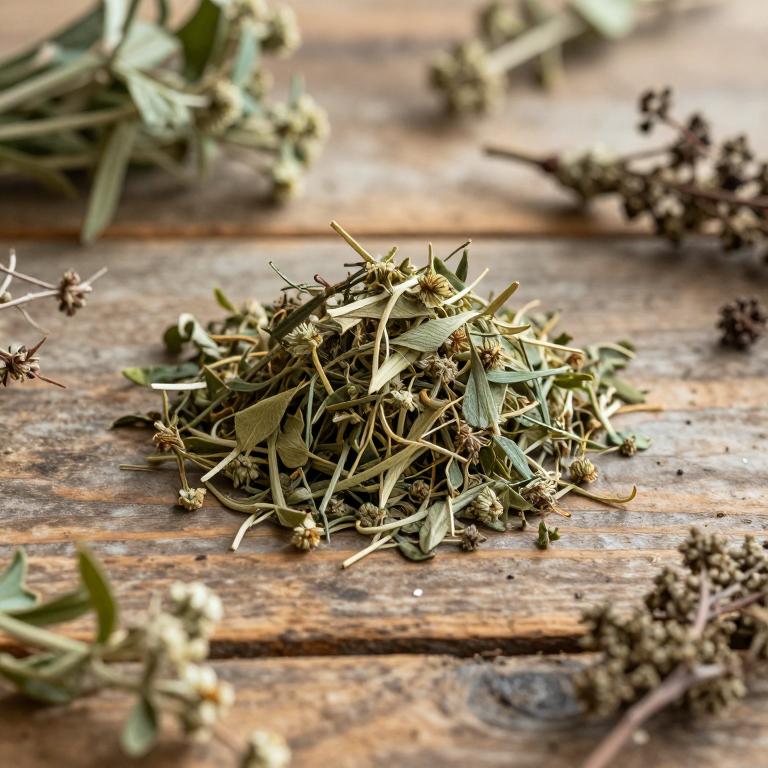
Names and Synonyms
Scientific Names
Accepted name
Scleranthus uncinatusSynonyms
- Scleranthus annuus subsp. uncinatus
- Scleranthus hamosus
- Scleranthus martini
- Scleranthus annuus var. uncinatus
Regional and Traditional Names
French:
- Scléranthe à crochets
Sources: Wikidata, Catalogue of Life
Taxonomical Classification
This plant belongs to the kingdom Plantae and is classified under the phylum Streptophyta within the class Equisetopsida. It is further categorized under the subclass Magnoliidae and the order Caryophyllales. Finally, it is a member of the family Caryophyllaceae and falls under the genus Scleranthus.
| Rank | Classification |
|---|---|
| Kingdom | Plantae |
| Phylum | Streptophyta |
| Class | Equisetopsida |
| Subclass | Magnoliidae |
| Order | Caryophyllales |
| Family | Caryophyllaceae |
| Genus | Scleranthus |
Sources: The World Checklist of Vascular Plants (WCVP)
Distribution
This plant exhibits a wide distribution across several regions in Southern Europe. Within Southwestern Europe, it can be found growing in both France and Spain. Its range also extends into Southeastern Europe, where it is present in Albania and Bulgaria. Additionally, the species is documented as inhabiting parts of Italy. Overall, these locations highlight its presence across various Mediterranean territories.
| Region | Area |
|---|---|
| Southwestern Europe | France |
| Southwestern Europe | Spain |
| Southeastern Europe | Albania |
| Southeastern Europe | Bulgaria |
| Southeastern Europe | Italy |
| Southeastern Europe | Romania |
| Southeastern Europe | NW. Balkan Pen. |
| Eastern Europe | Ukraine |
| Caucasus | North Caucasus |
| Caucasus | Transcaucasus |
Sources: The World Checklist of Vascular Plants (WCVP)
Botanical Identification
Ecology
The ecology of Sclareanthus uncinatus is characterized by its ability to thrive in varied terrains, specifically occupying habitats such as mountains and roadsides. This species demonstrates a significant vertical distribution, maintaining a presence across a wide altitudinal gradient that reaches an elevational range maximum of 3000 m AMSL. Its capacity to colonize roadside environments suggests a degree of resilience to disturbed soils and edge effects, while its mountain habitat preference indicates an adaptation to the specific climatic and topographical conditions found at higher altitudes.
- Elevational range max:
- 3000 m AMSL
- Habitat :
- mountains, roadsides
Life history
The life history of Scleranthus uncinatus is characterized by an annual lifecycle, meaning the plant completes its entire developmental process from seed germination to seed production within a single growing season. As an annual species, it focuses its biological resources on rapid vegetative growth followed by a decisive reproductive phase to ensure the dispersal of its progeny before the onset of unfavorable environmental conditions. This seasonal strategy involves the establishment of a seedling, the development of its structural components, and the eventual flowering and fruiting stages, all occurring within the span of one year.
- Lifecycle :
- annual
Morphology
The morphology of Scleranthus uncinatus is characterized by its diminutive stature and specific structural composition. It is a small herb that exhibits a non-woody habit, lacking any significant lignification in its stems. In terms of physical dimensions, the plant maintains a very low profile, with a height ranging from a minimum of 0.05 m to a maximum of 0.1 m.
- Growth form :
- herb
- Plant height max:
- 0.1 m
- Plant height min:
- 0.05 m
- Woodiness :
- non-woody
Reproduction
The reproduction of Scleranthus uncinatus is characterized by a specific seasonal flowering period that dictates its reproductive cycle. The flowering process begins in May and concludes in June, although the exact timing can be variable depending on environmental conditions. This concentrated window of activity represents the primary phase for pollen dispersal and potential fertilization within its habitat.
- Flowering time :
- May
- Flowering time :
- Jun
Sources: Global Inventory of Floras and Traits (GIFT)
Chemicals
Scleranthus uncinatus has 1 reported phytochemicals identified across 0 scientific publications and several other databases. The most consistently reported chemicals include maltol beta-D-glucopyranoside.
| Chemical | Supporting sources | Consensus |
|---|---|---|
| maltol beta-D-glucopyranoside | 1 supporting sources | ★☆☆☆☆ |
maltol beta-D-glucopyranoside
- Phytochemistry