Schoenocaulon officinale
Schoenocaulon officinale · Accepted scientific name
Scientific literature: Sparse (84 studies) · ★★☆☆☆
Schoenocauloon officinale, scientifically known as Schoenocauloon officinale, is a perennial herb native to the Americas. Historically prized in traditional medicine, its rhizomes contain potent alkaloids used for treating various ailments. While once common in pharmacopoeias, its use today is carefully regulated due to its significant biological activity.
- Family
- Not available
- Native range
- Northern America
- Parts used
- Not available
- Common names
- Not available
- Scientific synonyms
- Not available
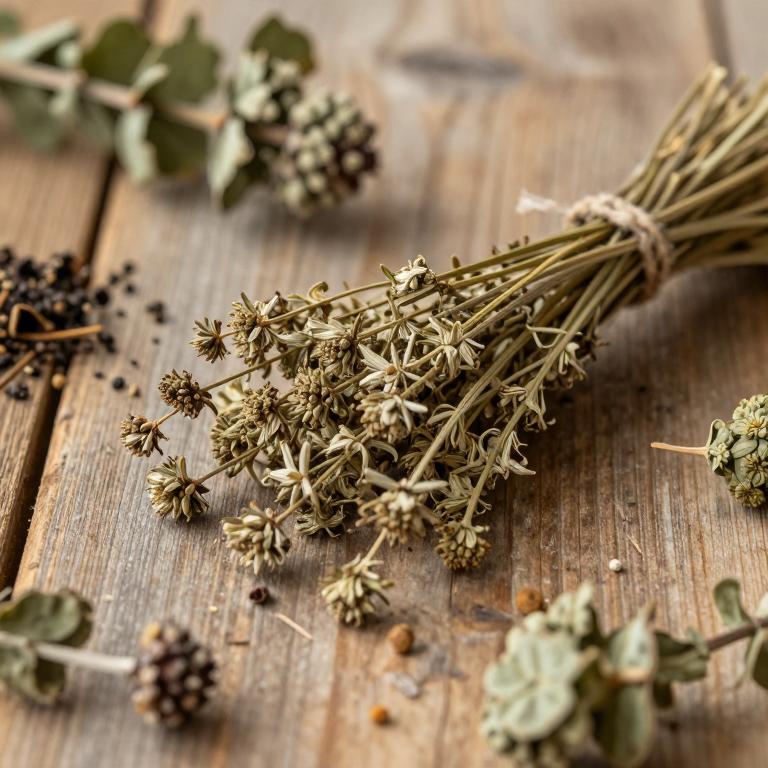
Names and Synonyms
Scientific Names
Accepted name
Schoenocaulon officinaleDistribution
This plant, known scientifically as Schoenocaulon officinale, exhibits a wide presence across various regions of Mexico. Its distribution includes the diverse landscapes found throughout Mexico Central. Furthermore, the species can be located within the territories of Mexico Northeast and Mexico Gulf. It also extends its range into the areas of Mexico Southwest. Finally, the plant is documented as being present in Mexico Southeast.
| Region | Area |
|---|---|
| Mexico | Mexico Central |
| Mexico | Mexico Northeast |
| Mexico | Mexico Gulf |
| Mexico | Mexico Southwest |
| Mexico | Mexico Southeast |
| Central America | Costa Rica |
| Central America | El Salvador |
| Central America | Honduras |
| Central America | Nicaragua |
| Northern South America | Venezuela |
Sources: The World Checklist of Vascular Plants (WCVP)
Botanical Identification
Life history
The life history of Schoenocaulon officinale is characterized by its classification as a cryptophyte, specifically functioning as a geophyte. This biological strategy involves the plant overwintering using underground storage organs, which allow it to survive unfavorable environmental conditions by protecting its vital tissues beneath the soil surface. As a geophyte, it relies on these specialized structures to re-emerge during favorable growing seasons, ensuring its persistence within its ecological niche. This life form enables the species to endure seasonal fluctuations, transitioning from a dormant state to an active vegetative and reproductive phase when moisture and temperature levels are optimal.
- Life form :
- geophyte
- Life form :
- cryptophyte
Morphology
The morphology of Schoenocaulon officinale is characterized by a growth form of a non-woody herb that reaches an average plant height of approximately 1 m. This species is a self-supporting plant, lacking any climbing tendencies such as lianas or vines, and functions as an independent organism rather than a parasite. It is a terrestrial species, not functioning as an epiphyte or an aquatic plant, and maintains a strictly non-woody structure throughout its development.
- Aquatic :
- terrestrial
- Climber :
- self-supporting
- Epiphyte :
- terrestrial
- Growth form :
- herb
- Parasite :
- independent
- Plant height mean:
- 1 m
- Woodiness :
- non-woody
Physiology
The physiology of Schoenocaulon officinale is characterized by its specialized metabolic pathways and distinct nutritional requirements. As a perennial herbaceous plant, its physiological processes are centered around the synthesis and storage of secondary metabolites, most notably the sesquiterpene lactone known as santonin, which is produced within specialized structures to serve as a chemical defense mechanism. Regarding its nutrient acquisition and soil interactions, the plant does not engage in symbiotic relationships with nitrogen-fixing bacteria, meaning it is not a nitrogen fixer; consequently, its nitrogen-fixation status is marked as no. This reliance on exogenous nitrogen sources dictates its physiological demand for organic or inorganic nitrogen available in the soil substrate to support protein synthesis and cellular growth. Furthermore, its metabolic activity is closely tied to its environmental adaptation, utilizing photosynthetic processes to convert light energy into chemical energy, which subsequently fuels the complex biosynthetic pathways required for its unique medicinal chemical profile.
- Nitrogen fixer :
- no
Sources: Global Inventory of Floras and Traits (GIFT)
Chemicals
Schoenocaulon officinale has 24 reported phytochemicals identified across 0 scientific publications and several other databases. The most consistently reported chemicals include Angelic acid, CEVADINE, Cevacine, Cevadic acid, Cevagenine.
| Chemical | Supporting sources | Consensus |
|---|---|---|
| Angelic acid | 1 supporting sources | ★☆☆☆☆ |
| CEVADINE | 1 supporting sources | ★☆☆☆☆ |
| Cevacine | 1 supporting sources | ★☆☆☆☆ |
| Cevadic acid | 1 supporting sources | ★☆☆☆☆ |
| Cevagenine | 1 supporting sources | ★☆☆☆☆ |
| Cevine | 1 supporting sources | ★☆☆☆☆ |
| Chelidonic acid | 1 supporting sources | ★☆☆☆☆ |
| FAT | 1 supporting sources | ★☆☆☆☆ |
| Germidine | 1 supporting sources | ★☆☆☆☆ |
| Neogermidine | 1 supporting sources | ★☆☆☆☆ |
Angelic acid
- Dr. Duke
CEVADINE
- Dr. Duke
Cevacine
- Dr. Duke
Cevadic acid
- Dr. Duke
Cevagenine
- Dr. Duke
Cevine
- Dr. Duke
Chelidonic acid
- Dr. Duke
FAT
- Dr. Duke
Germidine
- Dr. Duke
Neogermidine
- Dr. Duke
Activities
Schoenocaulon officinale has 60 reported activities identified across 0 scientific publications and several other databases. The most consistently reported activities include 5-Alpha-Reductase-Inhibitor, Acidulant, Aldose-Reductase-Inhibitor, Allelopathic, Allergenic.
| Activity | Supporting sources | Consensus |
|---|---|---|
| 5-Alpha-Reductase-Inhibitor | 1 supporting sources | ★☆☆☆☆ |
| Acidulant | 1 supporting sources | ★☆☆☆☆ |
| Aldose-Reductase-Inhibitor | 1 supporting sources | ★☆☆☆☆ |
| Allelopathic | 1 supporting sources | ★☆☆☆☆ |
| Allergenic | 1 supporting sources | ★☆☆☆☆ |
| Alpha-Reductase-Inhibitor | 1 supporting sources | ★☆☆☆☆ |
| Anemiagenic | 1 supporting sources | ★☆☆☆☆ |
| Anthelmintic | 1 supporting sources | ★☆☆☆☆ |
| Antialopecic | 1 supporting sources | ★☆☆☆☆ |
| Antiandrogenic | 1 supporting sources | ★☆☆☆☆ |
5-Alpha-Reductase-Inhibitor
- Dr. Duke
Acidulant
- Dr. Duke
Aldose-Reductase-Inhibitor
- Dr. Duke
Allelopathic
- Dr. Duke
Allergenic
- Dr. Duke
Alpha-Reductase-Inhibitor
- Dr. Duke
Anemiagenic
- Dr. Duke
Anthelmintic
- Dr. Duke
Antialopecic
- Dr. Duke
Antiandrogenic
- Dr. Duke