Schnella glabra
Schnella glabra · Accepted scientific name
Scientific literature: Very Sparse (13 studies) · ★☆☆☆☆
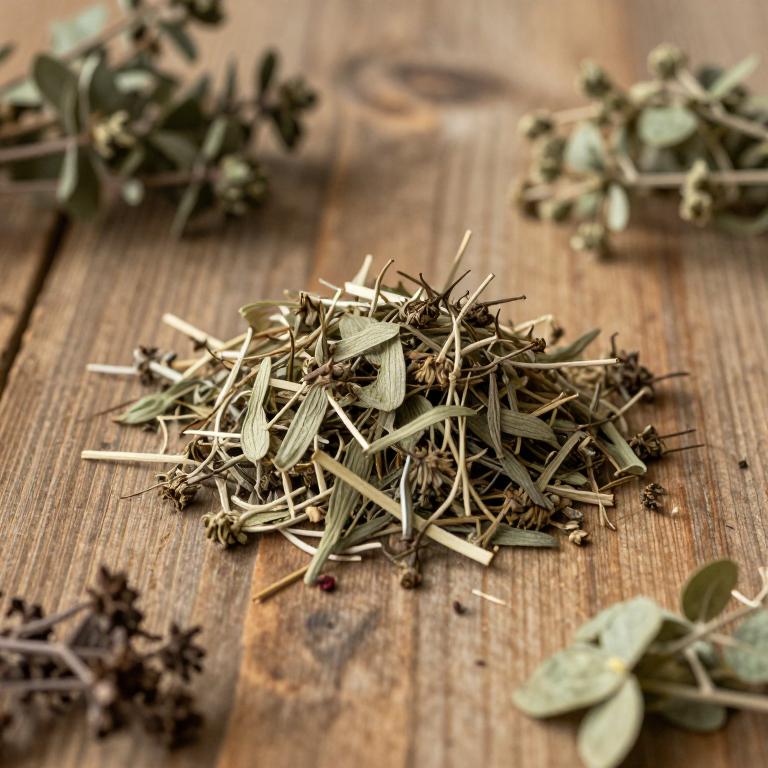
Schnella glabra, scientifically known as Schnella glabra, is a versatile medicinal herb valued in traditional healing practices. Renowned for its potent bioactive compounds, this plant offers significant therapeutic potential, particularly for its anti-inflammatory and antioxidant properties. Exploring its botanical characteristics reveals its vital role in natural pharmacology.
- Family
- Fabaceae
- Native range
- Asia-Tropical
- Parts used
- Leaf · Stem
- Common names
- Not available
- Scientific synonyms
- Phanera Punctata · Schnella Longipetala · 24 more
Names and Synonyms
Scientific Names
Accepted name
Schnella glabraSynonyms
- Phanera punctata
- Schnella longipetala
- Binaria hondurensis
- Schnella columbiensis
- Binaria longipetala
- Schnella brachystachya
- Cardenasia setacea
- Caulotretus eriophorus
- Caulotretus heterophyllus
- Bauhinia standleyi
- Schnella storkii
- Bauhinia storkii
- Schnella heterophylla
- Bauhinia suaveolens
- Bauhinia suaveolens var. loretana
- Bauhinia glabra
- Bauhinia eriophora
- Bauhinia brachystachya
- Bauhinia columbiensis
- Bauhinia heterophylla
- Bauhinia longipetala
- Phanera glabra
- Binaria cumanensis
- Bauhinia punctata
- Bauhinia hondurensis
- Bauhinia cumanensis
Regional and Traditional Names
Spanish:
- Bejuco cadena
Sources: Wikidata, Catalogue of Life
Taxonomical Classification
This plant, known as Schnella glabra, belongs to the kingdom Plantae and the phylum Streptophyta. Within the class Equisetopsida and subclass Magnoliidae, it is classified under the order Fabales. It is a member of the Fabaceae family, falling under the genus Schnella.
| Rank | Classification |
|---|---|
| Kingdom | Plantae |
| Phylum | Streptophyta |
| Class | Equisetopsida |
| Subclass | Magnoliidae |
| Order | Fabales |
| Family | Fabaceae |
| Genus | Schnella |
Sources: The World Checklist of Vascular Plants (WCVP)
Distribution
This plant exhibits a broad geographical distribution spanning across parts of Asia and the Americas. Within the Indian Subcontinent, it can be found growing in Sri Lanka. Its presence in North America extends to various regions of Mexico, including the Gulf, the Southwest, and the Southeast. Moving into Central America, the species is also documented in Belize. Consequently, the range of Schnella glabra covers diverse ecological zones across these international territories.
| Region | Area |
|---|---|
| Indian Subcontinent | Sri Lanka |
| Mexico | Mexico Gulf |
| Mexico | Mexico Southwest |
| Mexico | Mexico Southeast |
| Central America | Belize |
| Central America | Costa Rica |
| Central America | Honduras |
| Central America | Nicaragua |
| Central America | Panamá |
| Caribbean | Cuba |
Sources: The World Checklist of Vascular Plants (WCVP)
Botanical Identification
Ecology
The ecology of Schnella glabra is characterized by its broad adaptability across diverse Neotropical ecosystems, spanning an elevational range from sea level (0 m AMSL) up to a maximum altitude of 1200 m AMSL. This species thrives in a wide variety of specialized habitats, demonstrating significant ecological plasticity by inhabiting the Cerrado (latu sensu), seasonal riparian environments such as Floresta Ciliar or Galeria, and seasonally flooded forests including Floresta de Igapó and Floresta de Várzea. Furthermore, it is integrated into more stable forest structures, such as Floresta de Terra Firme and the humid, high-rainfall environments of Floresta Ombrófila (also known as Floresta Pluvial), as well as specialized Palmeirais.
- Elevational range max:
- 1200 m AMSL
- Elevational range min:
- 0 m AMSL
- Habitat :
- Cerrado (lato sensu), Floresta Ciliar ou Galeria, Floresta de Igapó, Floresta de Terra Firme, Floresta de Várzea, Floresta Ombrófila (= Floresta Pluvial), Palmeiral
Morphology
The morphology of Schnella glabra is characterized by a complex growth habit, manifesting as a woody plant that can exhibit forms ranging from a shrub to a tree. This species functions as an obligatory climber, specifically taking the form of a liana to navigate its environment. While it possesses the structural capability of a woody organism, its ecological positioning is primarily terrestrial, rather than functioning as an epiphyte. It maintains an independent existence, operating as a non-parasitic organism that does not rely on a host for nutrients. Although the species is adapted to terrestrial environments, its habitat context encompasses a spectrum of moisture levels, spanning aquatic, semiaquatic, and terrestrial conditions.
- Aquatic :
- terrestrial
- Climber :
- liana
- Climber :
- obligatory
- Epiphyte :
- terrestrial
- Growth form :
- tree
- Growth form :
- shrub
- Parasite :
- independent
- Woodiness :
- woody
Physiology
The physiology of Schnella glabra is characterized by a C3 photosynthetic pathway, a metabolic strategy common among many temperate and subtropical herbaceous species. In this pathway, the initial fixation of atmospheric carbon dioxide occurs through the enzyme Rubisco, which facilitates the carboxylation of ribulose-1,5-bisphosphate to produce two molecules of 3-phosphoglycerate. This process occurs within the mesophyll cells, where the absence of specialized Kranz anatomy or nocturnal acid accumulation—typical of C4 or CAM plants—means that the plant relies on a direct carbon fixation cycle that is highly sensitive to photorespiration under high-temperature or low-CO2 conditions. Consequently, its physiological efficiency is optimized for environments where water availability and moderate light intensities allow for steady gas exchange and efficient glucose production through the Calvin cycle.
- Photosynthetic pathway :
- C3
Reproduction
The reproduction of Schnella glabra is characterized by the production of seeds with highly consistent physical properties. Analytical data regarding its seed development indicates a uniform seed mass, with a mean value of 0.19516 g. This measurement is precisely reflected across the entire observed range, as both the maximum and minimum seed mass values are recorded at 0.19516 g. Such uniformity in seed mass suggests a highly stabilized reproductive strategy within the species, ensuring that each seed produced maintains a consistent weight for dispersal and germination processes.
- Seed mass mean:
- 0.19516 g
Sources: Global Inventory of Floras and Traits (GIFT)
Plant Parts
Schnella glabra has 2 reported plant parts identified across 2 scientific publications and several other databases that are studied for medicinal purposes. The most consistently reported plant part include leaf, stem.
| Plant part | Supporting sources | Consensus |
|---|---|---|
| Leaf | 1 supporting sources | ★☆☆☆☆ |
| Stem | 1 supporting sources | ★☆☆☆☆ |
Leaf
- Phytochemistry
Stem
- Biomedicine & pharmacotherapy = Biomedecine & pharmacotherapie
Chemicals
Schnella glabra has 3 reported phytochemicals identified across 2 scientific publications and several other databases. The most consistently reported chemicals include CARBON TETRACHLORIDE, di-chloromethane, n-butanol.
| Chemical | Supporting sources | Consensus |
|---|---|---|
| CARBON TETRACHLORIDE | 1 supporting sources | ★☆☆☆☆ |
| di-chloromethane | 1 supporting sources | ★☆☆☆☆ |
| n-butanol | 1 supporting sources | ★☆☆☆☆ |
CARBON TETRACHLORIDE
- Biomedicine & pharmacotherapy = Biomedecine & pharmacotherapie
di-chloromethane
- Biomedicine & pharmacotherapy = Biomedecine & pharmacotherapie
n-butanol
- Biomedicine & pharmacotherapy = Biomedecine & pharmacotherapie
Activities
Schnella glabra has 5 reported activities identified across 2 scientific publications and several other databases. The most consistently reported activities include Antidiabetic, Antinociceptive, Antioxidant, Antipyretic, Thrombolytic.
| Activity | Supporting sources | Consensus |
|---|---|---|
| Antidiabetic | 1 supporting sources | ★☆☆☆☆ |
| Antinociceptive | 1 supporting sources | ★☆☆☆☆ |
| Antioxidant | 1 supporting sources | ★☆☆☆☆ |
| Antipyretic | 1 supporting sources | ★☆☆☆☆ |
| Thrombolytic | 1 supporting sources | ★☆☆☆☆ |
Antidiabetic
- Phytochemistry
Antinociceptive
- Biomedicine & pharmacotherapy = Biomedecine & pharmacotherapie
Antioxidant
- Phytochemistry
Antipyretic
- Biomedicine & pharmacotherapy = Biomedecine & pharmacotherapie
Thrombolytic
- Biomedicine & pharmacotherapy = Biomedecine & pharmacotherapie
Conditions
Schnella glabra has 1 reported investigations on conditions identified across 2 scientific publications and several other databases. The most consistently reported conditions include antioxidant.
| Condition | Supporting sources | Consensus |
|---|---|---|
| Antioxidant | 1 supporting sources | ★☆☆☆☆ |
Antioxidant
- Phytochemistry