guapuruvu
Schizolobium parahyba · Accepted scientific name
Scientific literature: Very Sparse (11 studies) · ★☆☆☆☆
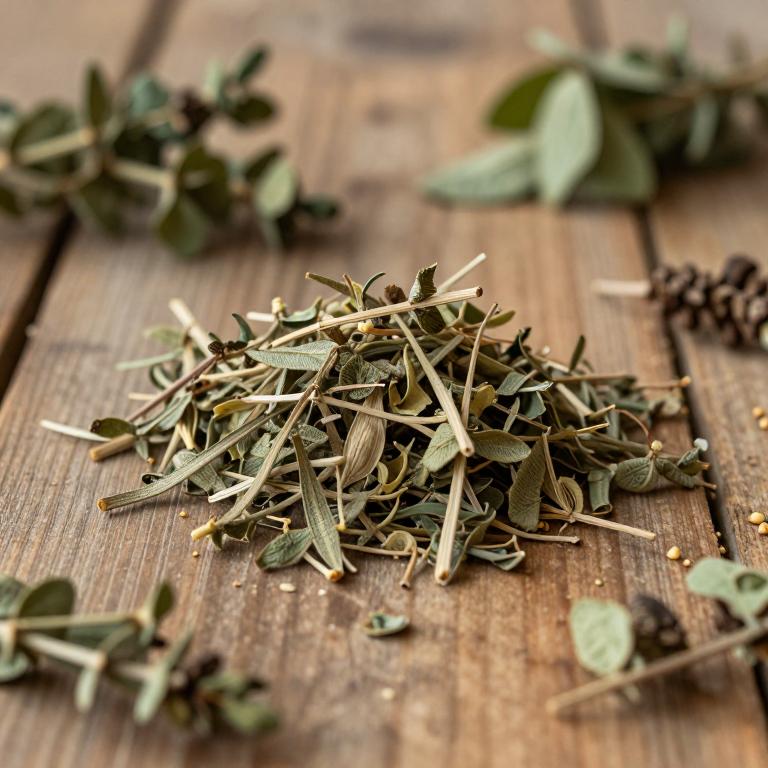
Guapuruvu, scientifically known as Schizolobium parahyba, is a prominent medicinal tree native to Brazil. Renowned for its therapeutic potential, it is traditionally utilized in folk medicine to treat inflammatory conditions and skin ailments. Its bark and leaves contain bioactive compounds that offer significant pharmacological benefits in holistic healing practices.
Names and Synonyms
Common Names
- Brazilian firetree
- Brazilian fern tree
- Feather-Duster Tree
- Parasol Tree
- Reach-For- The-Skies
- Guapuruvu tree
Scientific Names
Accepted name
Schizolobium parahybaSynonyms
- Caesalpinia parahyba
- Schizolobium parahyba var. amazonicum
- Cassia parahyba
- Schizolobium excelsum var. amazonicum
- Schizolobium excelsum
- Schizolobium glutinosum
- Schizolobium kellermanii
- Schizolobium amazonicum
Regional and Traditional Names
Spanish:
- Schizolobium glutinosum
- Cassia parahyba
- Caesalpinia parahyba
- Guapuruvú
- Guapuruvu
- Schizolobium excelsum
- Schizolobium kellermanii
- Schizolobium parahybrum
- Schizolobium parahybum
- Gallinazo
- Gavilan
- Serebo
- Tambor
- Árbol brasileño del zope
Sources: Wikidata, Catalogue of Life
Taxonomical Classification
This plant belongs to the kingdom Plantae and the phylum Streptophyta, falling under the class Equisetopsida and subclass Magnoliidae. Within the order Fabales, it is a member of the Fabaceae family. It is scientifically classified under the genus Schizolobium, specifically as the species Schizolobium parahyba.
| Rank | Classification |
|---|---|
| Kingdom | Plantae |
| Phylum | Streptophyta |
| Class | Equisetopsida |
| Subclass | Magnoliidae |
| Order | Fabales |
| Family | Fabaceae |
| Genus | Schizolobium |
Sources: The World Checklist of Vascular Plants (WCVP)
Distribution
This plant exhibits a diverse geographical presence across several key regions of the African continent. Within West-Central Tropical Africa, its range extends through both the Congo and the Democratic Republic of the Congo. Moving toward East Tropical Africa, the species can be found in the territories of Tanzania and Uganda. Additionally, its distribution reaches into South Tropical Africa, specifically within the borders of Malawi. Together, these locations highlight the plant's ability to thrive in various tropical African environments.
| Region | Area |
|---|---|
| West-Central Tropical Africa | Congo |
| West-Central Tropical Africa | DR Congo |
| East Tropical Africa | Tanzania |
| East Tropical Africa | Uganda |
| South Tropical Africa | Malawi |
| South Tropical Africa | Mozambique |
| South Tropical Africa | Zambia |
| Indian Subcontinent | India |
| Malesia | Jawa |
| Malesia | Philippines |
Sources: The World Checklist of Vascular Plants (WCVP)
Botanical Identification
Ecology
The ecology of Schizolobium parahyba is characterized by its occurrence within forest habitats, where it thrives under the specific environmental conditions provided by these ecosystems. This species exhibits a broad altitudinal distribution, spanning from sea level up to an elevation of 1400 m AMSL. This significant elevational range suggests that the plant is capable of adapting to diverse ecological niches, ranging from lowland tropical forest environments to more temperate, higher-altitude montane forest zones.
- Elevational range max:
- 1400 m AMSL
- Elevational range min:
- 0 m AMSL
- Habitat :
- forest
Life history
The life history of Schizolobium parahyba is characterized by its nature as a perennial organism, allowing it to persist through multiple growing seasons rather than completing its cycle within a single year. This longevity is complemented by its deciduous growth habit, meaning the plant undergoes a seasonal shedding of its foliage, typically in response to environmental cues or dry periods, before entering a period of dormancy.
- Deciduousness :
- deciduous
- Lifecycle :
- perennial
Morphology
The morphology of Schizolobium parahyba is characterized by its stature as a large, woody tree that can reach a mean height of 25 m, with a maximum height extending up to 35 m. As a terrestrial species, it does not exhibit aquatic or semiaquatic tendencies, nor does it function as an epiphyte, maintaining a strictly terrestrial growth habit. The plant is an independent organism, lacking any parasitic relationship, and is classified as a self-supporting structure rather than a climber, liana, or vine. Its robust, woody constitution supports its significant vertical growth, establishing it firmly as a prominent tree within its ecological niche.
- Aquatic :
- terrestrial
- Climber :
- self-supporting
- Epiphyte :
- terrestrial
- Growth form :
- tree
- Parasite :
- independent
- Plant height max:
- 35 m
- Plant height mean:
- 25 m
- Woodiness :
- woody
Physiology
The physiology of Schizolobium parahyba is characterized by a C3 photosynthetic pathway, a standard metabolic mechanism for carbon fixation in many tropical woody species. The plant exhibits specific leaf structural characteristics, as evidenced by its Leaf Dry Matter Content (LDMC), which maintains a mean value of 419.1 mg/g, with observed fluctuations ranging from a minimum of 405 mg/g to a maximum of 433.2 mg/g. Furthermore, Schizolobium parahyba functions as a nitrogen fixer, indicating a symbiotic capacity to convert atmospheric nitrogen into a bioavailable form, which supports its nutrient requirements and contributes to its ecological role.
- Leaf dry matter content (LDMC) max:
- 433.2 mg/g
- Leaf dry matter content (LDMC) mean:
- 419.1 mg/g
- Leaf dry matter content (LDMC) min:
- 405 mg/g
- Nitrogen fixer :
- yes
- Photosynthetic pathway :
- C3
Reproduction
The reproduction of Schizolobium parahyba is characterized by a biotic pollination syndrome, primarily driven by animal vectors rather than abiotic factors. Specifically, the plant relies on insect pollination, with a significant emphasis on bees as key pollinators to facilitate fertilization. Following successful pollination, the plant produces seeds that exhibit considerable morphological variation. The seed length ranges from a minimum of 15 mm to a maximum of 30 mm, with a recorded mean length of 3.1 mm. Furthermore, the seed mass shows a wide distribution, ranging from a minimum of approximately 7.9e-06 g to a maximum of 1.9465 g, resulting in an overall mean seed mass of 0.93722479 g.
- Pollination syndrome :
- insect
- Pollination syndrome :
- bee
- Pollination syndrome :
- biotic
- Seed length max:
- 30 mm
- Seed length mean:
- 3.1 mm
- Seed length min:
- 15 mm
- Seed mass max:
- 1.9465 g
- Seed mass mean:
- 0.93722479 g
- Seed mass min:
- 7.9e-06 g
Sources: Global Inventory of Floras and Traits (GIFT)
Plant Parts
Schizolobium parahyba has 1 reported plant parts identified across 1 scientific publications and several other databases that are studied for medicinal purposes. The most consistently reported plant part include leaf.
| Plant part | Supporting sources | Consensus |
|---|---|---|
| Leaf | 1 supporting sources | ★☆☆☆☆ |
Leaf
- Phytotherapy research : PTR
Chemicals
Schizolobium parahyba has 4 reported phytochemicals identified across 1 scientific publications and several other databases. The most consistently reported chemicals include Trypsin inhibitor, cystine, methionine, tryptophan.
| Chemical | Supporting sources | Consensus |
|---|---|---|
| Trypsin inhibitor | 1 supporting sources | ★☆☆☆☆ |
| cystine | 1 supporting sources | ★☆☆☆☆ |
| methionine | 1 supporting sources | ★☆☆☆☆ |
| tryptophan | 1 supporting sources | ★☆☆☆☆ |
Trypsin inhibitor
- Anais da Academia Brasileira de Ciencias
cystine
- Anais da Academia Brasileira de Ciencias
methionine
- Anais da Academia Brasileira de Ciencias
tryptophan
- Anais da Academia Brasileira de Ciencias
Conditions
Schizolobium parahyba has 6 reported investigations on conditions identified across 1 scientific publications and several other databases. The most consistently reported conditions include Phospholipase A(2), coagulant, hemorrhage, myotoxicity, snake venom.
| Condition | Supporting sources | Consensus |
|---|---|---|
| Phospholipase a(2) | 1 supporting sources | ★☆☆☆☆ |
| Coagulant | 1 supporting sources | ★☆☆☆☆ |
| Hemorrhage | 1 supporting sources | ★☆☆☆☆ |
| Myotoxicity | 1 supporting sources | ★☆☆☆☆ |
| Snake venom | 1 supporting sources | ★☆☆☆☆ |
| Snakebites | 1 supporting sources | ★☆☆☆☆ |
Phospholipase a(2)
- Phytotherapy research : PTR
Coagulant
- Phytotherapy research : PTR
Hemorrhage
- Phytotherapy research : PTR
Myotoxicity
- Phytotherapy research : PTR
Snake venom
- Phytotherapy research : PTR
Snakebites
- Phytotherapy research : PTR
Preparations
Schizolobium parahyba has 2 reported preparations identified across 1 scientific publications and several other databases. The most consistently reported preparations include aqueous extracts prepared from the leaves, aqueous leaves extract.
| Preparation | Supporting sources | Consensus |
|---|---|---|
| Aqueous extracts prepared from the leaves | 1 supporting sources | ★☆☆☆☆ |
| Aqueous leaves extract | 1 supporting sources | ★☆☆☆☆ |
Aqueous extracts prepared from the leaves
- Phytotherapy research : PTR
Aqueous leaves extract
- Phytotherapy research : PTR