magnolia-vines
Schisandra · Accepted scientific name
Scientific literature: Very Sparse (45 studies) · ★☆☆☆☆
Magnolia-vines, scientifically known as Schisandra, is a versatile medicinal plant celebrated in traditional herbalism. Often referred to as "five-flavor fruit," it is prized for its adaptogenic properties. This potent botanical helps balance the body, reduces stress, and enhances mental clarity, making it a vital tool for holistic wellness.
- Family
- Schisandraceae
- Native range
- Asia-Temperate
- Parts used
- Fruit · Root
- Common names
- Magnolia-Vines · Magnolia Vine
- Scientific synonyms
- Stellandria · Sphaerostema
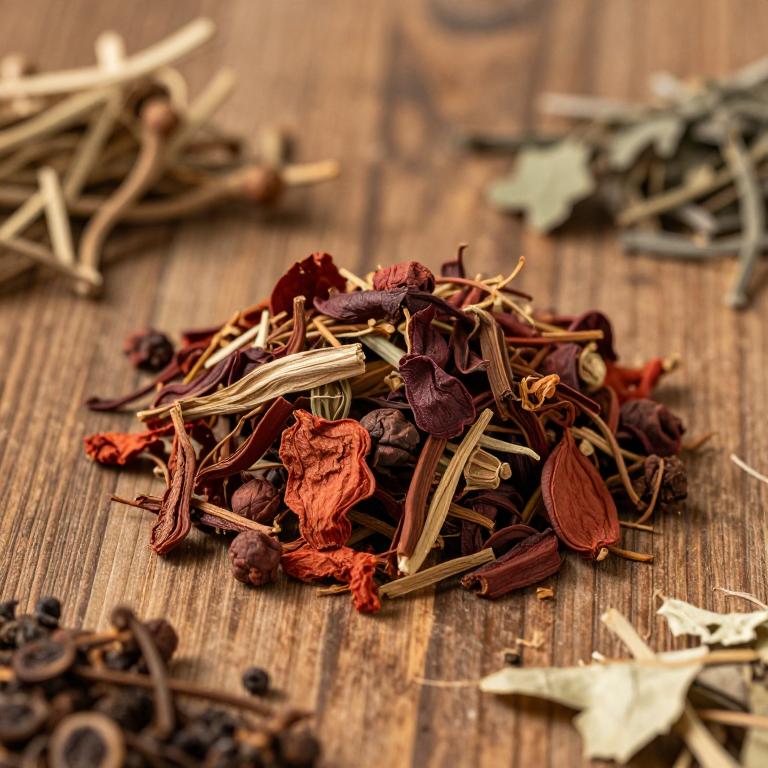
Names and Synonyms
Common Names
- magnolia-vines
- Magnolia Vine
Scientific Names
Accepted name
SchisandraSynonyms
- Stellandria
- Sphaerostema
Regional and Traditional Names
German:
- Spaltkörbchen
- Beerentrauben
Sources: Wikidata, Catalogue of Life
Taxonomical Classification
This plant belongs to the kingdom Plantae within the phylum Streptophyta and is classified under the class Equisetopsida. Following the subclass Magnoliidae and the order Austrobaileyales, it is a member of the family Schisandraceae. Finally, it is categorized under the genus Schisandra.
| Rank | Classification |
|---|---|
| Kingdom | Plantae |
| Phylum | Streptophyta |
| Class | Equisetopsida |
| Subclass | Magnoliidae |
| Order | Austrobaileyales |
| Family | Schisandraceae |
| Genus | Schisandra |
Sources: The World Checklist of Vascular Plants (WCVP)
Distribution
This plant is primarily distributed across several key regions within the Russian Far East. Specifically, it can be found growing in the Amur and Khabarovsk territories. Its presence also extends to the Primorye and Sakhalin regions of Russia. Beyond the Russian borders, the species is widely distributed within China. More specifically, its range includes the China South-Central area.
| Region | Area |
|---|---|
| Russian Far East | Amur |
| Russian Far East | Khabarovsk |
| Russian Far East | Primorye |
| Russian Far East | Sakhalin |
| China | China South-Central |
| China | Inner Mongolia |
| China | Manchuria |
| China | China North-Central |
| China | China Southeast |
| China | Tibet |
Sources: The World Checklist of Vascular Plants (WCVP)
Plant Parts
Schisandra has 3 reported plant parts identified across 7 scientific publications and several other databases that are studied for medicinal purposes. The most consistently reported plant part include fruit, root, stem.
| Plant part | Supporting sources | Consensus |
|---|---|---|
| Fruit | 5 supporting sources | ★★★☆☆ |
| Root | 1 supporting sources | ★☆☆☆☆ |
| Stem | 1 supporting sources | ★☆☆☆☆ |
Fruit
- Journal of chromatography. B, Biomedical applications
- Food additives & contaminants. Part A, Chemistry, analysis, control, exposure & risk assessment
- Zhongguo Zhong yao za zhi = Zhongguo zhongyao zazhi = China journal of Chinese materia medica
- Life (Basel, Switzerland)
- Yao xue xue bao = Acta pharmaceutica Sinica
Root
- Zhongguo Zhong yao za zhi = Zhongguo zhongyao zazhi = China journal of Chinese materia medica
Stem
- Zhongguo Zhong yao za zhi = Zhongguo zhongyao zazhi = China journal of Chinese materia medica
Chemicals
Schisandra has 9 reported phytochemicals identified across 7 scientific publications and several other databases. The most consistently reported chemicals include (+)-Anwulignan, 6-o-Benzoylgomisin O, D-epigalbacine, Deoxyschizandrin, Gomisin A.
| Chemical | Supporting sources | Consensus |
|---|---|---|
| (+)-Anwulignan | 1 supporting sources | ★☆☆☆☆ |
| 6-o-Benzoylgomisin O | 1 supporting sources | ★☆☆☆☆ |
| D-epigalbacine | 1 supporting sources | ★☆☆☆☆ |
| Deoxyschizandrin | 1 supporting sources | ★☆☆☆☆ |
| Gomisin A | 1 supporting sources | ★☆☆☆☆ |
| Schisandrin | 1 supporting sources | ★☆☆☆☆ |
| Schisantherin A | 1 supporting sources | ★☆☆☆☆ |
| Wuweizisu B | 1 supporting sources | ★☆☆☆☆ |
| Wuweizisu C | 1 supporting sources | ★☆☆☆☆ |
(+)-Anwulignan
- Zhongguo Zhong yao za zhi = Zhongguo zhongyao zazhi = China journal of Chinese materia medica
6-o-Benzoylgomisin O
- Zhongguo Zhong yao za zhi = Zhongguo zhongyao zazhi = China journal of Chinese materia medica
D-epigalbacine
- Zhongguo Zhong yao za zhi = Zhongguo zhongyao zazhi = China journal of Chinese materia medica
Deoxyschizandrin
- Zhongguo Zhong yao za zhi = Zhongguo zhongyao zazhi = China journal of Chinese materia medica
Gomisin A
- Zhongguo Zhong yao za zhi = Zhongguo zhongyao zazhi = China journal of Chinese materia medica
Schisandrin
- Zhongguo Zhong yao za zhi = Zhongguo zhongyao zazhi = China journal of Chinese materia medica
Schisantherin A
- Zhongguo Zhong yao za zhi = Zhongguo zhongyao zazhi = China journal of Chinese materia medica
Wuweizisu B
- Zhongguo Zhong yao za zhi = Zhongguo zhongyao zazhi = China journal of Chinese materia medica
Wuweizisu C
- Zhongguo Zhong yao za zhi = Zhongguo zhongyao zazhi = China journal of Chinese materia medica
Activities
Schisandra has 2 reported activities identified across 7 scientific publications and several other databases. The most consistently reported activities include Antitussive, Radioprotective.
| Activity | Supporting sources | Consensus |
|---|---|---|
| Antitussive | 1 supporting sources | ★☆☆☆☆ |
| Radioprotective | 1 supporting sources | ★☆☆☆☆ |
Antitussive
- Yao xue xue bao = Acta pharmaceutica Sinica
Radioprotective
- Cancers
Conditions
Schisandra has 6 reported investigations on conditions identified across 7 scientific publications and several other databases. The most consistently reported conditions include antitussive, fatigue, inflammation, neurasthenia, sedative.
| Condition | Supporting sources | Consensus |
|---|---|---|
| Antitussive | 1 supporting sources | ★☆☆☆☆ |
| Fatigue | 1 supporting sources | ★☆☆☆☆ |
| Inflammation | 1 supporting sources | ★☆☆☆☆ |
| Neurasthenia | 1 supporting sources | ★☆☆☆☆ |
| Sedative | 1 supporting sources | ★☆☆☆☆ |
| Tumor | 1 supporting sources | ★☆☆☆☆ |
Antitussive
- Yao xue xue bao = Acta pharmaceutica Sinica
Fatigue
- International journal of biological macromolecules
Inflammation
- International journal of biological macromolecules
Neurasthenia
- Yao xue xue bao = Acta pharmaceutica Sinica
Sedative
- Yao xue xue bao = Acta pharmaceutica Sinica
Tumor
- International journal of biological macromolecules
Preparations
Schisandra has 7 reported preparations identified across 7 scientific publications and several other databases. The most consistently reported preparations include Schisandra extract, Schisandra-Ginseng-Notoginseng-Lycium Extract, branch exudates, decoction of Schisandra, dried fruits.
| Preparation | Supporting sources | Consensus |
|---|---|---|
| Schisandra extract | 2 supporting sources | ★☆☆☆☆ |
| Schisandra-ginseng-notoginseng-lycium extract | 1 supporting sources | ★☆☆☆☆ |
| Branch exudates | 1 supporting sources | ★☆☆☆☆ |
| Decoction of schisandra | 1 supporting sources | ★☆☆☆☆ |
| Dried fruits | 1 supporting sources | ★☆☆☆☆ |
| Seed extract | 1 supporting sources | ★☆☆☆☆ |
| Tincture | 1 supporting sources | ★☆☆☆☆ |
Schisandra extract
- Journal of cellular and molecular medicine
- Planta medica
Schisandra-ginseng-notoginseng-lycium extract
- Evidence-based complementary and alternative medicine : eCAM
Branch exudates
- Molecules (Basel, Switzerland)
Decoction of schisandra
- Yao xue xue bao = Acta pharmaceutica Sinica
Dried fruits
- Molecules (Basel, Switzerland)
Seed extract
- Planta medica
Tincture
- Eksperimental'naia i klinicheskaia farmakologiia