Schisandra arisanensis subsp. viridis
Schisandra arisanensis subsp. viridis · Accepted scientific name
Scientific literature: Very Sparse (5 studies) · ★☆☆☆☆
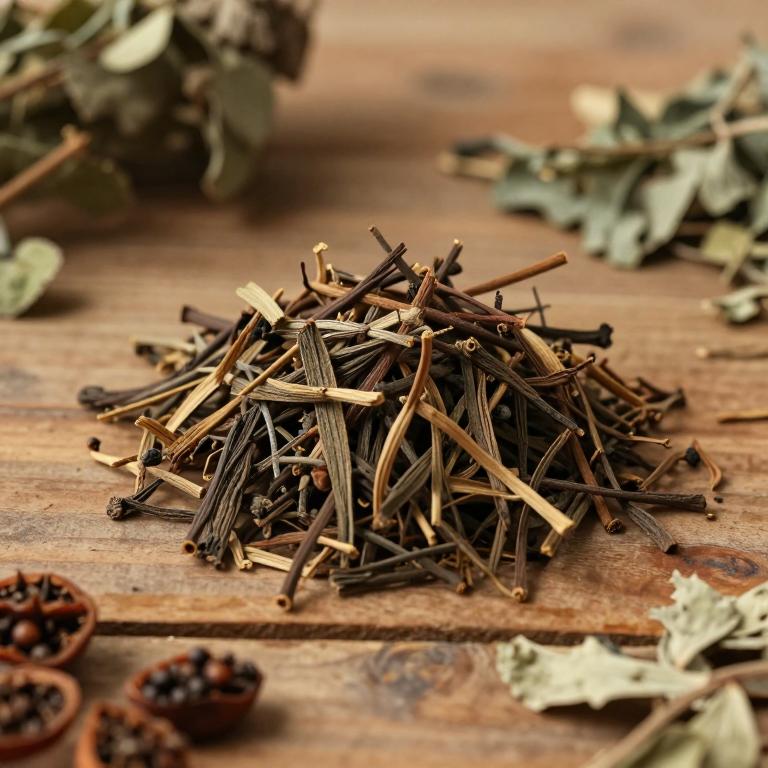
, scientifically known as Schisandra arisanensis subsp. viridis, is a specialized medicinal shrub native to specific subtropical regions. Renowned for its unique botanical properties, this subspecies is valued in traditional healing practices. It contains potent bioactive compounds that offer significant therapeutic potential for supporting overall health and holistic wellness.
- Family
- Schisandraceae
- Native range
- Asia-Temperate
- Parts used
- Leaf · Stem
- Common names
- Not available
- Scientific synonyms
- Schisandra Viridis
Names and Synonyms
Scientific Names
Accepted name
Schisandra arisanensis subsp. viridisSynonyms
- Schisandra viridis
Sources: Wikidata
Taxonomical Classification
This plant belongs to the kingdom Plantae and is classified under the phylum Streptophyta and class Equisetopsida. Within the subclass Magnoliidae, it is further categorized under the order Austrobaileyales and the family Schisandraceae. Finally, it is identified by the genus Schisandra as the subspecies Schisandra ariisanensis subsp. viridis.
| Rank | Classification |
|---|---|
| Kingdom | Plantae |
| Phylum | Streptophyta |
| Class | Equisetopsida |
| Subclass | Magnoliidae |
| Order | Austrobaileyales |
| Family | Schisandraceae |
| Genus | Schisandra |
Sources: The World Checklist of Vascular Plants (WCVP)
Distribution
This plant is primarily found within specific regions of China. Its geographical range is concentrated in the South-Central part of the country. Additionally, the species can be located throughout the Southeast region of China. These localized habitats define its natural distribution across the mainland. Consequently, its occurrence is restricted to these particular southeastern and south-central territories.
| Region | Area |
|---|---|
| China | China South-Central |
| China | China Southeast |
Sources: The World Checklist of Vascular Plants (WCVP)
Plant Parts
Schisandra arisanensis subsp. viridis has 2 reported plant parts identified across 2 scientific publications and several other databases that are studied for medicinal purposes. The most consistently reported plant part include leaf, stem.
| Plant part | Supporting sources | Consensus |
|---|---|---|
| Leaf | 1 supporting sources | ★☆☆☆☆ |
| Stem | 1 supporting sources | ★☆☆☆☆ |
Leaf
- Fitoterapia
Stem
- Fitoterapia
Chemicals
Schisandra arisanensis subsp. viridis has 3 reported phytochemicals identified across 2 scientific publications and several other databases. The most consistently reported chemicals include Gomisin A, Schisandrin, Wuweizisu B.
| Chemical | Supporting sources | Consensus |
|---|---|---|
| Gomisin A | 1 supporting sources | ★☆☆☆☆ |
| Schisandrin | 1 supporting sources | ★☆☆☆☆ |
| Wuweizisu B | 1 supporting sources | ★☆☆☆☆ |
Gomisin A
- Zhongguo Zhong yao za zhi = Zhongguo zhongyao zazhi = China journal of Chinese materia medica
Schisandrin
- Zhongguo Zhong yao za zhi = Zhongguo zhongyao zazhi = China journal of Chinese materia medica
Wuweizisu B
- Zhongguo Zhong yao za zhi = Zhongguo zhongyao zazhi = China journal of Chinese materia medica