Brazilian pepper tree
Schinus terebinthifolia · Accepted scientific name
Scientific literature: Very Sparse (24 studies) · ★☆☆☆☆
Brazilian pepper tree, scientifically known as Schinus terebinthifolia, is a versatile medicinal plant native to South America. Renowned for its antioxidant and anti-inflammatory properties, it is traditionally used to treat skin ailments, digestive issues, and respiratory conditions. This resilient species offers significant therapeutic potential in modern ethnobotanical research.
- Family
- Anacardiaceae
- Native range
- Europe
- Parts used
- Fruit · Leaf
- Common names
- Christmasberry-Tree · Brazil Pepper Tree · 5 more
- Scientific synonyms
- Not available
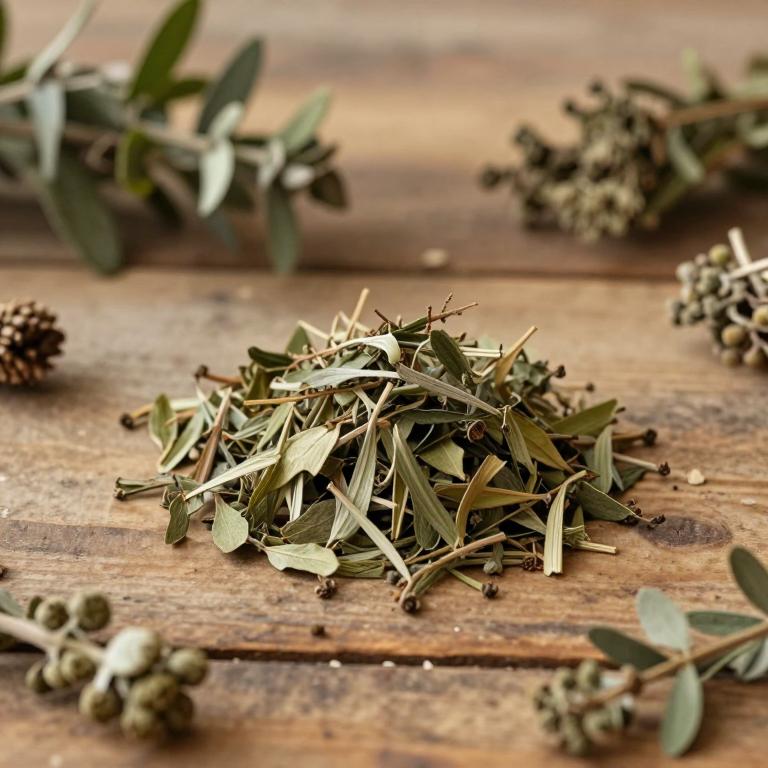
Names and Synonyms
Common Names
- Christmasberry-tree
- Brazil Pepper Tree
- Brazilian pepper
- Christmas Berry Tree
- Christmas berry
- South American Pepper
- Florida Holly
Scientific Names
Accepted name
Schinus terebinthifoliaRegional and Traditional Names
Spanish:
- Aroeira
- Turbinto
- pimienta de Brasil
- Chichita
- Pimentero brasileño
- Terebinto
- molle negro
German:
- Brasilianischer Pfefferbaum
- Schinus terebenthifolia
- Brasilianischer Pfefferbaum
- Rosapfeffer
French:
- faux poivrier
- Faux-poivrier
Sources: Wikidata, Catalogue of Life
Taxonomical Classification
This plant belongs to the kingdom Plantae and is classified under the phylum Streptophyta and the class Equisetopsida. Within the subclass Magnoliidae, it is further organized into the order Sapindales and the family Anacardiaceae. Finally, its taxonomic identity is defined by its placement within the genus Schinus.
| Rank | Classification |
|---|---|
| Kingdom | Plantae |
| Phylum | Streptophyta |
| Class | Equisetopsida |
| Subclass | Magnoliidae |
| Order | Sapindales |
| Family | Anacardiaceae |
| Genus | Schinus |
Sources: The World Checklist of Vascular Plants (WCVP)
Distribution
This plant exhibits a widespread presence across specific regions of the Mediterranean basin. In Southwestern Europe, its distribution includes the countries of Portugal and Spain. The species also extends into Northern Africa, where it can be found growing in Algeria. Furthermore, it inhabits the territories of Libya and Morocco within the same continent. Together, these locations define its primary geographical range.
| Region | Area |
|---|---|
| Southwestern Europe | Portugal |
| Southwestern Europe | Spain |
| Northern Africa | Algeria |
| Northern Africa | Libya |
| Northern Africa | Morocco |
| Northern Africa | Tunisia |
| Macaronesia | Canary Is. |
| Macaronesia | Cape Verde |
| Macaronesia | Madeira |
| West Tropical Africa | Benin |
Sources: The World Checklist of Vascular Plants (WCVP)
Botanical Identification
Ecology
The ecology of Schinus terebinthifolia is characterized by its remarkable adaptability to a diverse array of ecosystems and significant altitudinal variations. This species thrives across a broad environmental spectrum, occupying habitats such as anthropic areas, Cerrado (latu sensu), coastal restingas, and mangroves. It is also commonly found within various forest types, including seasonal semi-deciduous forests, gallery forests, ombrophilous forests (both pluvial and mixed), and coastal strip forests. In terms of topographical distribution, the plant exhibits a wide elevational range, spanning from sea level (0 m AMSL) up to a maximum altitude of 1500 m AMSL, allowing it to colonize both lowland coastal regions and higher-altitude inland landscapes.
- Elevational range max:
- 1500 m AMSL
- Elevational range min:
- 0 m AMSL
- Habitat :
- Área Antrópica, Cerrado (lato sensu), Floresta Ciliar ou Galeria, Floresta Estacional Semidecidual, Floresta Ombrófila (= Floresta Pluvial), Floresta Ombrófila Mista, Manguezal, Restinga
Genetics
The genetics of Schinus terebinthiifolia are characterized by a specific chromosomal configuration that defines its cellular structure. The species possesses a chromosome number of 60, which serves as a fundamental genetic marker for its cytological identification. Furthermore, the plant exhibits a diploid ploidy level, indicated by a ploidy value of 2, suggesting a standard chromosomal arrangement within its genome.
- Chromosome number :
- 60
- Ploidy :
- 2
Life history
The life history of Schinus terebinthifolia is characterized by its status as a perennial plant, allowing it to persist in its environment over many growing seasons. As a phanerophyte, its regenerative buds are located high above the ground on woody stems, a structural adaptation that defines its growth habit and life form. Furthermore, the species maintains an evergreen deciduousness, ensuring that its foliage remains functional throughout much of its life cycle rather than shedding all leaves seasonally.
- Deciduousness :
- evergreen
- Life form :
- phanerophyte
- Lifecycle :
- perennial
Morphology
The morphology of Schinus terebinthiifolia is characterized by its growth form as a woody tree, functioning as a self-supporting structure rather than a climber or vine. As a terrestrial and independent organism, it does not exhibit parasitic or epiphytic behavior, maintaining a stable life cycle on land. The plant's stature varies significantly depending on environmental conditions, with a height range spanning from a minimum of 1 m to a maximum of 10 m, and an average height of approximately 6.2 m.
- Aquatic :
- terrestrial
- Climber :
- self-supporting
- Epiphyte :
- terrestrial
- Growth form :
- tree
- Parasite :
- independent
- Plant height max:
- 10 m
- Plant height mean:
- 6.2 m
- Plant height min:
- 1 m
- Woodiness :
- woody
Physiology
The physiology of Schinus terebinthifolia is characterized by a C3 photosynthetic pathway and an alternate leaf arrangement. The foliage displays an imparipinnate leaf form, with individual leaflets measuring between 1.5 cm and 8 cm in length and ranging in width from 0.7 cm to 3.2 cm. The plant exhibits a consistent Specific Leaf Area (SLA) of 95 cm²/g across its minimum, mean, and maximum recorded values, indicating a uniform leaf density and thickness. Furthermore, this species does not function as a nitrogen fixer.
- Leaf arrangement :
- alternate
- Leaf form :
- imparipinnate
- Leaf length max:
- 8 cm
- Leaf length min:
- 1.5 cm
- Leaf width max:
- 3.2 cm
- Leaf width min:
- 0.7 cm
- Nitrogen fixer :
- no
- Photosynthetic pathway :
- C3
- Specific Leaf Area (SLA) min:
- 95 cm²/g
Reproduction
The reproduction of Schinus terebinthiifolia is characterized by a biotic pollination process, primarily driven by insects such as bees. The plant produces white flowers arranged in a panicle inflorescence, with individual flowers reaching a maximum length of 0.2 cm. The flowering period typically begins in July and concludes in September, and the species relies on external agents as self-fertilization is noted to be absent. Following successful pollination, the plant develops fleshy, indehiscent fruits classified as drupes. These fruits are initially green in color and typically measure between 0.5 cm and 0.6 cm in width, with a length ranging from a mean of 0.55 cm to a maximum of 0.6 cm. The dispersal of the species is zoochorous, meaning it relies on animals for seed distribution. The seeds contained within the fruit are quite small, with a mean mass of approximately 0.0181375 g (ranging from 0.0149 g to 0.02137 g) and a consistent seed volume of 29 mm³.
- Dehiscence :
- indehiscent
- Dispersal syndrome :
- zoochorous
- Flower colour :
- white
- Flower length max:
- 0.2 cm
- Flowering time :
- Jul
- Flowering time :
- Sep
- Fruit colour :
- green
- Fruit dryness :
- fleshy
- Fruit length max:
- 0.6 cm
- Fruit length mean:
- 0.55 cm
- Fruit type :
- drupe
- Fruit width max:
- 0.6 cm
- Fruit width min:
- 0.5 cm
- Inflorescence :
- panicle
- Pollination syndrome :
- insect
- Pollination syndrome :
- bee
- Pollination syndrome :
- biotic
- Seed mass max:
- 0.02137 g
- Seed mass mean:
- 0.0181375 g
- Seed mass min:
- 0.0149 g
- Seed volume max:
- 29 mm³
- Self fertilization :
- absent
Sources: Global Inventory of Floras and Traits (GIFT)
Plant Parts
Schinus terebinthifolia has 2 reported plant parts identified across 2 scientific publications and several other databases that are studied for medicinal purposes. The most consistently reported plant part include fruit, leaf.
| Plant part | Supporting sources | Consensus |
|---|---|---|
| Fruit | 1 supporting sources | ★☆☆☆☆ |
| Leaf | 1 supporting sources | ★☆☆☆☆ |
Fruit
- Scientific reports
Leaf
- Natural product research
Chemicals
Schinus terebinthifolia has 11 reported phytochemicals identified across 2 scientific publications and several other databases. The most consistently reported chemicals include (+)-catechin, 3-oxo-olean-12-en-28-oic acid, ETHYL GALLATE, Gallic acid, Kaempferol 3-O-glucoside.
| Chemical | Supporting sources | Consensus |
|---|---|---|
| (+)-catechin | 1 supporting sources | ★☆☆☆☆ |
| 3-oxo-olean-12-en-28-oic acid | 1 supporting sources | ★☆☆☆☆ |
| ETHYL GALLATE | 1 supporting sources | ★☆☆☆☆ |
| Gallic acid | 1 supporting sources | ★☆☆☆☆ |
| Kaempferol 3-O-glucoside | 1 supporting sources | ★☆☆☆☆ |
| Myricitrin | 1 supporting sources | ★☆☆☆☆ |
| Pentagalloyl glucose | 1 supporting sources | ★☆☆☆☆ |
| cumaric acid | 1 supporting sources | ★☆☆☆☆ |
| myricetin | 1 supporting sources | ★☆☆☆☆ |
| quercetin | 1 supporting sources | ★☆☆☆☆ |
(+)-catechin
- Natural product research
3-oxo-olean-12-en-28-oic acid
- Scientific reports
ETHYL GALLATE
- Natural product research
Gallic acid
- Natural product research
Kaempferol 3-O-glucoside
- Natural product research
Myricitrin
- Natural product research
Pentagalloyl glucose
- Natural product research
cumaric acid
- Natural product research
myricetin
- Natural product research
quercetin
- Natural product research
Activities
Schinus terebinthifolia has 2 reported activities identified across 2 scientific publications and several other databases. The most consistently reported activities include Antibacterial, Ovicide.
| Activity | Supporting sources | Consensus |
|---|---|---|
| Antibacterial | 1 supporting sources | ★☆☆☆☆ |
| Ovicide | 1 supporting sources | ★☆☆☆☆ |
Antibacterial
- Natural product research
Ovicide
- Natural product research
Conditions
Schinus terebinthifolia has 5 reported investigations on conditions identified across 2 scientific publications and several other databases. The most consistently reported conditions include bronchitis, diabetes mellitus, oxidative stress, ulcers, wounds.
| Condition | Supporting sources | Consensus |
|---|---|---|
| Bronchitis | 1 supporting sources | ★☆☆☆☆ |
| Diabetes mellitus | 1 supporting sources | ★☆☆☆☆ |
| Oxidative stress | 1 supporting sources | ★☆☆☆☆ |
| Ulcers | 1 supporting sources | ★☆☆☆☆ |
| Wounds | 1 supporting sources | ★☆☆☆☆ |
Bronchitis
- Journal of ethnopharmacology
Diabetes mellitus
- Natural product research
Oxidative stress
- Natural product research
Ulcers
- Journal of ethnopharmacology
Wounds
- Journal of ethnopharmacology
Preparations
Schinus terebinthifolia has 5 reported preparations identified across 2 scientific publications and several other databases. The most consistently reported preparations include 430D-F5, hydroalcoholic extract, hydroethanolic extract (HE), infusions, methanol extracts.
| Preparation | Supporting sources | Consensus |
|---|---|---|
| 430d-f5 | 1 supporting sources | ★☆☆☆☆ |
| Hydroalcoholic extract | 1 supporting sources | ★☆☆☆☆ |
| Hydroethanolic extract (he) | 1 supporting sources | ★☆☆☆☆ |
| Infusions | 1 supporting sources | ★☆☆☆☆ |
| Methanol extracts | 1 supporting sources | ★☆☆☆☆ |
430d-f5
- Scientific reports
Hydroalcoholic extract
- Natural product research
Hydroethanolic extract (he)
- Natural product research
Infusions
- Frontiers in pharmacology
Methanol extracts
- Fitoterapia