Peppercorn Tree
Schinus areira · Accepted scientific name
Scientific literature: Very Sparse (11 studies) · ★☆☆☆☆
Peppercorn Tree, scientifically known as Schinus areira, is a versatile evergreen native to South America. Renowned for its medicinal properties, it offers antioxidant, anti-inflammatory, and antimicrobial benefits. Traditionally used to treat skin ailments and digestive issues, this resilient species is highly valued in ethnobotany for its diverse therapeutic potential.
- Family
- Anacardiaceae
- Native range
- Northern America
- Parts used
- Leaf
- Common names
- Peppercorn Tree
- Scientific synonyms
- Schinus Molle Var. Areira
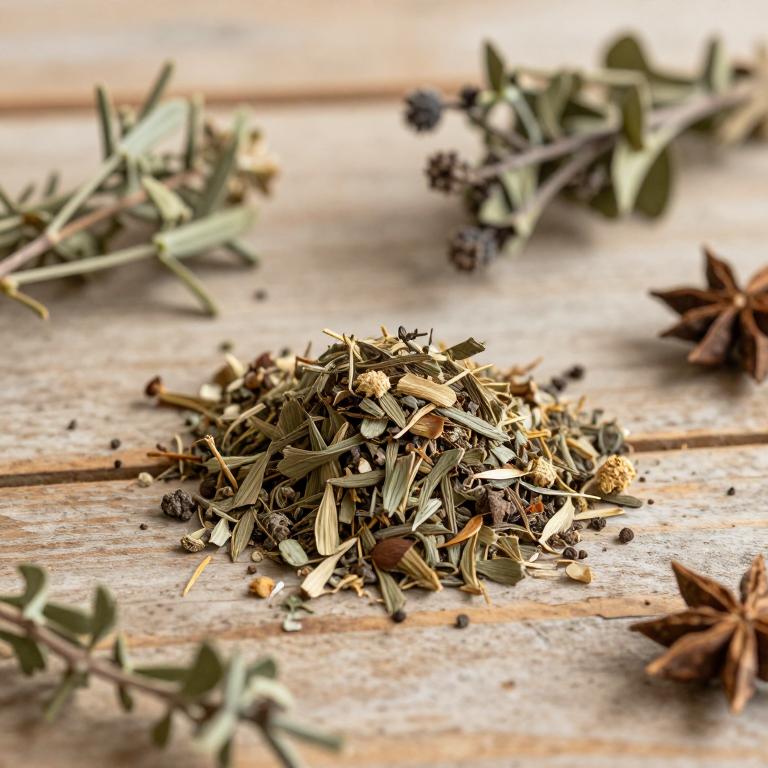
Names and Synonyms
Common Names
- Peppercorn Tree
Scientific Names
Accepted name
Schinus areiraSynonyms
- Schinus molle var. areira
Regional and Traditional Names
Spanish:
- Schinus molle var. areira
- Schinus molle var areira
- Aguaribay
- Pimiento Negro
German:
- Pfefferbaum
Sources: Wikidata, Catalogue of Life
Taxonomical Classification
This plant belongs to the kingdom Plantae and is classified under the phylum Streptophyta and class Equisetopsida. Within the subclass Magnoliidae, it falls under the order Sapindales and the family Anacardiaceae. Finally, it is categorized under the genus Schinus.
| Rank | Classification |
|---|---|
| Kingdom | Plantae |
| Phylum | Streptophyta |
| Class | Equisetopsida |
| Subclass | Magnoliidae |
| Order | Sapindales |
| Family | Anacardiaceae |
| Genus | Schinus |
Sources: The World Checklist of Vascular Plants (WCVP)
Distribution
This plant exhibits a wide geographical range spanning across North and South America. In the Southwestern United States, its presence is noted within the state of California. Moving eastward, it can be found in the South-Central region of the U.S. in Texas, as well as in Florida in the Southeast. The distribution continues into Western South America, where it inhabits the landscapes of Bolivia. Finally, its reach extends further through the diverse environments of Colombia.
| Region | Area |
|---|---|
| Southwestern U.S.A. | California |
| South-Central U.S.A. | Texas |
| Southeastern U.S.A. | Florida |
| Western South America | Bolivia |
| Western South America | Colombia |
| Western South America | Peru |
| Southern South America | Argentina Northeast |
| Southern South America | Argentina Northwest |
| Southern South America | Chile Central |
| Southern South America | Chile North |
Sources: The World Checklist of Vascular Plants (WCVP)
Botanical Identification
Ecology
The ecology of Schinus areira is characterized by its remarkable adaptability to diverse environmental conditions across a broad altitudinal gradient. This species thrives across an extensive elevational range, spanning from 0 m AMSL to a maximum of 3500 m AMSL. This wide vertical distribution allows it to occupy various ecological niches, ranging from low-altitude valleys to high-altitude montane regions. It is typically found in open woodlands, scrublands, and disturbed areas, where it demonstrates high resilience to varying levels of precipitation and soil compositions. Its ability to colonize such a vast range of elevations highlights its capacity to endure significant fluctuations in temperature and atmospheric pressure, making it a prominent component of its native ecosystems.
- Elevational range max:
- 3500 m AMSL
- Elevational range min:
- 0 m AMSL
Life history
The life history of Schinus areira is characterized by its nature as a perennial species, allowing it to establish a long-term presence within its ecological niche. Throughout its extended lifespan, the plant undergoes a continuous cycle of growth and seasonal adaptation, often surviving for many years in its native habitats. As a perennial, it does not complete its life cycle in a single season but rather invests in robust woody structures that support repeated reproductive efforts over multiple years. This longevity enables the plant to endure varying environmental conditions, contributing to its stability within the ecosystem as it moves through various stages of maturity and reproductive maturity.
- Lifecycle :
- perennial
Morphology
The morphology of Schinus terebinthifolia is characterized by a woody growth form, primarily manifesting as a self-supporting tree. It is a terrestrial species that functions as an independent organism, neither acting as a parasite nor as an epiphyte. The plant exhibits a robust structure with a height typically ranging from a minimum of 2 meters to a maximum of 10 meters. As a self-supporting tree, it does not possess climbing or vine-like characteristics, maintaining a stable, upright stature within its terrestrial habitat.
- Aquatic :
- terrestrial
- Climber :
- self-supporting
- Epiphyte :
- terrestrial
- Growth form :
- tree
- Parasite :
- independent
- Plant height max:
- 10 m
- Plant height min:
- 2 m
- Woodiness :
- woody
Physiology
The physiological structure of the foliage in Schinus terebinthifolius (often associated with the Schinus genus characteristics) is defined by highly specialized leaf dimensions that facilitate efficient gas exchange and light interception. The leaves exhibit a significant morphological range, with individual leaf lengths varying from a minimum of 12 cm to a maximum of 25 cm. In terms of lateral expansion, the leaf width is notably narrow, maintaining a physiological profile that ranges from a minimum of 0.2 cm to a maximum of 1 cm. This elongated, linear aspect ratio suggests an evolutionary adaptation to optimize photosynthetic surface area while managing transpiration rates within its specific ecological niche.
- Leaf length max:
- 25 cm
- Leaf length min:
- 12 cm
- Leaf width max:
- 1 cm
- Leaf width min:
- 0.2 cm
Reproduction
The reproduction of Schinus terebinthifolia (often referred to in the context of the Schinus genus including S. areira) is facilitated through the production of specialized fruit structures that aid in seed dispersal. The plant produces a fruit type classified as a drupe, which is a fleshy fruit typically containing a single hard seed or pit. These fruits are characterized by their indehiscent nature, meaning they do not split open at maturity to release their contents; instead, the entire fruit structure remains intact, often relying on biotic agents such as birds or mammals to consume the fleshy portion and disperse the seeds through their digestive tracts.
- Dehiscence :
- indehiscent
- Fruit type :
- drupe
Sources: Global Inventory of Floras and Traits (GIFT)
Plant Parts
Schinus areira has 1 reported plant parts identified across 1 scientific publications and several other databases that are studied for medicinal purposes. The most consistently reported plant part include leaf.
| Plant part | Supporting sources | Consensus |
|---|---|---|
| Leaf | 1 supporting sources | ★☆☆☆☆ |
Leaf
- Journal of ethnopharmacology
Chemicals
Schinus areira has 2 reported phytochemicals identified across 1 scientific publications and several other databases. The most consistently reported chemicals include 3-O-Caffeoylquinic acid, Isoferulic acid.
| Chemical | Supporting sources | Consensus |
|---|---|---|
| 3-O-Caffeoylquinic acid | 1 supporting sources | ★☆☆☆☆ |
| Isoferulic acid | 1 supporting sources | ★☆☆☆☆ |
3-O-Caffeoylquinic acid
- Plant foods for human nutrition (Dordrecht, Netherlands)
Isoferulic acid
- Plant foods for human nutrition (Dordrecht, Netherlands)
Activities
Schinus areira has 8 reported activities identified across 1 scientific publications and several other databases. The most consistently reported activities include Antidepressant, Antimicrobial, Antioxidant, Antiseptic, Astringent.
| Activity | Supporting sources | Consensus |
|---|---|---|
| Antidepressant | 1 supporting sources | ★☆☆☆☆ |
| Antimicrobial | 1 supporting sources | ★☆☆☆☆ |
| Antioxidant | 1 supporting sources | ★☆☆☆☆ |
| Antiseptic | 1 supporting sources | ★☆☆☆☆ |
| Astringent | 1 supporting sources | ★☆☆☆☆ |
| Diuretic | 1 supporting sources | ★☆☆☆☆ |
| Insecticide | 1 supporting sources | ★☆☆☆☆ |
| Repellent | 1 supporting sources | ★☆☆☆☆ |
Antidepressant
- Journal of ethnopharmacology
Antimicrobial
- Plant foods for human nutrition (Dordrecht, Netherlands)
Antioxidant
- Plant foods for human nutrition (Dordrecht, Netherlands)
Antiseptic
- Journal of ethnopharmacology
Astringent
- Journal of ethnopharmacology
Diuretic
- Journal of ethnopharmacology
Insecticide
- Journal of ethnopharmacology
Repellent
- Journal of ethnopharmacology
Preparations
Schinus areira has 3 reported preparations identified across 1 scientific publications and several other databases. The most consistently reported preparations include ethanolic and hexanic extracts from leaves, infusions, methanolic extracts.
| Preparation | Supporting sources | Consensus |
|---|---|---|
| Ethanolic and hexanic extracts from leaves | 1 supporting sources | ★☆☆☆☆ |
| Infusions | 1 supporting sources | ★☆☆☆☆ |
| Methanolic extracts | 1 supporting sources | ★☆☆☆☆ |
Ethanolic and hexanic extracts from leaves
- Journal of ethnopharmacology
Infusions
- Chemotherapy
Methanolic extracts
- Chemotherapy