Schinopsis brasiliensis
Schinopsis brasiliensis · Accepted scientific name
Scientific literature: Very Sparse (26 studies) · ★☆☆☆☆
, scientifically known as Schinopsis brasiliensis, is a significant medicinal shrub native to South American landscapes. Renowned for its diverse pharmacological properties, it is traditionally utilized in folk medicine to treat inflammatory conditions and digestive ailments. Modern research continues to explore its bioactive compounds for potential therapeutic applications.
- Family
- Anacardiaceae
- Native range
- Southern America
- Parts used
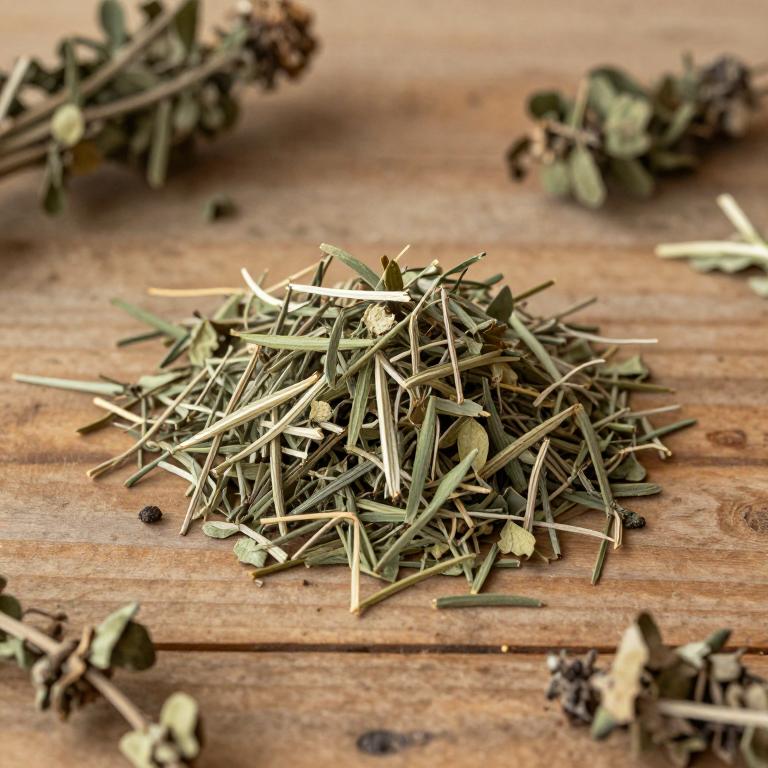
- Leaf
- Common names
- Not available
- Scientific synonyms
- Schinopsis Brasiliensis Var. Glabra · Schinopsis Glabra
Names and Synonyms
Scientific Names
Accepted name
Schinopsis brasiliensisSynonyms
- Schinopsis brasiliensis var. glabra
- Schinopsis glabra
Sources: Wikidata, Catalogue of Life
Taxonomical Classification
This plant belongs to the kingdom Plantae and is classified under the phylum Streptophyta within the class Equisetopsida. As a member of the subclass Magnoliidae and the order Sapindales, it falls under the family Anacardiaceae. Finally, it is identified by its specific genus, Schinopsis, and its species name, Schinopsis brasiliensis.
| Rank | Classification |
|---|---|
| Kingdom | Plantae |
| Phylum | Streptophyta |
| Class | Equisetopsida |
| Subclass | Magnoliidae |
| Order | Sapindales |
| Family | Anacardiaceae |
| Genus | Schinopsis |
Sources: The World Checklist of Vascular Plants (WCVP)
Distribution
This plant exhibits a broad distribution across several regions of the South American continent. In Western South America, its presence is specifically noted within the borders of Bolivia. Within Brazil, it can be found across various territories, including the West-Central, Northeast, and Southeast regions. Furthermore, the species extends into Southern South America, where it is located in Paraguay. This wide range demonstrates the plant's adaptability to diverse ecological zones across the region.
| Region | Area |
|---|---|
| Western South America | Bolivia |
| Brazil | Brazil West-Central |
| Brazil | Brazil Northeast |
| Brazil | Brazil Southeast |
| Southern South America | Paraguay |
Sources: The World Checklist of Vascular Plants (WCVP)
Botanical Identification
Ecology
The ecology of Schinusopsis brasiliensis is characterized by its adaptation to specific semi-arid and seasonal biomes, primarily occupying the Caatinga (strictu sensu) and the Cerrado (lato sensu) habitats. This species thrives within a relatively low-lying altitudinal gradient, spanning an elevational range from 0 m AMSL up to a maximum of 500 m AMSL. Its presence in these distinct vegetation types suggests an ability to tolerate the varied environmental pressures of these ecosystems, ranging from the highly seasonal rainfall of the Caatinga to the more diverse landscapes of the Cerrado.
- Elevational range max:
- 500 m AMSL
- Elevational range min:
- 0 m AMSL
- Habitat :
- Caatinga (stricto sensu), Cerrado (lato sensu)
Life history
The life history of Schinusopsis brasiliensis is characterized by its classification as a perennial species, allowing it to persist through multiple growing seasons. As a phanerophyte, its reproductive buds are located on aerial shoots well above the ground, a structural adaptation that defines its overall life form. Furthermore, the plant exhibits a deciduous nature, shedding its leaves periodically as part of its seasonal physiological cycle.
- Deciduousness :
- deciduous
- Life form :
- phanerophyte
- Lifecycle :
- perennial
Morphology
The morphology of Schinusopsis brasiliensis is characterized by its robust growth form as a woody tree, reaching a mean height of approximately 10 m and attaining a maximum height of up to 15 m. As a terrestrial species, it thrives in soil-based environments rather than aquatic or semiaquatic habitats, and it functions as an independent organism without parasitic behavior. The plant is self-supporting in its structure, possessing a non-climbing habit that distinguishes it from lianas or vines, and it maintains a strictly terrestrial existence rather than acting as an epiphyte.
- Aquatic :
- terrestrial
- Climber :
- self-supporting
- Epiphyte :
- terrestrial
- Growth form :
- tree
- Parasite :
- independent
- Plant height max:
- 15 m
- Plant height mean:
- 10 m
- Woodiness :
- woody
Physiology
The physiology of Schinusopsis brasiliensis is characterized by a specific metabolic framework and nutrient acquisition strategy. Regarding its carbon assimilation, the plant utilizes the C3 photosynthetic pathway, which involves the direct fixation of atmospheric carbon dioxide through the enzyme Rubisco during the Calvin cycle. In terms of its symbiotic relationships and nutrient cycling, the species does not function as a nitrogen fixer, meaning it lacks the biological mechanism to convert atmospheric nitrogen into ammonia through symbiotic bacteria.
- Nitrogen fixer :
- no
- Photosynthetic pathway :
- C3
Reproduction
The reproduction of Schinopsis brasiliensis is characterized by a biotic pollination syndrome, primarily facilitated through interactions with animal vectors. Specifically, the plant relies on insects for pollen transfer, with bees identified as a key component of its pollination network. Following successful fertilization, the plant produces seeds that exhibit a measurable range of physical dimensions. The seed mass for this species varies, with a minimum recorded weight of 0.11875 g and a maximum weight of 0.22899 g, resulting in an average seed mass of approximately 0.16749875 g.
- Pollination syndrome :
- insect
- Pollination syndrome :
- bee
- Pollination syndrome :
- biotic
- Seed mass max:
- 0.22899 g
- Seed mass mean:
- 0.16749875 g
- Seed mass min:
- 0.11875 g
Sources: Global Inventory of Floras and Traits (GIFT)
Plant Parts
Schinopsis brasiliensis has 1 reported plant parts identified across 3 scientific publications and several other databases that are studied for medicinal purposes. The most consistently reported plant part include leaf.
| Plant part | Supporting sources | Consensus |
|---|---|---|
| Leaf | 3 supporting sources | ★★☆☆☆ |
Leaf
- Pharmaceuticals (Basel, Switzerland)
- BMC veterinary research
- Journal of chromatography. B, Analytical technologies in the biomedical and life sciences
Chemicals
Schinopsis brasiliensis has 4 reported phytochemicals identified across 3 scientific publications and several other databases. The most consistently reported chemicals include Flavonoids, Tannins, Phenols, polyphenols.
| Chemical | Supporting sources | Consensus |
|---|---|---|
| Flavonoids | 2 supporting sources | ★☆☆☆☆ |
| Tannins | 2 supporting sources | ★☆☆☆☆ |
| Phenols | 1 supporting sources | ★☆☆☆☆ |
| polyphenols | 1 supporting sources | ★☆☆☆☆ |
Flavonoids
- TheScientificWorldJournal
- Pharmaceuticals (Basel, Switzerland)
Tannins
- Pharmaceuticals (Basel, Switzerland)
- BMC veterinary research
Phenols
- Pharmaceuticals (Basel, Switzerland)
polyphenols
- Pharmaceuticals (Basel, Switzerland)
Activities
Schinopsis brasiliensis has 5 reported activities identified across 3 scientific publications and several other databases. The most consistently reported activities include Antimicrobial, Antinociceptive, Antioxidant, Cytotoxic, Preservative.
| Activity | Supporting sources | Consensus |
|---|---|---|
| Antimicrobial | 1 supporting sources | ★☆☆☆☆ |
| Antinociceptive | 1 supporting sources | ★☆☆☆☆ |
| Antioxidant | 1 supporting sources | ★☆☆☆☆ |
| Cytotoxic | 1 supporting sources | ★☆☆☆☆ |
| Preservative | 1 supporting sources | ★☆☆☆☆ |
Antimicrobial
- Pharmaceuticals (Basel, Switzerland)
Antinociceptive
- Pharmaceuticals (Basel, Switzerland)
Antioxidant
- Pharmaceuticals (Basel, Switzerland)
Cytotoxic
- Pharmaceuticals (Basel, Switzerland)
Preservative
- Pharmaceuticals (Basel, Switzerland)
Conditions
Schinopsis brasiliensis has 6 reported investigations on conditions identified across 3 scientific publications and several other databases. The most consistently reported conditions include colorectal cancer, cough, diarrhea, inflammation, influenza.
| Condition | Supporting sources | Consensus |
|---|---|---|
| Colorectal cancer | 1 supporting sources | ★☆☆☆☆ |
| Cough | 1 supporting sources | ★☆☆☆☆ |
| Diarrhea | 1 supporting sources | ★☆☆☆☆ |
| Inflammation | 1 supporting sources | ★☆☆☆☆ |
| Influenza | 1 supporting sources | ★☆☆☆☆ |
| Injuries | 1 supporting sources | ★☆☆☆☆ |
Colorectal cancer
- Journal of chromatography. B, Analytical technologies in the biomedical and life sciences
Cough
- Journal of chromatography. B, Analytical technologies in the biomedical and life sciences
Diarrhea
- Journal of chromatography. B, Analytical technologies in the biomedical and life sciences
Inflammation
- Pharmaceuticals (Basel, Switzerland)
Influenza
- Journal of chromatography. B, Analytical technologies in the biomedical and life sciences
Injuries
- Pharmaceuticals (Basel, Switzerland)
Preparations
Schinopsis brasiliensis has 4 reported preparations identified across 3 scientific publications and several other databases. The most consistently reported preparations include AE, decoction, infusion, syrup.
| Preparation | Supporting sources | Consensus |
|---|---|---|
| Ae | 1 supporting sources | ★☆☆☆☆ |
| Decoction | 1 supporting sources | ★☆☆☆☆ |
| Infusion | 1 supporting sources | ★☆☆☆☆ |
| Syrup | 1 supporting sources | ★☆☆☆☆ |
Ae
- BMC veterinary research
Decoction
- Pharmaceuticals (Basel, Switzerland)
Infusion
- Pharmaceuticals (Basel, Switzerland)
Syrup
- Pharmaceuticals (Basel, Switzerland)