Spiked Centaury
Schenkia spicata · Accepted scientific name
Scientific literature: Very Sparse (4 studies) · ★☆☆☆☆
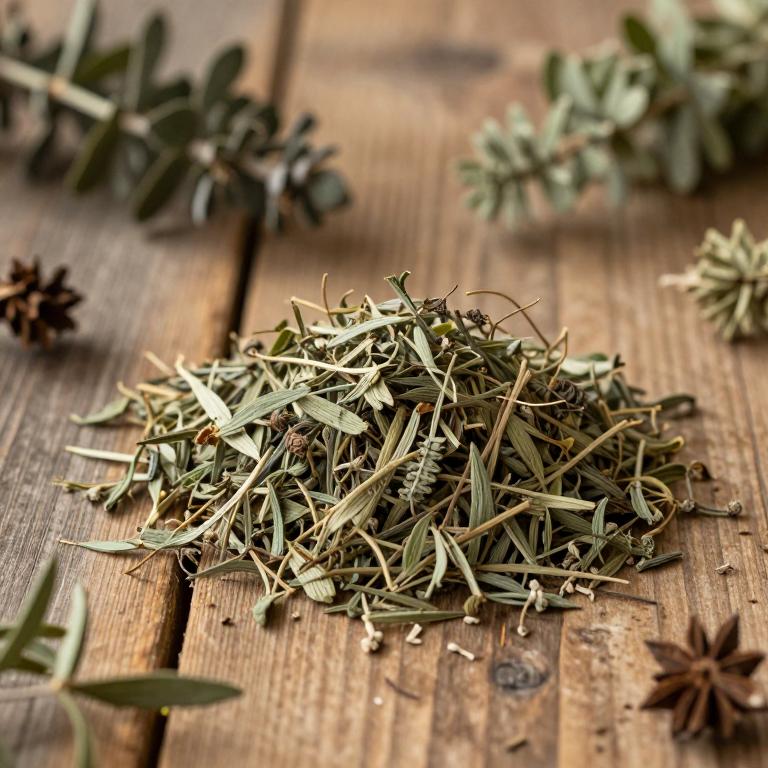
Spiked Centaury, scientifically known as Schenkia spicata, is a delicate, flowering herbaceous plant native to various regions. Often found in grassy habitats, it is characterized by its slender stems and small, white, star-shaped blooms. This botanical species is valued in ethnobotany for its unique presence within diverse ecosystems.
- Family
- Gentianaceae
- Native range
- Europe
- Parts used
- Not available
- Common names
- Spiked Centaury
- Scientific synonyms
- Centaurium Babylonicum · Centaurium Spicatum Var. Brachyanthum · 17 more
Names and Synonyms
Common Names
- Spiked Centaury
Scientific Names
Accepted name
Schenkia spicataSynonyms
- Centaurium babylonicum
- Centaurium spicatum var. brachyanthum
- Erythraea spicata f. albiflora
- Erythraea pickeringii
- Erythraea subspicata
- Centaurium emporitanum
- Libadion spiciferum
- Schenkia spicata var. tamanica
- Erythraea spicata
- Schenkia spicata var. ramosissima
- Gentiana spicata
- Erythraea babylonica
- Chironia spicata
- Hippion spicatum
- Centaurium spicatum
- Centaurium spicatum var. condensatum
- Centaurium subspicatum
- Erythraea spicata var. tamanica
- Erythraea spicata var. ramosissima
Regional and Traditional Names
German:
- Ähriges Tausendgüldenkraut
French:
- Centaurée en épi
Sources: Wikidata, Catalogue of Life
Taxonomical Classification
This plant belongs to the kingdom Plantae and is classified under the phylum Streptophyta within the class Equisetopsida. It is further categorized under the subclass Magnoliidae and the order Gentianales. Finally, it is a member of the family Gentianaceae and is identified by the genus Schenkia.
| Rank | Classification |
|---|---|
| Kingdom | Plantae |
| Phylum | Streptophyta |
| Class | Equisetopsida |
| Subclass | Magnoliidae |
| Order | Gentianales |
| Family | Gentianaceae |
| Genus | Schenkia |
Sources: The World Checklist of Vascular Plants (WCVP)
Distribution
This plant exhibits a specific geographical distribution primarily concentrated within Southwestern Europe. Its presence is documented across several distinct Mediterranean regions, including the islands of Baleares and Sardegna. Additionally, it can be found growing in the territory of Corse. The species also inhabits parts of mainland France. Finally, its range extends further west into the coastal areas of Portugal.
| Region | Area |
|---|---|
| Southwestern Europe | Baleares |
| Southwestern Europe | Corse |
| Southwestern Europe | France |
| Southwestern Europe | Portugal |
| Southwestern Europe | Sardegna |
| Southwestern Europe | Spain |
| Southeastern Europe | Bulgaria |
| Southeastern Europe | Greece |
| Southeastern Europe | Italy |
| Southeastern Europe | Kriti |
Sources: The World Checklist of Vascular Plants (WCVP)
Botanical Identification
Ecology
The ecology of Schenkia spicata is characterized by its preference for dense secondary shrubland and rude-ral vegetation, where it thrives amidst disturbed or regrowth habitats. This species is typically found at a mean elevation of 1200 m AMSL, occupying specific altitudinal niches within its ecosystem.
- Elevational range mean:
- 1200 m AMSL
- Habitat :
- dense secondary shrub and ruderal vegetation
Life history
The life history of Schenkia spicata is characterized by its classification as an annual plant, meaning it completes its entire developmental cycle—from germination to seed production—within a single growing season. In terms of its structural growth strategy and survival mechanism, it is categorized as a therophyte, a life form defined by plants that survive unfavorable seasons as ephemeral seeds rather than through persistent vegetative structures. This strategy allows the species to rapidly exploit favorable environmental conditions before retreating into a dormant seed state to endure periods of stress.
- Life form :
- therophyte
- Lifecycle :
- annual
Morphology
The morphology of Schenkia spicata is characterized by its growth form as a non-woody herb and forb. This plant is primarily terrestrial in its ecological habit, though it can exist within aquatic and semiaquatic environments. It functions as an independent organism, neither acting as a parasite nor an epiphyte, as it maintains a terrestrial lifestyle. Structurally, the plant is self-supporting rather than being a climber, liana, or vine. It is a diminutive species, with a plant height that ranges from a minimum of 0.02 m to a maximum of 0.5 m.
- Aquatic :
- terrestrial
- Climber :
- self-supporting
- Epiphyte :
- terrestrial
- Growth form :
- herb
- Growth form :
- forb
- Parasite :
- independent
- Plant height max:
- 0.5 m
- Plant height min:
- 0.02 m
- Woodiness :
- non-woody
Physiology
The physiology of Schenkia spicata is characterized by its specific morphological adaptations, particularly regarding its foliar dimensions which play a critical role in its photosynthetic efficiency and moisture regulation. The leaves exhibit a notable range of variability in size, with lengths typically spanning from a minimum of 1 cm to a maximum of 3 cm. Complementing this longitudinal variation, the leaf width is relatively narrow and constrained, measuring between a minimum of 0.4 cm and a maximum of 1 cm. This specific ratio of length to width suggests a specialized surface-area-to-volume relationship, likely adapted to optimize gas exchange and light interception within its specific ecological niche.
- Leaf length max:
- 3 cm
- Leaf length min:
- 1 cm
- Leaf width max:
- 1 cm
- Leaf width min:
- 0.4 cm
Reproduction
The reproduction of Schenkia spicata is characterized by a specific flowering season that begins in May and extends through October, though the timing can be variable depending on environmental conditions. Following pollination, the plant develops fruit in the form of a capsule. These capsules are relatively small, with a length ranging from a minimum of 1 cm to a maximum of 1.5 cm, and a width that varies between 0.2 cm and 0.3 cm. Once the fruit has reached maturity, it undergoes a dehiscence process, meaning the capsule is dehiscence to release its seeds.
- Dehiscence :
- dehiscent
- Flowering time :
- May
- Flowering time :
- Oct
- Fruit length max:
- 1.5 cm
- Fruit length min:
- 1 cm
- Fruit type :
- capsule
- Fruit width max:
- 0.3 cm
- Fruit width min:
- 0.2 cm
Sources: Global Inventory of Floras and Traits (GIFT)
Chemicals
Schenkia spicata has 2 reported phytochemicals identified across 0 scientific publications and several other databases. The most consistently reported chemicals include Iridoids, polyphenols.
| Chemical | Supporting sources | Consensus |
|---|---|---|
| Iridoids | 1 supporting sources | ★☆☆☆☆ |
| polyphenols | 1 supporting sources | ★☆☆☆☆ |
Iridoids
- Pharmaceuticals (Basel, Switzerland)
polyphenols
- Pharmaceuticals (Basel, Switzerland)
Activities
Schenkia spicata has 2 reported activities identified across 0 scientific publications and several other databases. The most consistently reported activities include Antimicrobial, Antioxidant.
| Activity | Supporting sources | Consensus |
|---|---|---|
| Antimicrobial | 1 supporting sources | ★☆☆☆☆ |
| Antioxidant | 1 supporting sources | ★☆☆☆☆ |
Antimicrobial
- Pharmaceuticals (Basel, Switzerland)
Antioxidant
- Pharmaceuticals (Basel, Switzerland)
Preparations
Schenkia spicata has 1 reported preparations identified across 0 scientific publications and several other databases. The most consistently reported preparations include Ethanol-water-based extraction procedures.
| Preparation | Supporting sources | Consensus |
|---|---|---|
| Ethanol-water-based extraction procedures | 1 supporting sources | ★☆☆☆☆ |
Ethanol-water-based extraction procedures
- Pharmaceuticals (Basel, Switzerland)