Shepherd's needle
Scandix pecten-veneris · Accepted scientific name
Scientific literature: Very Sparse (9 studies) · ★☆☆☆☆
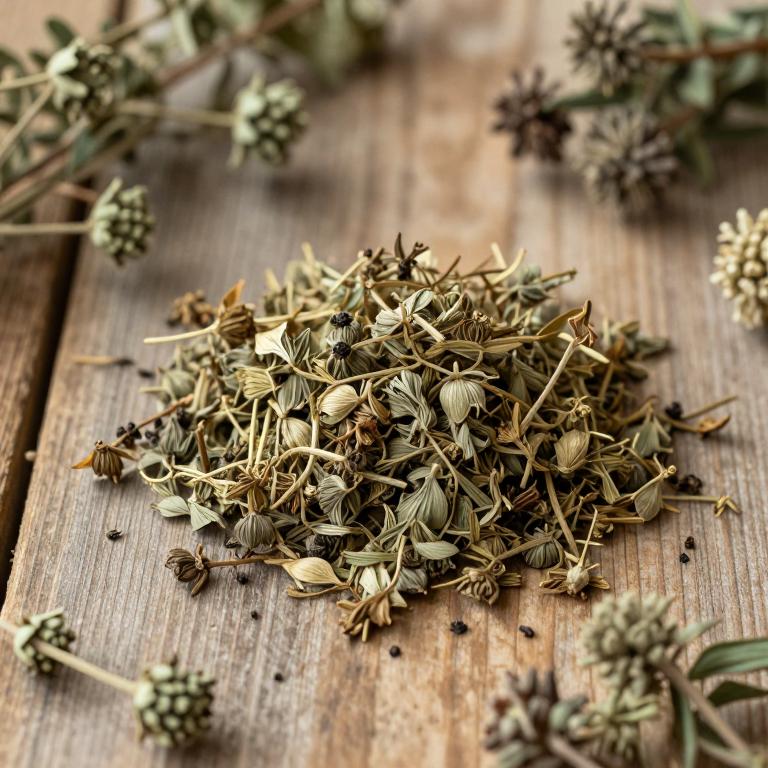
Shepherd's needle, scientifically known as Scandix pecten-veneris, is a delicate biennial herb characterized by its distinctive, comb-like seed pods. Often found in meadows and disturbed soils, this botanical specimen has been utilized historically in traditional medicine for its purported anti-inflammatory and diuretic properties, though modern clinical research remains limited.
Names and Synonyms
Common Names
- Venus'-comb
- shepherd's-needle
- Sheperd's needle
- Shepherd's Needle
- Venus's-comb
- venus' needle
Scientific Names
Accepted name
Scandix pecten-venerisSynonyms
- Chaerophyllum pecten-veneris
- Selinum pecten-veneris
- Wylia pecten-veneris
- Myrrhis pecten-veneris
Regional and Traditional Names
Spanish:
- aguja de pastor
- Peine de Venus
German:
- Venuskamm
- Gewöhnlicher Nadelkerbel
- Venuskamm
- Venuskamm-Nadelkerbel
- Gewöhnlicher Venuskamm
French:
- Scandix peigne de Vénus
- peine de vénus
- peigne-de-Vénus
- scandix peigne de Vénus
- Scandix peigne de Venus
Sources: Wikidata, Catalogue of Life
Taxonomical Classification
This plant belongs to the kingdom Plantae and the phylum Streptophyta, falling under the class Equisetopsida and subclass Magnoliidae. Within the order Apiales, it is classified under the family Apiaceae. Finally, it is identified by its specific genus, Scandix.
| Rank | Classification |
|---|---|
| Kingdom | Plantae |
| Phylum | Streptophyta |
| Class | Equisetopsida |
| Subclass | Magnoliidae |
| Order | Apiales |
| Family | Apiaceae |
| Genus | Scandix |
Sources: The World Checklist of Vascular Plants (WCVP)
Distribution
This plant exhibits a wide distribution across several regions of the European continent. In Northern Europe, it can be found growing in Denmark, Sweden, Great Britain, and Ireland. Its presence also extends into Middle Europe, specifically within the borders of Austria. These locations highlight its ability to thrive in various temperate climates. Consequently, the species maintains a significant foothold across both northern and central territories.
| Region | Area |
|---|---|
| Northern Europe | Denmark |
| Northern Europe | Great Britain |
| Northern Europe | Ireland |
| Northern Europe | Sweden |
| Middle Europe | Austria |
| Middle Europe | Belgium |
| Middle Europe | Czechia-Slovakia |
| Middle Europe | Germany |
| Middle Europe | Hungary |
| Middle Europe | Netherlands |
Sources: The World Checklist of Vascular Plants (WCVP)
Botanical Identification
Ecology
The ecology of Scandix pecten-veneris is characterized by its ability to thrive across a broad vertical gradient, occupying an elevational range that extends from sea level (0 m AMSL) up to a maximum of 3000 m AMSL. This species exhibits significant adaptability to various anthropogenic and disturbed landscapes, frequently colonizing habitats such as cropfields, oldfields, and parks. Its presence in these environments suggests a preference for open, sunlit areas where soil disturbance provides favorable conditions for establishment and growth.
- Elevational range max:
- 3000 m AMSL
- Elevational range min:
- 0 m AMSL
- Habitat :
- cropfields,oldfields,parks
Life history
The life history of Scandix pecten-veneris is characterized by its existence as an annual plant, meaning it completes its entire developmental cycle from germination to seed production within a single growing season. As a therophyte, its survival strategy relies on completing its life cycle rapidly and persisting through unfavorable conditions primarily in the form of seeds. This specific life form dictates that the plant's perennating organs are located within the seed, allowing it to evade seasonal stress. Regarding its vegetative state, the species is categorized as evergreen, maintaining its physiological presence throughout its active growth phase before the season concludes.
- Deciduousness :
- evergreen
- Life form :
- therophyte
- Lifecycle :
- annual
Morphology
The morphology of Scandix pecten-veneris is characterized by its growth form as a non-woody herb, specifically classified as a forb. This self-supporting plant does not function as a climber or a liana, nor does it exhibit parasitic or epiphytic behavior, maintaining an independent lifestyle in terrestrial habitats. In terms of stature, it is a relatively small plant with a height that varies between a minimum of 0.1 m and a maximum of 0.6 m, maintaining an average plant height of approximately 0.233 m.
- Aquatic :
- terrestrial
- Climber :
- self-supporting
- Epiphyte :
- terrestrial
- Growth form :
- herb
- Growth form :
- forb
- Parasite :
- independent
- Plant height max:
- 0.6 m
- Plant height mean:
- 0.233 m
- Plant height min:
- 0.1 m
- Woodiness :
- non-woody
Physiology
The physiology of Scandix pecten-veneris is characterized by a C3 photosynthetic pathway, which dictates its metabolic processes and carbon fixation strategies. The plant is non-carnivorous, relying on traditional soil-based nutrient uptake rather than insectivory. Its foliage exhibits specific morphological and physiological dimensions, featuring linear leaf forms with a mean leaf size of 8.3577 cm². The leaf dimensions vary, with lengths ranging from a minimum of 3 cm to a maximum of 5 cm, while the width fluctuates between a minimum of 1.5 cm and a maximum of 3 cm. Furthermore, the plant maintains a mean Specific Leaf Area (SLA) of 183.93 cm²/g, a value that reflects its leaf mass per area and provides insight into its resource allocation and light-harvesting efficiency.
- Carnivory :
- non-carnivorous
- Leaf form :
- linear
- Leaf length max:
- 5 cm
- Leaf length min:
- 3 cm
- Leaf size mean:
- 8.3577 cm²
- Leaf width max:
- 3 cm
- Leaf width min:
- 1.5 cm
- Photosynthetic pathway :
- C3
- Specific Leaf Area (SLA) mean:
- 183.93 cm²/g
Reproduction
The reproduction of Scandix pecten-veneris is characterized by a sexual process, as asexual reproduction is absent. The flowering phase typically begins in May and concludes in June, featuring small, white flowers arranged in an umbel inflorescence. These individual flowers range in length from 0.2 cm to 0.45 cm. The pollination syndrome is classified as biotic, specifically relying on insects to facilitate the transfer of pollen. Following successful pollination, which can occur through self-fertilization, the plant develops fruits that measure between 5 cm and 8 cm in length, with a width ranging from 0.17 cm to 0.22 cm. The resulting seeds are quite small, with a mean mass of approximately 0.0147 g, though they can vary from a minimum of 0.00671 g to a maximum of 0.02557 g. Dispersal of the seeds follows a zoochorous syndrome, specifically utilizing epizoochory, where the seeds are dispersed by attaching to animals.
- Dispersal syndrome :
- zoochorous
- Dispersal syndrome :
- epizoochorous
- Flower colour :
- white
- Flower length max:
- 0.45 cm
- Flower length min:
- 0.2 cm
- Flowering time :
- May
- Flowering time :
- Jun
- Fruit length max:
- 8 cm
- Fruit length min:
- 5 cm
- Fruit width max:
- 0.22 cm
- Fruit width min:
- 0.17 cm
- Inflorescence :
- umbel
- Pollination syndrome :
- insect
- Pollination syndrome :
- biotic
- Reproduction asexual :
- absent
- Seed mass max:
- 0.02557 g
- Seed mass mean:
- 0.014737423 g
- Seed mass min:
- 0.00671 g
- Self fertilization :
- present
Sources: Global Inventory of Floras and Traits (GIFT)
Chemicals
Scandix pecten-veneris has 3 reported phytochemicals identified across 0 scientific publications and several other databases. The most consistently reported chemicals include Flavonoids, Tannins, polyphenols.
| Chemical | Supporting sources | Consensus |
|---|---|---|
| Flavonoids | 1 supporting sources | ★☆☆☆☆ |
| Tannins | 1 supporting sources | ★☆☆☆☆ |
| polyphenols | 1 supporting sources | ★☆☆☆☆ |
Flavonoids
- Journal of Zhejiang University. Science. B
Tannins
- Journal of Zhejiang University. Science. B
polyphenols
- Journal of Zhejiang University. Science. B
Activities
Scandix pecten-veneris has 4 reported activities identified across 0 scientific publications and several other databases. The most consistently reported activities include Antimicrobial, Antimutagenic, Antioxidant, Mutagenic.
| Activity | Supporting sources | Consensus |
|---|---|---|
| Antimicrobial | 1 supporting sources | ★☆☆☆☆ |
| Antimutagenic | 1 supporting sources | ★☆☆☆☆ |
| Antioxidant | 1 supporting sources | ★☆☆☆☆ |
| Mutagenic | 1 supporting sources | ★☆☆☆☆ |
Antimicrobial
- Cellular and molecular biology (Noisy-le-Grand, France)
Antimutagenic
- Cellular and molecular biology (Noisy-le-Grand, France)
Antioxidant
- Cellular and molecular biology (Noisy-le-Grand, France)
Mutagenic
- Cellular and molecular biology (Noisy-le-Grand, France)
Conditions
Scandix pecten-veneris has 2 reported investigations on conditions identified across 0 scientific publications and several other databases. The most consistently reported conditions include cancer, infectious diseases.
| Condition | Supporting sources | Consensus |
|---|---|---|
| Cancer | 1 supporting sources | ★☆☆☆☆ |
| Infectious diseases | 1 supporting sources | ★☆☆☆☆ |
Cancer
- Cellular and molecular biology (Noisy-le-Grand, France)
Infectious diseases
- Cellular and molecular biology (Noisy-le-Grand, France)