pincushion flower
Scabiosa · Accepted scientific name
Scientific literature: Very Sparse (8 studies) · ★☆☆☆☆
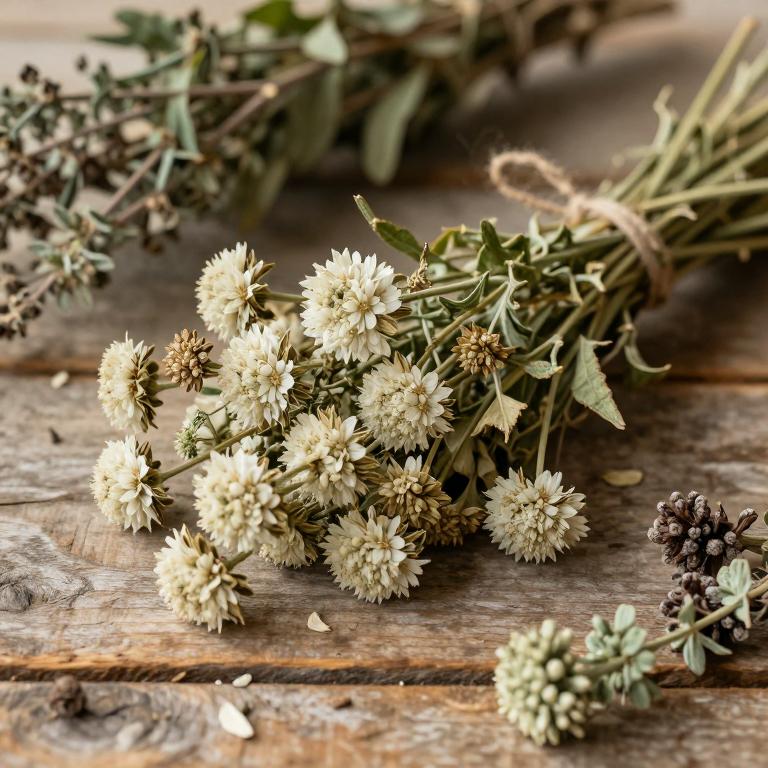
Pincushion flower, scientifically known as Scabiosa, is a charming perennial prized for its intricate, dome-shaped blooms. Often used in traditional medicine to treat skin ailments and inflammation, these resilient plants attract pollinators like butterflies. Their elegant texture and long blooming season make them a versatile addition to any garden.
Names and Synonyms
Common Names
- scabious
- Pincushion flowers
- pincushions
Scientific Names
Accepted name
ScabiosaSynonyms
- Euptilia
- Cyrtostemma
- Acura
- Scabiosella
- Spongostemma
- Sixalix
- Sclerostemma
- Gonokeros
- Columbaria
- Trochocephalus
- Anisodens
- Asterocephalus
- Pentena
Regional and Traditional Names
Spanish:
- Tremastelma
- Lomelosia
- Pycnocomon
- Sixalix
- Pseudoscabiosa
- Scabiosiopsis
- Flores del Acerico
- Flores del Acerico
German:
- Skabiosen
- Skabiose
- Skabiose
- Skabiosen
French:
- scabieuse
- Scabieuses
- Scabieuses "vraies"
- Scabieuses
Sources: Wikidata, Catalogue of Life
Taxonomical Classification
This plant belongs to the kingdom Plantae and the phylum Streptophyta, falling under the class Equisetopsida and subclass Magnoliidae. Within the order Dipsacales, it is classified under the family Caprifoliaceae. Finally, the medicinal species is categorized under the genus Scabiosa.
| Rank | Classification |
|---|---|
| Kingdom | Plantae |
| Phylum | Streptophyta |
| Class | Equisetopsida |
| Subclass | Magnoliidae |
| Order | Dipsacales |
| Family | Caprifoliaceae |
| Genus | Scabiosa |
Sources: The World Checklist of Vascular Plants (WCVP)
Distribution
This plant exhibits a diverse geographical distribution across several European regions. In Northern Europe, it can be found growing in Denmark, Great Britain, and Sweden. Its presence also extends into Middle Europe, where it is documented in Austria. Additionally, the species is located within the borders of Belgium. Together, these locations highlight the plant's ability to thrive in various European climates.
| Region | Area |
|---|---|
| Northern Europe | Denmark |
| Northern Europe | Great Britain |
| Northern Europe | Sweden |
| Middle Europe | Austria |
| Middle Europe | Belgium |
| Middle Europe | Czechia-Slovakia |
| Middle Europe | Germany |
| Middle Europe | Hungary |
| Middle Europe | Netherlands |
| Middle Europe | Poland |
Sources: The World Checklist of Vascular Plants (WCVP)
Activities
Scabiosa has 6 reported activities identified across 0 scientific publications and several other databases. The most consistently reported activities include Antihyperglycemic, Antimicrobial, Antioxidant, Antitumor, Antiviral.
| Activity | Supporting sources | Consensus |
|---|---|---|
| Antihyperglycemic | 1 supporting sources | ★☆☆☆☆ |
| Antimicrobial | 1 supporting sources | ★☆☆☆☆ |
| Antioxidant | 1 supporting sources | ★☆☆☆☆ |
| Antitumor | 1 supporting sources | ★☆☆☆☆ |
| Antiviral | 1 supporting sources | ★☆☆☆☆ |
| Hepatoprotective | 1 supporting sources | ★☆☆☆☆ |
Antihyperglycemic
- Chemistry & biodiversity
Antimicrobial
- Chemistry & biodiversity
Antioxidant
- Chemistry & biodiversity
Antitumor
- Chemistry & biodiversity
Antiviral
- Chemistry & biodiversity
Hepatoprotective
- Chemistry & biodiversity
Conditions
Scabiosa has 2 reported investigations on conditions identified across 0 scientific publications and several other databases. The most consistently reported conditions include respiratory infections, wound healing.
| Condition | Supporting sources | Consensus |
|---|---|---|
| Respiratory infections | 1 supporting sources | ★☆☆☆☆ |
| Wound healing | 1 supporting sources | ★☆☆☆☆ |
Respiratory infections
- Chemistry & biodiversity
Wound healing
- Chemistry & biodiversity