Scabiosa tschiliensis
Scabiosa tschiliensis · Accepted scientific name
Scientific literature: Very Sparse (12 studies) · ★☆☆☆☆
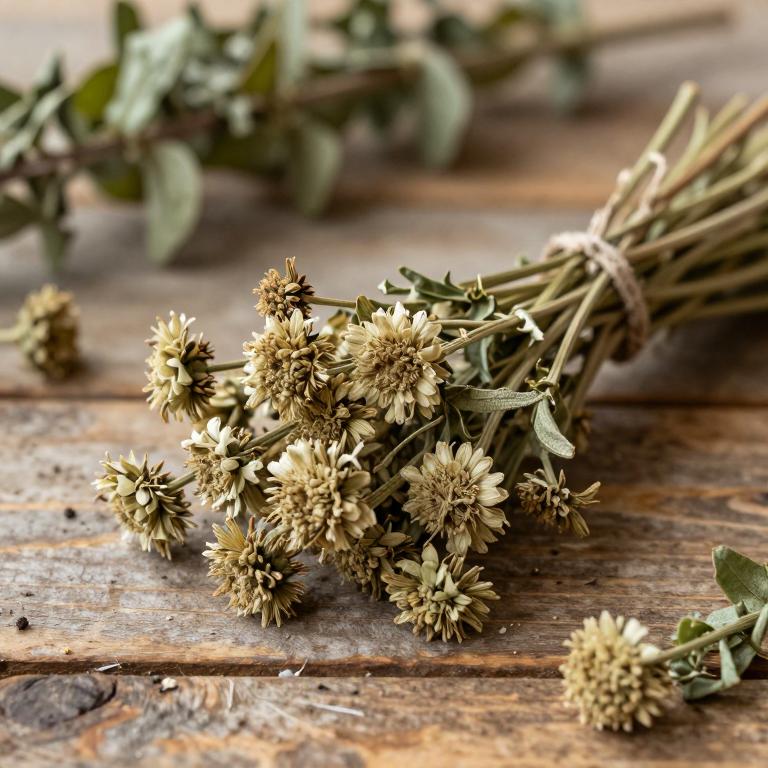
Scabiosa tschiliensis, scientifically known as Scabiosa tschiliensis, is a resilient medicinal herb valued in traditional healing practices. Native to arid regions, this plant is recognized for its therapeutic properties, often utilized to address skin ailments and inflammatory conditions. Its unique botanical characteristics make it a significant subject of ethnobotanical study.
- Family
- Caprifoliaceae
- Native range
- Asia-Temperate
- Parts used
- Not available
- Common names
- Not available
- Scientific synonyms
- Trochocephalus Superbus · Trochocephalus Tschiliensis · 5 more
Names and Synonyms
Scientific Names
Accepted name
Scabiosa tschiliensisSynonyms
- Trochocephalus superbus
- Trochocephalus tschiliensis
- Scabiosa japonica subsp. tschiliensis
- Scabiosa superba
- Scabiosa japonica var. tschiliensis
- Scabiosa tschiliensis var. superba
- Scabiosa tschiliensis f. albiflora
Sources: Wikidata
Taxonomical Classification
This plant belongs to the kingdom Plantae and the phylum Streptophyta, situated within the class Equisetopsida and subclass Magnoliidae. It is classified under the order Dipsacales and the family Caprifoliaceae, falling specifically under the genus Scabiosa.
| Rank | Classification |
|---|---|
| Kingdom | Plantae |
| Phylum | Streptophyta |
| Class | Equisetopsida |
| Subclass | Magnoliidae |
| Order | Dipsacales |
| Family | Caprifoliaceae |
| Genus | Scabiosa |
Sources: The World Checklist of Vascular Plants (WCVP)
Distribution
This plant exhibits a specific geographical distribution across several regions within China. It can be found growing in the expansive territories of Inner Mongolia. Additionally, the species is documented to inhabit the Manchuria region. Its presence also extends into the areas of China North-Central. These locations collectively define the primary natural range for Scabiosa tschiliensis.
| Region | Area |
|---|---|
| China | Inner Mongolia |
| China | Manchuria |
| China | China North-Central |
Sources: The World Checklist of Vascular Plants (WCVP)
Chemicals
Scabiosa tschiliensis has 11 reported phytochemicals identified across 0 scientific publications and several other databases. The most consistently reported chemicals include Scabiosaponin A, Scabiosaponin B, Scabiosaponin C, Scabiosaponin D, Scabiosaponin E.
| Chemical | Supporting sources | Consensus |
|---|---|---|
| Scabiosaponin A | 1 supporting sources | ★☆☆☆☆ |
| Scabiosaponin B | 1 supporting sources | ★☆☆☆☆ |
| Scabiosaponin C | 1 supporting sources | ★☆☆☆☆ |
| Scabiosaponin D | 1 supporting sources | ★☆☆☆☆ |
| Scabiosaponin E | 1 supporting sources | ★☆☆☆☆ |
| Scabiosaponin F | 1 supporting sources | ★☆☆☆☆ |
| Scabiosaponin G | 1 supporting sources | ★☆☆☆☆ |
| Scabiosaponin H | 1 supporting sources | ★☆☆☆☆ |
| Scabiosaponin I | 1 supporting sources | ★☆☆☆☆ |
| Scabiosaponin J | 1 supporting sources | ★☆☆☆☆ |
Scabiosaponin A
- Journal of natural products
Scabiosaponin B
- Journal of natural products
Scabiosaponin C
- Journal of natural products
Scabiosaponin D
- Journal of natural products
Scabiosaponin E
- Journal of natural products
Scabiosaponin F
- Journal of natural products
Scabiosaponin G
- Journal of natural products
Scabiosaponin H
- Journal of natural products
Scabiosaponin I
- Journal of natural products
Scabiosaponin J
- Journal of natural products
Preparations
Scabiosa tschiliensis has 1 reported preparations identified across 0 scientific publications and several other databases. The most consistently reported preparations include whole plants.
| Preparation | Supporting sources | Consensus |
|---|---|---|
| Whole plants | 1 supporting sources | ★☆☆☆☆ |
Whole plants
- Journal of natural products