Scabiosa arenaria
Scabiosa arenaria · Accepted scientific name
Scientific literature: Very Sparse (12 studies) · ★☆☆☆☆
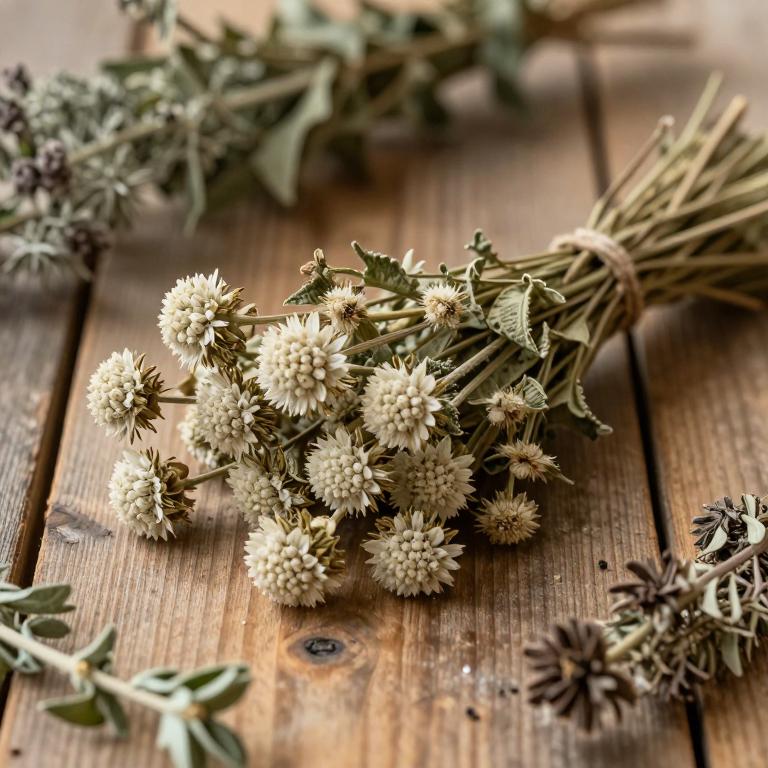
Scabiosa arenaria, scientifically known as Scabiosa arenaria, is a resilient perennial herb native to sandy coastal regions. Renowned for its delicate, pale blossoms, this medicinal plant is valued in traditional practices for its potential therapeutic properties, offering unique botanical insights into treating skin ailments and supporting overall wellness.
- Family
- Caprifoliaceae
- Native range
- Africa
- Parts used
- Flower
- Common names
- Not available
- Scientific synonyms
- Sixalix Arenaria · Asterocephalus Arenarius · 4 more
Names and Synonyms
Scientific Names
Accepted name
Scabiosa arenariaSynonyms
- Sixalix arenaria
- Asterocephalus arenarius
- Scabiosa leptopoda
- Scabiosa fenestrata
- Scabiosa rhizantha
- Scabiosa rhizantha var. ochroleuca
Sources: Wikidata
Taxonomical Classification
This plant belongs to the kingdom Plantae and is classified under the phylum Streptophyta within the class Equisetopsida. As a member of the subclass Magnoliidae and the order Dipsacales, it falls under the family Caprifoliaceae. Finally, it is specifically categorized under the genus Scabiosa.
| Rank | Classification |
|---|---|
| Kingdom | Plantae |
| Phylum | Streptophyta |
| Class | Equisetopsida |
| Subclass | Magnoliidae |
| Order | Dipsacales |
| Family | Caprifoliaceae |
| Genus | Scabiosa |
Sources: The World Checklist of Vascular Plants (WCVP)
Distribution
This plant, known as Scabiosa arenaria, is primarily distributed across the northern reaches of the African continent. Its presence is recorded in the coastal and inland regions of Morocco and Algeria. Additionally, the species can be found throughout the territories of Tunisia and Libya. The geographical range extends further east to include parts of Egypt. Collectively, these locations highlight its specific adaptation to the North African landscape.
| Region | Area |
|---|---|
| Northern Africa | Algeria |
| Northern Africa | Egypt |
| Northern Africa | Libya |
| Northern Africa | Morocco |
| Northern Africa | Tunisia |
| Western Asia | Palestine |
| Western Asia | Sinai |
Sources: The World Checklist of Vascular Plants (WCVP)
Botanical Identification
Life history
The life history of Scabiosa arenaria is characterized by an annual lifecycle, meaning the plant completes its entire biological progression—from germination and vegetative growth to flowering and seed production—within a single growing season. As an annual species, it relies on the successful production and dispersal of seeds to ensure the survival of the next generation, as the individual plant does not persist through multiple years. This rapid developmental cycle is typically synchronized with seasonal environmental cues, allowing the plant to exploit specific windows of resource availability in its habitat before the onset of unfavorable conditions.
- Lifecycle :
- annual
Morphology
The morphology of Scabiosa arenaria is characterized by its classification as a non-woody herb that exhibits a self-supporting growth habit, rather than acting as a climber. This plant is independent in its nutritional requirements, functioning as a non-parasitic organism. Regarding its ecological niche and habitat preference, it is primarily terrestrial, though it can exist within a spectrum that includes semiaquatic and aquatic environments.
- Aquatic :
- terrestrial
- Climber :
- self-supporting
- Growth form :
- herb
- Parasite :
- independent
- Woodiness :
- non-woody
Sources: Global Inventory of Floras and Traits (GIFT)
Plant Parts
Scabiosa arenaria has 1 reported plant parts identified across 1 scientific publications and several other databases that are studied for medicinal purposes. The most consistently reported plant part include flower.
| Plant part | Supporting sources | Consensus |
|---|---|---|
| Flower | 1 supporting sources | ★☆☆☆☆ |
Flower
- The Journal of pharmacy and pharmacology
Chemicals
Scabiosa arenaria has 6 reported phytochemicals identified across 1 scientific publications and several other databases. The most consistently reported chemicals include Apigenin 7-O-glucoside, CINNAMIC ACID, Luteolin 7-O-glucopyranoside, Luteolin 7-O-glucoside, OLEANOLIC ACID.
| Chemical | Supporting sources | Consensus |
|---|---|---|
| Apigenin 7-O-glucoside | 1 supporting sources | ★☆☆☆☆ |
| CINNAMIC ACID | 1 supporting sources | ★☆☆☆☆ |
| Luteolin 7-O-glucopyranoside | 1 supporting sources | ★☆☆☆☆ |
| Luteolin 7-O-glucoside | 1 supporting sources | ★☆☆☆☆ |
| OLEANOLIC ACID | 1 supporting sources | ★☆☆☆☆ |
| luteolin | 1 supporting sources | ★☆☆☆☆ |
Apigenin 7-O-glucoside
- The Journal of pharmacy and pharmacology
CINNAMIC ACID
- International journal of biological macromolecules
Luteolin 7-O-glucopyranoside
- Chemistry & biodiversity
Luteolin 7-O-glucoside
- The Journal of pharmacy and pharmacology
OLEANOLIC ACID
- Chemistry & biodiversity
luteolin
- The Journal of pharmacy and pharmacology
Conditions
Scabiosa arenaria has 5 reported investigations on conditions identified across 1 scientific publications and several other databases. The most consistently reported conditions include Candida albicans, Escherichia coli, Pseudomonas aeruginosa, diabetic complications, type 2 diabetes mellitus.
| Condition | Supporting sources | Consensus |
|---|---|---|
| Candida albicans | 1 supporting sources | ★☆☆☆☆ |
| Escherichia coli | 1 supporting sources | ★☆☆☆☆ |
| Pseudomonas aeruginosa | 1 supporting sources | ★☆☆☆☆ |
| Diabetic complications | 1 supporting sources | ★☆☆☆☆ |
| Type 2 diabetes mellitus | 1 supporting sources | ★☆☆☆☆ |
Candida albicans
- Chemistry & biodiversity
Escherichia coli
- Chemistry & biodiversity
Pseudomonas aeruginosa
- Chemistry & biodiversity
Diabetic complications
- International journal of biological macromolecules
Type 2 diabetes mellitus
- International journal of biological macromolecules
Preparations
Scabiosa arenaria has 1 reported preparations identified across 1 scientific publications and several other databases. The most consistently reported preparations include ethyl acetate fraction.
| Preparation | Supporting sources | Consensus |
|---|---|---|
| Ethyl acetate fraction | 1 supporting sources | ★☆☆☆☆ |
Ethyl acetate fraction
- The Journal of pharmacy and pharmacology