Saussurea salicifolia
Saussurea salicifolia · Accepted scientific name
Scientific literature: Very Sparse (8 studies) · ★☆☆☆☆
Saussurea salicifolia, is a resilient perennial herb native to the high-altitude alpine regions of the Himalayas. Renowned in traditional medicine, particularly within Tibetan practices, this botanical species is valued for its therapeutic properties. It is often utilized to treat inflammatory conditions and respiratory ailments, showcasing remarkable medicinal potential.
- Family
- Asteraceae
- Native range
- Asia-Temperate
- Parts used
- Not available
- Common names
- Not available
- Scientific synonyms
- Heterotrichum Leptophyllum · Serratula Salicifolia · 1 more
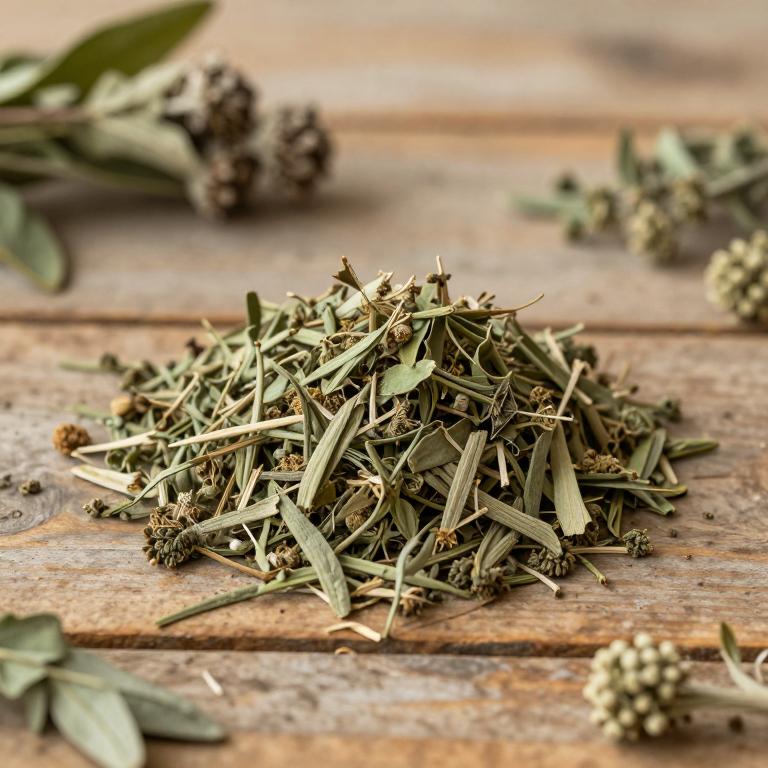
Names and Synonyms
Scientific Names
Accepted name
Saussurea salicifoliaSynonyms
- Heterotrichum leptophyllum
- Serratula salicifolia
- Theodorea salicifolia
Sources: Wikidata, Catalogue of Life
Taxonomical Classification
This plant belongs to the kingdom Plantae and is classified under the phylum Streptophyta within the class Equisetopsida. As a member of the subclass Magnoliidae and the order Asterales, it is further categorized into the family Asteraceae. Finally, it is identified by the genus Saussurea, specifically as the species Saussurea salicifolia.
| Rank | Classification |
|---|---|
| Kingdom | Plantae |
| Phylum | Streptophyta |
| Class | Equisetopsida |
| Subclass | Magnoliidae |
| Order | Asterales |
| Family | Asteraceae |
| Genus | Saussurea |
Sources: The World Checklist of Vascular Plants (WCVP)
Distribution
This plant exhibits a widespread presence across several key regions within the vast landscape of Siberia. Specifically, its habitat includes the mountainous terrain of the Altai region. It is also found throughout the territory of Buryatia, stretching across the eastern parts of the continent. The distribution continues through the Chitа area, marking its presence in southeastern Siberia. Furthermore, the species is documented within the Irkutsk and Krasnoyarsk regions, completing its extensive geographical range.
| Region | Area |
|---|---|
| Siberia | Altay |
| Siberia | Buryatiya |
| Siberia | Chita |
| Siberia | Irkutsk |
| Siberia | Krasnoyarsk |
| Siberia | Tuva |
| Siberia | Yakutiya |
| China | China South-Central |
| China | Inner Mongolia |
| China | Manchuria |
Sources: The World Checklist of Vascular Plants (WCVP)
Botanical Identification
Ecology
The ecology of Saussurea salicifolia is characterized by its adaptation to high-altitude environments, where it thrives across a broad altitudinal gradient. The species is typically found at elevations ranging from a minimum of 1600 m AMSL to a maximum of 3800 m AMSL, with a mean elevational range centered around 2700 m AMSL. Its preferred habitats are diverse, encompassing alpine meadows, mountainous terrain, steppes, and various stony places. These varied microhabitats suggest a high degree of resilience to the rugged and often exposed conditions found in high-elevation ecosystems.
- Elevational range max:
- 3800 m AMSL
- Elevational range mean:
- 2700 m AMSL
- Elevational range min:
- 1600 m AMSL
- Habitat :
- meadows, mountains, steppe, stony places
Life history
The life history of Saussurea salicifolia is characterized by its nature as a perennial plant, meaning it persists through multiple growing seasons rather than completing its life cycle in a single year. This perennial lifestyle allows the species to establish a robust presence in its high-altitude habitats, where it undergoes seasonal cycles of dormancy and active growth. Throughout its lifespan, the plant focuses on developing a strong root system or rhizomatous structure to survive harsh environmental conditions, eventually producing flowering stalks during its reproductive phases. Unlike annuals or biennials, its long-term survival strategy enables it to accumulate resources over several years, ensuring a more stable contribution to the population through repeated reproductive efforts across its extended life history.
- Lifecycle :
- perennial
Morphology
The morphology of Saussurea salicifolia is characterized by its growth form as a non-woody herb, exhibiting a self-supporting structure without any climbing tendencies. This independent plant, which does not function as a parasite, typically reaches a height ranging from a minimum of 0.4 m to a maximum of 0.6 m. In terms of its habitat preference and moisture relationship, it is categorized across a spectrum of aquatic, semiaquatic, and terrestrial environments, though it maintains a robust herbaceous habit throughout its development.
- Aquatic :
- terrestrial
- Climber :
- self-supporting
- Growth form :
- herb
- Parasite :
- independent
- Plant height max:
- 0.6 m
- Plant height min:
- 0.4 m
- Woodiness :
- non-woody
Reproduction
The reproduction of Saussurea salicifolia is characterized by a sexual process facilitated by bisexual flowers, ensuring that both male and female reproductive organs are present within the same floral structure. The flowering period is seasonally constrained, typically commencing in July and concluding in August. Following pollination, the plant utilizes an anemochorous dispersal syndrome, relying on wind currents to transport its seeds across the landscape to facilitate colonization and expansion.
- Dispersal syndrome :
- anemochorous
- Flowering time :
- Jul
- Flowering time :
- Aug
- Reproduction sexual :
- bisexual
Sources: Global Inventory of Floras and Traits (GIFT)
Chemicals
Saussurea salicifolia has 7 reported phytochemicals identified across 0 scientific publications and several other databases. The most consistently reported chemicals include Arctigenin, Arctiin, Cynaropicrin, Matairesinol, Matairesinoside.
| Chemical | Supporting sources | Consensus |
|---|---|---|
| Arctigenin | 1 supporting sources | ★☆☆☆☆ |
| Arctiin | 1 supporting sources | ★☆☆☆☆ |
| Cynaropicrin | 1 supporting sources | ★☆☆☆☆ |
| Matairesinol | 1 supporting sources | ★☆☆☆☆ |
| Matairesinoside | 1 supporting sources | ★☆☆☆☆ |
| Trachelogenin | 1 supporting sources | ★☆☆☆☆ |
| Tracheloside | 1 supporting sources | ★☆☆☆☆ |
Arctigenin
- Biological & pharmaceutical bulletin
Arctiin
- Biological & pharmaceutical bulletin
Cynaropicrin
- Biological & pharmaceutical bulletin
Matairesinol
- Biological & pharmaceutical bulletin
Matairesinoside
- Biological & pharmaceutical bulletin
Trachelogenin
- Biological & pharmaceutical bulletin
Tracheloside
- Biological & pharmaceutical bulletin
Preparations
Saussurea salicifolia has 1 reported preparations identified across 0 scientific publications and several other databases. The most consistently reported preparations include ethanol extract.
| Preparation | Supporting sources | Consensus |
|---|---|---|
| Ethanol extract | 1 supporting sources | ★☆☆☆☆ |
Ethanol extract
- Biological & pharmaceutical bulletin