Saussurea involucrata
Saussurea involucrata · Accepted scientific name
Scientific literature: Moderate (136 studies) · ★★★☆☆
Scientifically known as Saussurea involucrata, is a rare, high-altitude perennial herb native to the Himalayan mountains. Often called "Snow Lotus," this precious medicinal plant is revered in traditional medicine for its potent antioxidant, anti-inflammatory, and immune-boosting properties, making it a highly valued component in various healing formulations.
- Family
- Asteraceae
- Native range
- Asia-Temperate
- Parts used
- Flower · Leaf
- Common names
- Not available
- Scientific synonyms
- Theodorea Involucrata · Saussurea Dorogostaiskii · 7 more
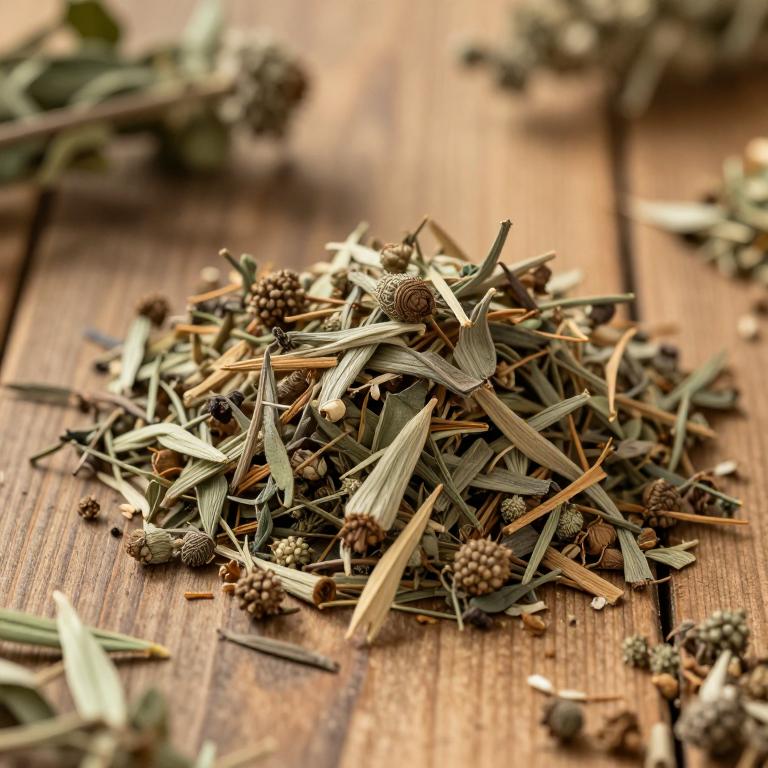
Names and Synonyms
Scientific Names
Accepted name
Saussurea involucrataSynonyms
- Theodorea involucrata
- Saussurea dorogostaiskii
- Aplotaxis involucrata
- Saussurea karelinii
- Haplotaxis involucrata
- Saussurea lioui
- Saussurea involucrata var. axillicalanthina
- Saussurea ischnoides
- Saussurea polylada
Sources: Wikidata, Catalogue of Life
Taxonomical Classification
This plant belongs to the kingdom Plantae and the phylum Streptophyta, falling under the class Equisetopsida and subclass Magnoliidae. Within the order Asterales, it is classified under the family Asteraceae. Finally, it is identified by the genus Saussurea.
| Rank | Classification |
|---|---|
| Kingdom | Plantae |
| Phylum | Streptophyta |
| Class | Equisetopsida |
| Subclass | Magnoliidae |
| Order | Asterales |
| Family | Asteraceae |
| Genus | Saussurea |
Sources: The World Checklist of Vascular Plants (WCVP)
Distribution
This plant is primarily found across the rugged high-altitude regions of northern and central Asia. In the vast expanse of Siberia, its presence is documented in the Altai and Tuva regions. Moving southward into Central Asia, the species occupies diverse mountainous landscapes. It can be specifically located within the territories of Kazakhstan and Kyrgyzstan. Additionally, its distribution extends into the unique environments of Uzbekistan.
| Region | Area |
|---|---|
| Siberia | Altay |
| Siberia | Tuva |
| Central Asia | Kazakhstan |
| Central Asia | Kirgizstan |
| Central Asia | Uzbekistan |
| China | China South-Central |
| China | Inner Mongolia |
| China | Manchuria |
| China | China North-Central |
| China | Qinghai |
Sources: The World Checklist of Vascular Plants (WCVP)
Botanical Identification
Ecology
The ecology of Saussurea involucrata is defined by its preference for high-altitude environments, specifically thriving within an elevational range that typically begins at 2,400 m AMSL. It is most commonly found at a mean elevation of 2,935 m AMSL, reaching its upper altitudinal limit at approximately 3,470 m AMSL. This species occupies specialized niches characterized by harsh, high-mountain conditions, specifically inhabiting gravelly and stony slopes, screes, and alpine meadows. These habitats provide the necessary drainage and mineral-rich substrate required for its survival in fragile alpine ecosystems.
- Elevational range max:
- 3470 m AMSL
- Elevational range mean:
- 2935 m AMSL
- Elevational range min:
- 2400 m AMSL
- Habitat :
- Gravelly and stony slopes, screes, alpine meadows.
Life history
The life history of Saussurea involucrata is characterized by a perennial lifecycle, allowing the plant to persist in its harsh, high-altitude alpine habitats over many years. As a perennial herb, it avoids the vulnerability of completing its cycle in a single season, instead developing robust structures that can withstand extreme temperature fluctuations and heavy snow cover. The plant typically spends much of its existence in a vegetative state, slowly accumulating nutrients and building a substantial root system to support its eventual reproductive efforts. When environmental conditions are favorable, it transitions into a flowering phase, producing distinctive inflorescences protected by large, petal-like involucral bracts. Following successful pollination, the plant produces seeds that contribute to the next generation, after which the individual returns to a vegetative period, continuing its long-term survival through the cyclic patterns of the mountain ecosystem.
- Lifecycle :
- perennial
Morphology
The morphology of Saussurea involucrata is characterized by its growth form as a non-woody herb, specifically classified as a herb and a forb. This species functions as an independent organism, meaning it is not a parasite, and maintains a self-supporting structure rather than acting as a climber. As a terrestrial plant, it grows in land-based habitats with a height that varies significantly depending on environmental conditions; individual specimens typically range from a minimum height of 0.1 m to a maximum height of 1 m, with an average plant height of approximately 0.25 m.
- Aquatic :
- terrestrial
- Climber :
- self-supporting
- Growth form :
- herb
- Parasite :
- independent
- Plant height max:
- 1 m
- Plant height mean:
- 0.25 m
- Plant height min:
- 0.1 m
- Woodiness :
- non-woody
Physiology
The physiological development of the foliage in Saussurea involucrata is characterized by specific morphological dimensions that reflect its adaptation to high-altitude environments. The leaves exhibit a distinct range of sizes, with a mean leaf length of 6.25 cm, fluctuating between a minimum of 5.5 cm and a maximum of 7 cm. Correspondingly, the leaf width demonstrates significant variability, maintaining a mean width of 4.5 cm, while the actual breadth of the foliage ranges from a minimum of 2 cm to a maximum of 7 cm. These dimensional parameters suggest a structural plasticity in the leaf tissue, allowing the plant to manage its surface area in response to varying light intensities and moisture availability in its natural habitat.
- Leaf length max:
- 7 cm
- Leaf length mean:
- 6.25 cm
- Leaf length min:
- 5.5 cm
- Leaf width max:
- 7 cm
- Leaf width mean:
- 4.5 cm
- Leaf width min:
- 2 cm
Reproduction
The reproduction of Saussurea involucrata is characterized by a bisexual sexual reproductive system, ensuring that individual flowers contain both male and female organs. The flowering period occurs during the summer months, typically starting in July and concluding in August. Following fertilization, the plant produces small fruits that maintain a highly consistent size, with a minimum, mean, and maximum length all measured at approximately 0.3 cm. The dispersal of these fruits follows an anemochorous syndrome, meaning they are specialized for dispersal via wind.
- Dispersal syndrome :
- anemochorous
- Flowering time :
- Jul
- Flowering time :
- Aug
- Fruit length max:
- 0.3 cm
- Reproduction sexual :
- bisexual
Sources: Global Inventory of Floras and Traits (GIFT)
Plant Parts
Saussurea involucrata has 3 reported plant parts identified across 3 scientific publications and several other databases that are studied for medicinal purposes. The most consistently reported plant part include flower, leaf, root.
| Plant part | Supporting sources | Consensus |
|---|---|---|
| Flower | 1 supporting sources | ★☆☆☆☆ |
| Leaf | 1 supporting sources | ★☆☆☆☆ |
| Root | 1 supporting sources | ★☆☆☆☆ |
Flower
- Cellular and molecular biology (Noisy-le-Grand, France)
Leaf
- Zhong yao cai = Zhongyaocai = Journal of Chinese medicinal materials
Root
- Plant cell reports
Chemicals
Saussurea involucrata has 40 reported phytochemicals identified across 3 scientific publications and several other databases. The most consistently reported chemicals include Flavonoids, RUTIN, Syringin, 1,5-Dicaffeoylquinic acid, CHLOROGENIC ACID.
| Chemical | Supporting sources | Consensus |
|---|---|---|
| Flavonoids | 6 supporting sources | ★★★☆☆ |
| RUTIN | 6 supporting sources | ★★★☆☆ |
| Syringin | 6 supporting sources | ★★★☆☆ |
| 1,5-Dicaffeoylquinic acid | 2 supporting sources | ★☆☆☆☆ |
| CHLOROGENIC ACID | 2 supporting sources | ★☆☆☆☆ |
| Hispidulin | 2 supporting sources | ★☆☆☆☆ |
| Lignans | 2 supporting sources | ★☆☆☆☆ |
| Steroids | 2 supporting sources | ★☆☆☆☆ |
| 3-Dehydrogamabufotalin | 1 supporting sources | ★☆☆☆☆ |
| 3-dehydroscillarenin | 1 supporting sources | ★☆☆☆☆ |
Flavonoids
- Journal of ethnopharmacology
- Zhong yao cai = Zhongyaocai = Journal of Chinese medicinal materials
- Genes
- Zhongguo Zhong yao za zhi = Zhongguo zhongyao zazhi = China journal of Chinese materia medica
- Phytochemistry
View 1 additional sources
- BMC plant biology
RUTIN
- Plant cell reports
- Zhong yao cai = Zhongyaocai = Journal of Chinese medicinal materials
- Chemistry & biodiversity
- Botanical studies
- Zhongguo Zhong yao za zhi = Zhongguo zhongyao zazhi = China journal of Chinese materia medica
View 1 additional sources
- PloS one
Syringin
- Plant cell reports
- Botanical studies
- Journal of pharmaceutical and biomedical analysis
- Yao xue xue bao = Acta pharmaceutica Sinica
- Zhongguo Zhong yao za zhi = Zhongguo zhongyao zazhi = China journal of Chinese materia medica
View 1 additional sources
- PloS one
1,5-Dicaffeoylquinic acid
- Journal of pharmaceutical and biomedical analysis
- Zhongguo Zhong yao za zhi = Zhongguo zhongyao zazhi = China journal of Chinese materia medica
CHLOROGENIC ACID
- Zhongguo Zhong yao za zhi = Zhongguo zhongyao zazhi = China journal of Chinese materia medica
- PloS one
Hispidulin
- Journal of traditional and complementary medicine
- Plant cell reports
Lignans
- Journal of ethnopharmacology
- Zhongguo Zhong yao za zhi = Zhongguo zhongyao zazhi = China journal of Chinese materia medica
Steroids
- Journal of ethnopharmacology
- Zhongguo Zhong yao za zhi = Zhongguo zhongyao zazhi = China journal of Chinese materia medica
3-Dehydrogamabufotalin
- Phytochemistry
3-dehydroscillarenin
- Phytochemistry
Activities
Saussurea involucrata has 6 reported activities identified across 3 scientific publications and several other databases. The most consistently reported activities include Analgesic, Antioxidant, Antitumor, Apoptotic, Cytotoxic.
| Activity | Supporting sources | Consensus |
|---|---|---|
| Analgesic | 2 supporting sources | ★☆☆☆☆ |
| Antioxidant | 2 supporting sources | ★☆☆☆☆ |
| Antitumor | 1 supporting sources | ★☆☆☆☆ |
| Apoptotic | 1 supporting sources | ★☆☆☆☆ |
| Cytotoxic | 1 supporting sources | ★☆☆☆☆ |
| Neuroprotective | 1 supporting sources | ★☆☆☆☆ |
Analgesic
- Journal of ethnopharmacology
- Asian Pacific journal of cancer prevention : APJCP
Antioxidant
- Advanced healthcare materials
- Journal of ethnopharmacology
Antitumor
- Journal of ethnopharmacology
Apoptotic
- Asian Pacific journal of cancer prevention : APJCP
Cytotoxic
- Asian Pacific journal of cancer prevention : APJCP
Neuroprotective
- Journal of ethnopharmacology
Conditions
Saussurea involucrata has 19 reported investigations on conditions identified across 3 scientific publications and several other databases. The most consistently reported conditions include inflammation, altitude sickness, analgesia, anthrax, aplastic anemia.
| Condition | Supporting sources | Consensus |
|---|---|---|
| Inflammation | 3 supporting sources | ★★☆☆☆ |
| Altitude sickness | 1 supporting sources | ★☆☆☆☆ |
| Analgesia | 1 supporting sources | ★☆☆☆☆ |
| Anthrax | 1 supporting sources | ★☆☆☆☆ |
| Aplastic anemia | 1 supporting sources | ★☆☆☆☆ |
| Arthritis | 1 supporting sources | ★☆☆☆☆ |
| Breast cancer | 1 supporting sources | ★☆☆☆☆ |
| Cardiovascular diseases | 1 supporting sources | ★☆☆☆☆ |
| Dysmenorrhea | 1 supporting sources | ★☆☆☆☆ |
| Gout | 1 supporting sources | ★☆☆☆☆ |
Inflammation
- Journal of ethnopharmacology
- Cellular and molecular biology (Noisy-le-Grand, France)
- International journal of biological macromolecules
Altitude sickness
- Journal of ethnopharmacology
Analgesia
- Zhongguo Zhong yao za zhi = Zhongguo zhongyao zazhi = China journal of Chinese materia medica
Anthrax
- Journal of ethnopharmacology
Aplastic anemia
- Zhongguo Zhong yao za zhi = Zhongguo zhongyao zazhi = China journal of Chinese materia medica
Arthritis
- Journal of ethnopharmacology
Breast cancer
- Phytochemistry
Cardiovascular diseases
- Botanical studies
Dysmenorrhea
- Journal of ethnopharmacology
Gout
- Journal of ethnopharmacology
Preparations
Saussurea involucrata has 16 reported preparations identified across 3 scientific publications and several other databases. The most consistently reported preparations include cell suspension cultures, S. involucrata cell cultures, Saussurea involucrata ethanol extract, Saussurea involucrata extract (SIE), Saussurea involucrata polysaccharide (SIP).
| Preparation | Supporting sources | Consensus |
|---|---|---|
| Cell suspension cultures | 2 supporting sources | ★☆☆☆☆ |
| S. involucrata cell cultures | 1 supporting sources | ★☆☆☆☆ |
| Saussurea involucrata ethanol extract | 1 supporting sources | ★☆☆☆☆ |
| Saussurea involucrata extract (sie) | 1 supporting sources | ★☆☆☆☆ |
| Saussurea involucrata polysaccharide (sip) | 1 supporting sources | ★☆☆☆☆ |
| Botanical drug | 1 supporting sources | ★☆☆☆☆ |
| Dried flowers | 1 supporting sources | ★☆☆☆☆ |
| Ethanol extract | 1 supporting sources | ★☆☆☆☆ |
| Ethanolic extract of a hairy root culture | 1 supporting sources | ★☆☆☆☆ |
| Extract | 1 supporting sources | ★☆☆☆☆ |
Cell suspension cultures
- Yao xue xue bao = Acta pharmaceutica Sinica
- Phytochemistry
S. involucrata cell cultures
- Chemistry & biodiversity
Saussurea involucrata ethanol extract
- Asian Pacific journal of cancer prevention : APJCP
Saussurea involucrata extract (sie)
- Asian Pacific journal of cancer prevention : APJCP
Saussurea involucrata polysaccharide (sip)
- International journal of biological macromolecules
Botanical drug
- Zhongguo Zhong yao za zhi = Zhongguo zhongyao zazhi = China journal of Chinese materia medica
Dried flowers
- Cellular and molecular biology (Noisy-le-Grand, France)
Ethanol extract
- Asian Pacific journal of cancer prevention : APJCP
Ethanolic extract of a hairy root culture
- Plant cell reports
Extract
- Journal of ethnopharmacology