lizard's tail
Saururus cernuus · Accepted scientific name
Scientific literature: Very Sparse (13 studies) · ★☆☆☆☆
Lizard's tail, scientifically known as Saururus cernuus, is a unique perennial aquatic plant native to wetlands. Characterized by its distinctive spike-like white flowers, it thrives in marshes and slow-moving waters. Historically utilized in traditional medicine, this resilient species serves as a fascinating botanical specimen for ecological and therapeutic study.
- Family
- Saururaceae
- Native range
- Europe
- Parts used
- Not available
- Common names
- Lizard'S-Tail · Water-Dragon
- Scientific synonyms
- Neobiondia Silvestrii · Mattuschkia Aquatica · 1 more
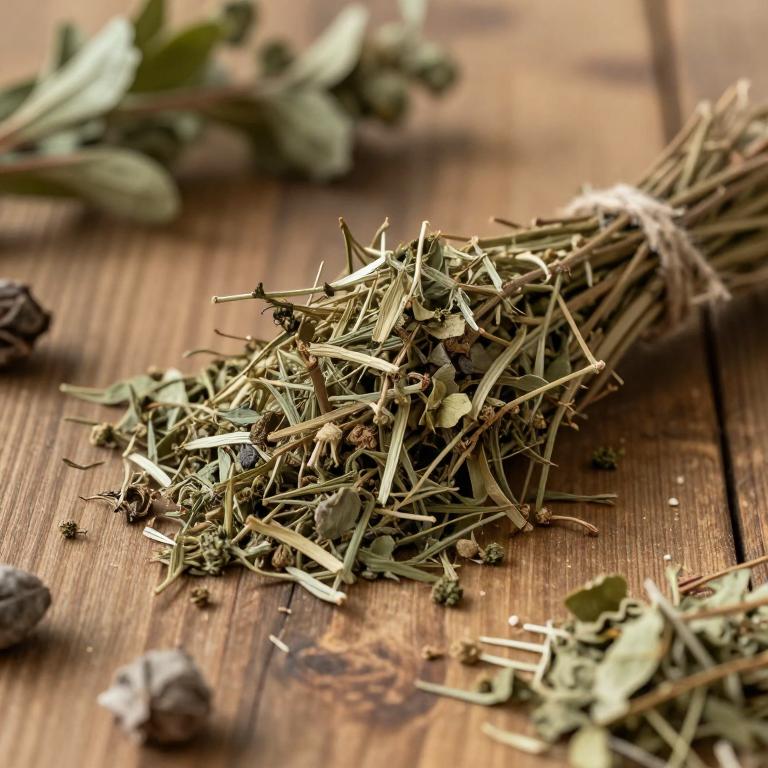
Names and Synonyms
Common Names
- lizard's-tail
- water-dragon
Scientific Names
Accepted name
Saururus cernuusSynonyms
- Neobiondia silvestrii
- Mattuschkia aquatica
- Saururus cernuus f. submersus
Regional and Traditional Names
German:
- Eidechsenschwanz
- Amerikanischer Molchschwanz
French:
- lézardelle penchée
- saurure penché
- saurure penchée
Sources: Wikidata, Catalogue of Life
Taxonomical Classification
This plant belongs to the kingdom Plantae and the phylum Streptophyta, falling under the class Equisetopsida and subclass Magnoliidae. It is classified within the order Piperales and the family Saururaceae. Finally, it is identified by the genus Saururus.
| Rank | Classification |
|---|---|
| Kingdom | Plantae |
| Phylum | Streptophyta |
| Class | Equisetopsida |
| Subclass | Magnoliidae |
| Order | Piperales |
| Family | Saururaceae |
| Genus | Saururus |
Sources: The World Checklist of Vascular Plants (WCVP)
Distribution
This plant exhibits a broad geographical distribution spanning across several different continents and regions. In Northern Europe, its presence can be documented within the borders of Great Britain. Moving into Middle Europe, it is found growing in Germany, while its reach extends to Southwestern Europe in both France and Corse. Finally, its range stretches across the Atlantic to include the province of Ontario in Eastern Canada.
| Region | Area |
|---|---|
| Northern Europe | Great Britain |
| Middle Europe | Germany |
| Southwestern Europe | Corse |
| Southwestern Europe | France |
| Eastern Canada | Ontario |
| Eastern Canada | Québec |
| North-Central U.S.A. | Illinois |
| North-Central U.S.A. | Kansas |
| North-Central U.S.A. | Missouri |
| North-Central U.S.A. | Oklahoma |
Sources: The World Checklist of Vascular Plants (WCVP)
Botanical Identification
Life history
The life history of Saururus cernuus is characterized by its classification as a perennial plant, allowing it to persist through multiple growing seasons. As a geophyte, it maintains its survival by utilizing underground storage organs to endure unfavorable conditions, facilitating its regrowth in subsequent years. This life cycle enables the species to establish stable populations within its typical wetland habitats, relying on its perennial nature to navigate seasonal environmental shifts.
- Life form :
- geophyte
- Lifecycle :
- perennial
Morphology
The morphology of Saururus cernuus is characterized by its growth form as a non-woody herb and forb, functioning as an independent organism rather than a parasite or epiphyte. It is a self-supporting plant that does not exhibit climbing behavior, such as a liana or vine, and maintains a terrestrial to semiaquatic lifestyle. The plant reaches a maximum height of approximately 1.4 m, supported by its non-woody structural framework.
- Aquatic :
- terrestrial
- Climber :
- self-supporting
- Epiphyte :
- terrestrial
- Growth form :
- herb
- Growth form :
- forb
- Parasite :
- independent
- Plant height max:
- 1.4 m
- Woodiness :
- non-woody
Physiology
The physiology of Saururus cernuus is characterized by a specialized metabolic framework adapted to its typically wetland or riparian habitats. As a member of the C3 photosynthetic pathway group, the plant utilizes the Calvin cycle to fix atmospheric carbon dioxide, a process that occurs directly within the mesophyll cells without the spatial or temporal separation seen in other pathways. This C3 mechanism is highly efficient in the moist, shaded, or partially sunlit environments where the species thrives, allowing for optimal gas exchange and water use under high humidity conditions. Beyond its carbon fixation strategy, the plant's physiological processes are closely tied to its ability to manage moisture levels and nutrient uptake in saturated soils, supporting the robust growth of its herbaceous structure and the development of its distinctive terminal racemes.
- Photosynthetic pathway :
- C3
Reproduction
Reproduction in Saururus cernuus is driven by its flowering cycle, which occurs during the peak of the warm season. The flowering period specifically begins in July and concludes in August, marking the window for its reproductive activity. During this time, the plant produces its distinctive inflorescences, facilitating the necessary processes for seed production and genetic exchange.
- Flowering time :
- Jul
- Flowering time :
- Aug
Sources: Global Inventory of Floras and Traits (GIFT)
Chemicals
Saururus cernuus has 5 reported phytochemicals identified across 0 scientific publications and several other databases. The most consistently reported chemicals include Anthraquinones, Flavonoids, Lignans, Phenols, Saponins.
| Chemical | Supporting sources | Consensus |
|---|---|---|
| Anthraquinones | 1 supporting sources | ★☆☆☆☆ |
| Flavonoids | 1 supporting sources | ★☆☆☆☆ |
| Lignans | 1 supporting sources | ★☆☆☆☆ |
| Phenols | 1 supporting sources | ★☆☆☆☆ |
| Saponins | 1 supporting sources | ★☆☆☆☆ |
Anthraquinones
- The American journal of Chinese medicine
Flavonoids
- The American journal of Chinese medicine
Lignans
- The American journal of Chinese medicine
Phenols
- The American journal of Chinese medicine
Saponins
- The American journal of Chinese medicine
Activities
Saururus cernuus has 1 reported activities identified across 0 scientific publications and several other databases. The most consistently reported activities include Antioxidant.
| Activity | Supporting sources | Consensus |
|---|---|---|
| Antioxidant | 1 supporting sources | ★☆☆☆☆ |
Antioxidant
- Journal of natural products
Conditions
Saururus cernuus has 6 reported investigations on conditions identified across 0 scientific publications and several other databases. The most consistently reported conditions include beriberi, edema, hypertension, jaundice, tumors.
| Condition | Supporting sources | Consensus |
|---|---|---|
| Beriberi | 1 supporting sources | ★☆☆☆☆ |
| Edema | 1 supporting sources | ★☆☆☆☆ |
| Hypertension | 1 supporting sources | ★☆☆☆☆ |
| Jaundice | 1 supporting sources | ★☆☆☆☆ |
| Tumors | 1 supporting sources | ★☆☆☆☆ |
| Urinary tract infections | 1 supporting sources | ★☆☆☆☆ |
Beriberi
- The American journal of Chinese medicine
Edema
- The American journal of Chinese medicine
Hypertension
- The American journal of Chinese medicine
Jaundice
- The American journal of Chinese medicine
Tumors
- The American journal of Chinese medicine
Urinary tract infections
- The American journal of Chinese medicine
Preparations
Saururus cernuus has 3 reported preparations identified across 0 scientific publications and several other databases. The most consistently reported preparations include essential oils, extract of Saururus cernuus, lipid extract.
| Preparation | Supporting sources | Consensus |
|---|---|---|
| Essential oils | 1 supporting sources | ★☆☆☆☆ |
| Extract of saururus cernuus | 1 supporting sources | ★☆☆☆☆ |
| Lipid extract | 1 supporting sources | ★☆☆☆☆ |
Essential oils
- Lloydia
Extract of saururus cernuus
- Journal of natural products
Lipid extract
- Journal of natural products