Satureja kitaibelii
Satureja kitaibelii · Accepted scientific name
Scientific literature: Very Sparse (11 studies) · ★☆☆☆☆
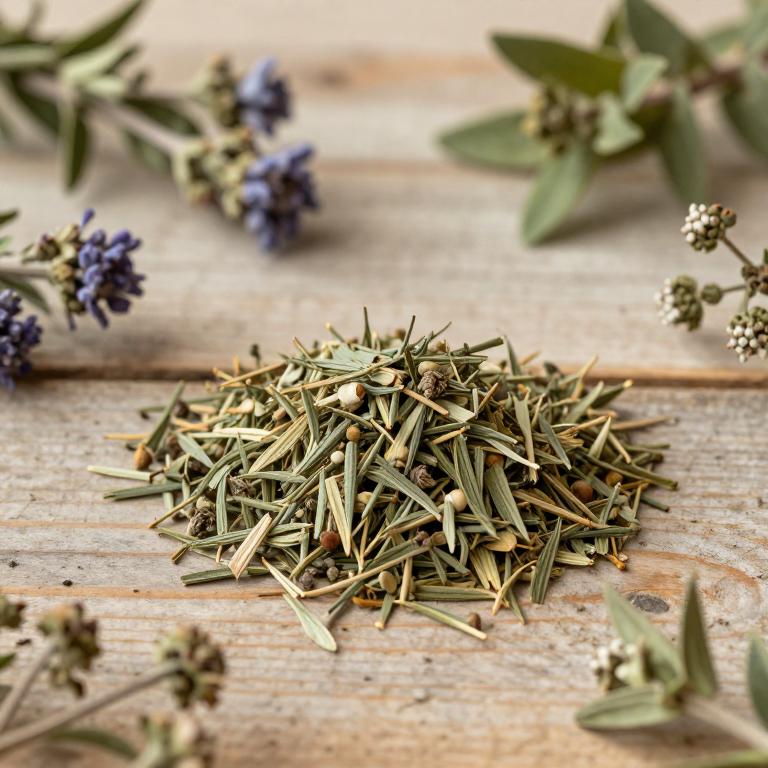
Saturaje, scientifically known as Saturaje kitaibelii, is a prominent medicinal plant deeply rooted in traditional Brazilian ethnobotany. Renowned for its potent bioactive properties, it is frequently utilized to treat inflammatory conditions, digestive issues, and various infections, offering a natural approach to wellness through its diverse phytochemical profile.
- Family
- Lamiaceae
- Native range
- Europe
- Parts used
- Not available
- Common names
- Not available
- Scientific synonyms
- Satureja Montana Var. Kitaibelii · Satureja Montana Subsp. Kitaibelii
Names and Synonyms
Scientific Names
Accepted name
Satureja kitaibeliiSynonyms
- Satureja montana var. kitaibelii
- Satureja montana subsp. kitaibelii
Sources: Wikidata, Catalogue of Life
Taxonomical Classification
This plant, Satureja kitaibelii, belongs to the kingdom Plantae and the phylum Streptophyta. It is classified within the class Equisetopsida and the subclass Magnoliidae, falling under the order Lamiales and the family Lamiaceae. Ultimately, its taxonomic identity is defined by its placement within the genus Satureja.
| Rank | Classification |
|---|---|
| Kingdom | Plantae |
| Phylum | Streptophyta |
| Class | Equisetopsida |
| Subclass | Magnoliidae |
| Order | Lamiales |
| Family | Lamiaceae |
| Genus | Satureja |
Sources: The World Checklist of Vascular Plants (WCVP)
Distribution
This plant, Satureja kitaibelii, exhibits a specific geographical range primarily located within Southeastern Europe. It can be found growing naturally in the country of Bulgaria. Additionally, its distribution extends into the territories of Romania. The species is also documented across the Northwestern Balkan Peninsula. Together, these regions define the core habitat for this medicinal herb.
| Region | Area |
|---|---|
| Southeastern Europe | Bulgaria |
| Southeastern Europe | Romania |
| Southeastern Europe | NW. Balkan Pen. |
Sources: The World Checklist of Vascular Plants (WCVP)
Botanical Identification
Life history
The life history of Satureja kitaibelii is characterized by its specific growth habit and survival strategy, classified under the life form of a chamaephyte. In terms of its ecological positioning, it functions as a chamaephyte, meaning its perennating buds are located close to or just above the soil surface, allowing it to withstand various environmental fluctuations. This classification is further refined by its structural classification as a chamaephyte, distinguishing its developmental trajectory from phanerophytes or therophytes. This life form enables the plant to maintain a low-profile presence, optimizing its resource acquisition and resilience within its native habitat.
- Life form :
- chamaephyte
Morphology
The morphology of Saturejia kitaibelii is characterized by its specialized growth habit and ecological positioning. The plant functions as a self-supporting climber, utilizing its structural development to ascend and navigate its environment. It is classified as an independent organism, meaning it does not exhibit parasitic behavior and maintains its own metabolic processes without relying on a host for nutrients. Furthermore, the species is strictly terrestrial in its habitat, growing from the ground rather than adopting an epiphytic existence on other plants.
- Climber :
- self-supporting
- Epiphyte :
- terrestrial
- Parasite :
- independent
Sources: Global Inventory of Floras and Traits (GIFT)
Chemicals
Satureja kitaibelii has 6 reported phytochemicals identified across 0 scientific publications and several other databases. The most consistently reported chemicals include Flavonoids, GERANIOL, Germacrene D, P-CYMENE, Rosmanol.
| Chemical | Supporting sources | Consensus |
|---|---|---|
| Flavonoids | 2 supporting sources | ★☆☆☆☆ |
| GERANIOL | 1 supporting sources | ★☆☆☆☆ |
| Germacrene D | 1 supporting sources | ★☆☆☆☆ |
| P-CYMENE | 1 supporting sources | ★☆☆☆☆ |
| Rosmanol | 1 supporting sources | ★☆☆☆☆ |
| rosmarinic acid | 1 supporting sources | ★☆☆☆☆ |
Flavonoids
- Scientific reports
- Plant foods for human nutrition (Dordrecht, Netherlands)
GERANIOL
- Molecules (Basel, Switzerland)
Germacrene D
- Molecules (Basel, Switzerland)
P-CYMENE
- Molecules (Basel, Switzerland)
Rosmanol
- Plant foods for human nutrition (Dordrecht, Netherlands)
rosmarinic acid
- Plant foods for human nutrition (Dordrecht, Netherlands)
Activities
Satureja kitaibelii has 1 reported activities identified across 0 scientific publications and several other databases. The most consistently reported activities include Antioxidant.
| Activity | Supporting sources | Consensus |
|---|---|---|
| Antioxidant | 1 supporting sources | ★☆☆☆☆ |
Antioxidant
- Plant foods for human nutrition (Dordrecht, Netherlands)
Preparations
Satureja kitaibelii has 3 reported preparations identified across 0 scientific publications and several other databases. The most consistently reported preparations include Ethanol extract of aerial parts, essential oil, ethanol extracts.
| Preparation | Supporting sources | Consensus |
|---|---|---|
| Ethanol extract of aerial parts | 1 supporting sources | ★☆☆☆☆ |
| Essential oil | 1 supporting sources | ★☆☆☆☆ |
| Ethanol extracts | 1 supporting sources | ★☆☆☆☆ |
Ethanol extract of aerial parts
- Plant foods for human nutrition (Dordrecht, Netherlands)
Essential oil
- Molecules (Basel, Switzerland)
Ethanol extracts
- Plant foods for human nutrition (Dordrecht, Netherlands)