Veitch's Bamboo
Sasa veitchii · Accepted scientific name
Scientific literature: Very Sparse (4 studies) · ★☆☆☆☆
Veitch's Bamboo, scientifically known as Sasa veietschii, is a versatile evergreen plant native to East Asia. Renowned for its medicinal properties, it is frequently used in traditional remedies to treat inflammation, skin ailments, and digestive issues. Its nutrient-rich leaves offer significant therapeutic potential in modern herbal pharmacology.
- Family
- Poaceae
- Native range
- Europe
- Parts used
- Leaf
- Common names
- Veitch'S Bamboo · Kuma Bamboo Grass
- Scientific synonyms
- Arundinaria Albomarginata · Arundinaria Veitchii · 3 more
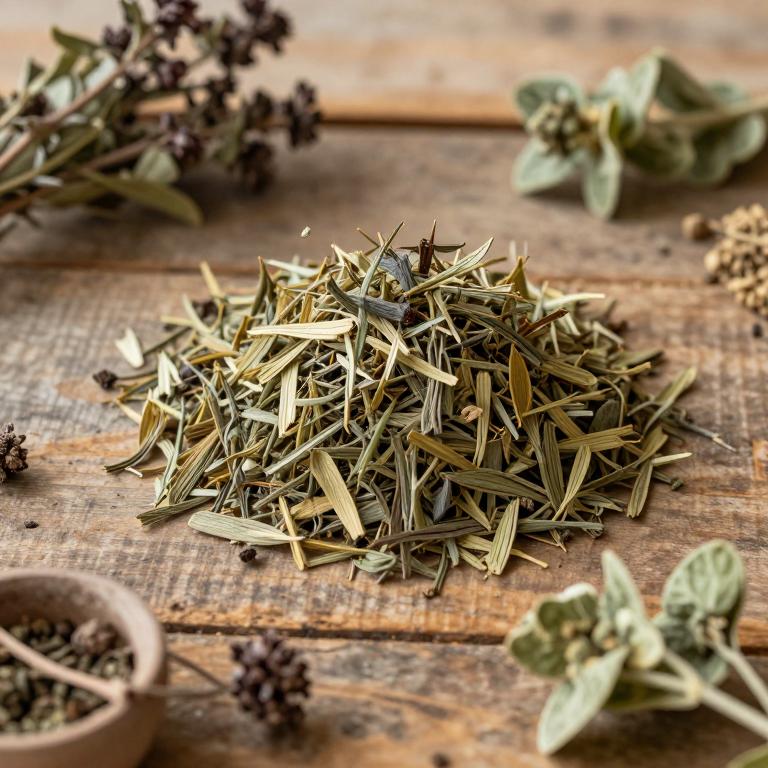
Names and Synonyms
Common Names
- Veitch's Bamboo
- kuma bamboo grass
Scientific Names
Accepted name
Sasa veitchiiSynonyms
- Arundinaria albomarginata
- Arundinaria veitchii
- Bambusa veitchii
- Bambusa senanensis var. albomarginata
- Sasa albomarginata
Sources: Wikidata, Catalogue of Life
Taxonomical Classification
This plant belongs to the kingdom Plantae and is classified under the phylum Streptophyta and the class Equisetopsida. Within the subclass Magnoliidae, it is further categorized under the order Poales and the family Poaceae. Ultimately, it is identified by the genus Sasa, specifically as the species Sasa veiitchii.
| Rank | Classification |
|---|---|
| Kingdom | Plantae |
| Phylum | Streptophyta |
| Class | Equisetopsida |
| Subclass | Magnoliidae |
| Order | Poales |
| Family | Poaceae |
| Genus | Sasa |
Sources: The World Checklist of Vascular Plants (WCVP)
Distribution
This plant exhibits a broad geographical distribution across several distinct regions of the northern hemisphere. In Northern Europe, its presence can be documented in both Great Britain and Ireland. Moving toward Southwestern Europe, the species is also found within the borders of France. Its range extends significantly eastward into the Russian Far East. Specifically, within this eastern territory, it inhabits both the Kuril Islands and Sakhalin.
| Region | Area |
|---|---|
| Northern Europe | Great Britain |
| Northern Europe | Ireland |
| Southwestern Europe | France |
| Russian Far East | Kuril Is. |
| Russian Far East | Sakhalin |
| Eastern Asia | Japan |
Sources: The World Checklist of Vascular Plants (WCVP)
Botanical Identification
Morphology
The morphology of Sasa veiitchii is characterized by a graminoid growth form, functioning as a non-woody herb. It is a self-supporting plant that does not exhibit climbing tendencies, such as being a liana or vine, nor does it require external support. As an independent organism, it does not act as a parasite and maintains a terrestrial habit rather than being aquatic, semiaquatic, or epiphytic.
- Aquatic :
- terrestrial
- Climber :
- self-supporting
- Epiphyte :
- terrestrial
- Growth form :
- herb
- Growth form :
- graminoid
- Parasite :
- independent
- Woodiness :
- non-woody
Sources: Global Inventory of Floras and Traits (GIFT)
Plant Parts
Sasa veitchii has 1 reported plant parts identified across 1 scientific publications and several other databases that are studied for medicinal purposes. The most consistently reported plant part include leaf.
| Plant part | Supporting sources | Consensus |
|---|---|---|
| Leaf | 1 supporting sources | ★☆☆☆☆ |
Leaf
- Journal of natural medicines
Chemicals
Sasa veitchii has 1 reported phytochemicals identified across 1 scientific publications and several other databases. The most consistently reported chemicals include Sodium copper chlorophyllin.
| Chemical | Supporting sources | Consensus |
|---|---|---|
| Sodium copper chlorophyllin | 1 supporting sources | ★☆☆☆☆ |
Sodium copper chlorophyllin
- Nagoya journal of medical science
Activities
Sasa veitchii has 2 reported activities identified across 1 scientific publications and several other databases. The most consistently reported activities include Antiallergic, Antitumor.
| Activity | Supporting sources | Consensus |
|---|---|---|
| Antiallergic | 1 supporting sources | ★☆☆☆☆ |
| Antitumor | 1 supporting sources | ★☆☆☆☆ |
Antiallergic
- International journal of medicinal mushrooms
Antitumor
- International journal of medicinal mushrooms
Preparations
Sasa veitchii has 4 reported preparations identified across 1 scientific publications and several other databases. The most consistently reported preparations include Leaf extract, bamboo water-soluble methanol precipitation (BWMP), extract, hot-water extract.
| Preparation | Supporting sources | Consensus |
|---|---|---|
| Leaf extract | 1 supporting sources | ★☆☆☆☆ |
| Bamboo water-soluble methanol precipitation (bwmp) | 1 supporting sources | ★☆☆☆☆ |
| Extract | 1 supporting sources | ★☆☆☆☆ |
| Hot-water extract | 1 supporting sources | ★☆☆☆☆ |
Leaf extract
- Journal of natural medicines
Bamboo water-soluble methanol precipitation (bwmp)
- International journal of medicinal mushrooms
Extract
- Nagoya journal of medical science
Hot-water extract
- International journal of medicinal mushrooms