Sarracenia rubra
Sarracenia rubra · Accepted scientific name
Scientific literature: Very Sparse (37 studies) · ★☆☆☆☆
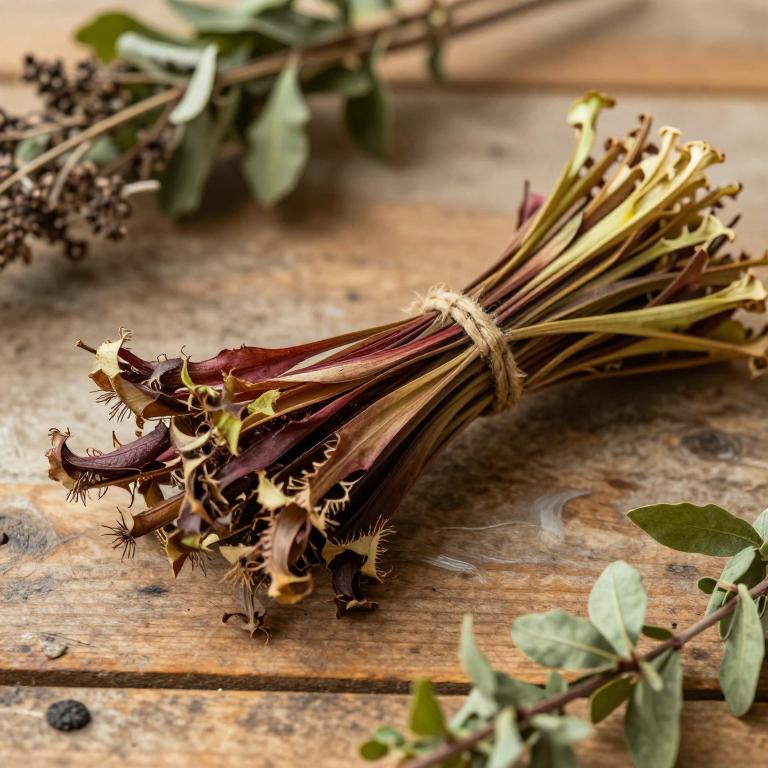
Sarracenia rubra, scientifically known as Sarracenia rubra, is a captivating carnivorous pitcher plant native to the wetlands of the southeastern United States. Renowned for its striking deep-red foliage and specialized trapping leaves, this species plays a vital ecological role by capturing and digesting insects to supplement nutrient-poor soils.
- Family
- Not available
- Native range
- Northern America
- Parts used
- Not available
- Common names
- Not available
- Scientific synonyms
- Not available
Names and Synonyms
Scientific Names
Accepted name
Sarracenia rubraDistribution
This plant, known as Sarracenia rubra, is primarily found throughout the Southeastern United States. Its natural habitat extends across several specific states within this lush region. Specifically, you can locate this species in the coastal plains of Alabama and Florida. It also maintains a presence within the borders of Georgia and North Carolina. Finally, its geographical range includes the landscape of South Carolina.
| Region | Area |
|---|---|
| Southeastern U.S.A. | Alabama |
| Southeastern U.S.A. | Florida |
| Southeastern U.S.A. | Georgia |
| Southeastern U.S.A. | North Carolina |
| Southeastern U.S.A. | South Carolina |
Sources: The World Checklist of Vascular Plants (WCVP)
Botanical Identification
Life history
The life history of Sarracenia rubra is characterized by a perennial lifecycle, allowing the plant to persist through multiple growing seasons and establish robust root systems within its native bog habitats. As a long-lived perennial, it undergoes seasonal cycles of growth and dormancy, typically emerging from underground rhizomes in the spring to produce new pitchers and foliage. This extended lifespan enables the plant to accumulate significant energy reserves, facilitating its ability to thrive in nutrient-poor environments where it relies on specialized structures for supplemental nutrition. Throughout its various stages of development, the plant maintains a consistent presence in its ecosystem, often occupying the same niche for many years, which provides stability for its slow-growing population.
- Lifecycle :
- perennial
Morphology
The morphology of Sarracenia rubra is characterized by its growth form as a non-woody herb, specifically categorized as a forb. It functions as an independent organism, exhibiting no parasitic or epiphytic tendencies, and is strictly terrestrial in its habitat rather than aquatic or semiaquatic. As a self-supporting plant, it does not possess any climbing, liana, or vine-like structures, maintaining a sturdy, upright stature.
- Aquatic :
- terrestrial
- Climber :
- self-supporting
- Epiphyte :
- terrestrial
- Growth form :
- herb
- Growth form :
- forb
- Parasite :
- independent
- Woodiness :
- non-woody
Reproduction
Reproduction in Sarracenia rubra involves a specialized process of sexual propagation via seed production, characterized by highly consistent physical properties in its progeny. The seeds produced by this species exhibit a uniform distribution in weight, with a recorded seed mass mean of 0.00176 g. This consistency is absolute across the observed samples, as both the maximum and minimum seed mass values are identical at 0.00176 g. Such precise uniformity in seed mass suggests a highly regulated developmental process during the maturation of the seeds within the plant's reproductive structures.
- Seed mass mean:
- 0.00176 g
Sources: Global Inventory of Floras and Traits (GIFT)
Chemicals
Sarracenia rubra has 3 reported phytochemicals identified across 0 scientific publications and several other databases. The most consistently reported chemicals include Astragalin, Foeniculin, Hyperoside.
| Chemical | Supporting sources | Consensus |
|---|---|---|
| Astragalin | 1 supporting sources | ★☆☆☆☆ |
| Foeniculin | 1 supporting sources | ★☆☆☆☆ |
| Hyperoside | 1 supporting sources | ★☆☆☆☆ |
Astragalin
- Dr. Duke
Foeniculin
- Dr. Duke
Hyperoside
- Dr. Duke
Activities
Sarracenia rubra has 34 reported activities identified across 0 scientific publications and several other databases. The most consistently reported activities include ACE-Inhibitor, Aldose-Reductase-Inhibitor, Analgesic, Antiaging, Antibacterial.
| Activity | Supporting sources | Consensus |
|---|---|---|
| ACE-Inhibitor | 1 supporting sources | ★☆☆☆☆ |
| Aldose-Reductase-Inhibitor | 1 supporting sources | ★☆☆☆☆ |
| Analgesic | 1 supporting sources | ★☆☆☆☆ |
| Antiaging | 1 supporting sources | ★☆☆☆☆ |
| Antibacterial | 1 supporting sources | ★☆☆☆☆ |
| Anticancer | 1 supporting sources | ★☆☆☆☆ |
| Anticapillary-Fragility | 1 supporting sources | ★☆☆☆☆ |
| Antidermatitic | 1 supporting sources | ★☆☆☆☆ |
| Antielastase | 1 supporting sources | ★☆☆☆☆ |
| Antiflu | 1 supporting sources | ★☆☆☆☆ |
ACE-Inhibitor
- Dr. Duke
Aldose-Reductase-Inhibitor
- Dr. Duke
Analgesic
- Dr. Duke
Antiaging
- Dr. Duke
Antibacterial
- Dr. Duke
Anticancer
- Dr. Duke
Anticapillary-Fragility
- Dr. Duke
Antidermatitic
- Dr. Duke
Antielastase
- Dr. Duke
Antiflu
- Dr. Duke