Sarracenia oreophila
Sarracenia oreophila · Accepted scientific name
Scientific literature: Very Sparse (32 studies) · ★☆☆☆☆
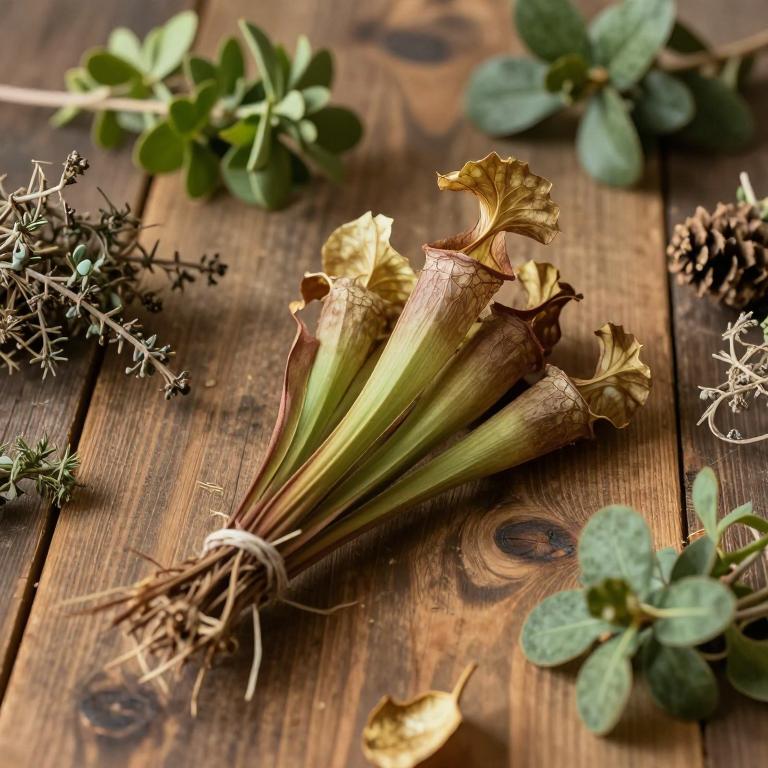
, scientifically known as Sarraceenia oreophila, is a rare carnivorous pitcher plant endemic to the boggy wetlands of the southeastern United States. Distinguished by its striking, colorful traps, this species captures insects to supplement nutrient-poor soils, making it a fascinating subject for botanical study and specialized horticultural conservation efforts.
- Family
- Not available
- Native range
- Northern America
- Parts used
- Not available
- Common names
- Not available
- Scientific synonyms
- Not available
Names and Synonyms
Scientific Names
Accepted name
Sarracenia oreophilaDistribution
This plant is a specialized carnivorous species found exclusively within the Southeastern United States. Its natural range is quite limited and restricted to specific wetland habitats. Within this region, it can be found growing in the state of Alabama. Additionally, its distribution extends into parts of Georgia. Finally, populations of this species are also documented in North Carolina.
| Region | Area |
|---|---|
| Southeastern U.S.A. | Alabama |
| Southeastern U.S.A. | Georgia |
| Southeastern U.S.A. | North Carolina |
Sources: The World Checklist of Vascular Plants (WCVP)
Botanical Identification
Life history
The life history of Sarracenia oreophila is characterized by a perennial lifecycle, allowing the plant to persist in its specialized habitats over many years. As a long-lived species, it does not rely on a single season of growth but instead establishes robust root systems and rhizomes that support continuous development and seasonal regrowth. This perennial nature enables the plant to navigate the fluctuating environmental conditions of the nutrient-poor bogs it inhabits, accumulating resources over multiple growing seasons to produce its distinctive carnivorous pitchers and reproductive structures. Through this extended lifespan, the species can maintain stable populations within its niche, contributing to its long-term survival and ecological role within its native range.
- Lifecycle :
- perennial
Morphology
The morphology of Sarracenia oreophila is characterized by its distinct growth form as a perennial forb, exhibiting a self-supporting habit that requires no external structures for vertical stability. As a non-climbing species, it maintains its structure through a robust rhizomatous base from which its specialized leaves emerge. The plant's most defining morphological feature is its modified leaves, which develop into upright, tubular, pitfall traps known as pitchers. These pitchers are typically elongated and cylindrical, featuring a specialized operculum (lid) and a peristome (rim) designed to facilitate the capture of insect prey. The overall architecture of the plant is compact yet vertical, with the foliage arising directly from the ground level to form a specialized carnivorous cluster.
- Climber :
- self-supporting
- Growth form :
- forb
Sources: Global Inventory of Floras and Traits (GIFT)
Chemicals
Sarracenia oreophila has 2 reported phytochemicals identified across 0 scientific publications and several other databases. The most consistently reported chemicals include Foeniculin, Hyperoside.
| Chemical | Supporting sources | Consensus |
|---|---|---|
| Foeniculin | 1 supporting sources | ★☆☆☆☆ |
| Hyperoside | 1 supporting sources | ★☆☆☆☆ |
Foeniculin
- Dr. Duke
Hyperoside
- Dr. Duke
Activities
Sarracenia oreophila has 30 reported activities identified across 0 scientific publications and several other databases. The most consistently reported activities include Aldose-Reductase-Inhibitor, Analgesic, Antiaging, Antibacterial, Anticancer.
| Activity | Supporting sources | Consensus |
|---|---|---|
| Aldose-Reductase-Inhibitor | 1 supporting sources | ★☆☆☆☆ |
| Analgesic | 1 supporting sources | ★☆☆☆☆ |
| Antiaging | 1 supporting sources | ★☆☆☆☆ |
| Antibacterial | 1 supporting sources | ★☆☆☆☆ |
| Anticancer | 1 supporting sources | ★☆☆☆☆ |
| Anticapillary-Fragility | 1 supporting sources | ★☆☆☆☆ |
| Antidermatitic | 1 supporting sources | ★☆☆☆☆ |
| Antielastase | 1 supporting sources | ★☆☆☆☆ |
| Antiflu | 1 supporting sources | ★☆☆☆☆ |
| Antihepatotoxic | 1 supporting sources | ★☆☆☆☆ |
Aldose-Reductase-Inhibitor
- Dr. Duke
Analgesic
- Dr. Duke
Antiaging
- Dr. Duke
Antibacterial
- Dr. Duke
Anticancer
- Dr. Duke
Anticapillary-Fragility
- Dr. Duke
Antidermatitic
- Dr. Duke
Antielastase
- Dr. Duke
Antiflu
- Dr. Duke
Antihepatotoxic
- Dr. Duke