prickly burnet
Sarcopoterium spinosum · Accepted scientific name
Scientific literature: Very Sparse (24 studies) · ★☆☆☆☆
Prickly burnet, scientifically known as Sarcopoterium spinosum, is a resilient, thorny shrub native to the Mediterranean region. Valued in traditional medicine, this hardy plant possesses diverse bioactive properties. Its various parts are utilized for their antioxidant and anti-inflammatory potential, offering promising applications in natural therapeutic treatments and wellness.
- Family
- Rosaceae
- Native range
- Europe
- Parts used
- Root
- Common names
- Spiny Burnet · Thorny Burnet
- Scientific synonyms
- Bencomia Spinosa · Sanguisorba Spinosa · 4 more
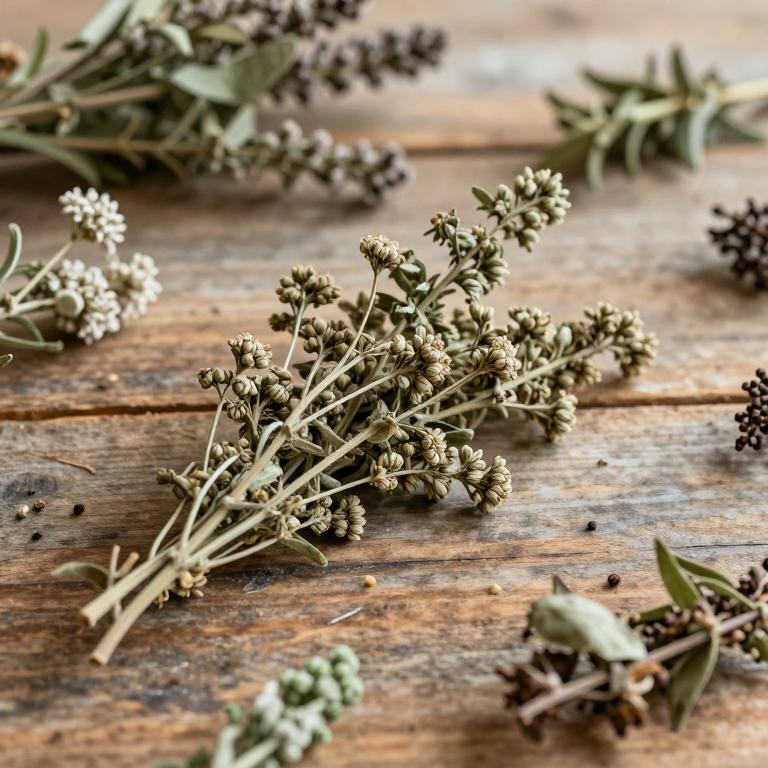
Names and Synonyms
Common Names
- Spiny Burnet
- thorny burnet
Scientific Names
Accepted name
Sarcopoterium spinosumSynonyms
- Bencomia spinosa
- Sanguisorba spinosa
- Poterium spinosum
- Poterium spinosum var. crispum
- Poterium spinosum var. inerme
- Pimpinella spinosa
Regional and Traditional Names
German:
- Dornige Bibernelle
- Dornige Bibernelle
French:
- Sanguisorbe épineuse
- Pimprenelle épineuse
Sources: Wikidata, Catalogue of Life
Taxonomical Classification
This plant belongs to the kingdom Plantae and the phylum Streptophyta, falling under the class Equisetopsida and subclass Magnoliidae. Within the order Rosales, it is classified under the family Rosaceae. Specifically, it is identified by the genus Sarcopoterium.
| Rank | Classification |
|---|---|
| Kingdom | Plantae |
| Phylum | Streptophyta |
| Class | Equisetopsida |
| Subclass | Magnoliidae |
| Order | Rosales |
| Family | Rosaceae |
| Genus | Sarcopoterium |
Sources: The World Checklist of Vascular Plants (WCVP)
Distribution
This plant exhibits a specific distribution pattern primarily concentrated within the Mediterranean basin. In Southwestern Europe, it can be found growing in the region of Sardegna. Its presence extends into Southeastern Europe, where it is documented in Albania. Furthermore, the species is widely distributed across Italy and the mainland of Greece. Finally, its geographical range includes the island of Kriti within the Southeastern European zone.
| Region | Area |
|---|---|
| Southwestern Europe | Sardegna |
| Southeastern Europe | Albania |
| Southeastern Europe | Greece |
| Southeastern Europe | Italy |
| Southeastern Europe | Kriti |
| Southeastern Europe | Sicilia |
| Southeastern Europe | Türkiye-in-Europe |
| Southeastern Europe | NW. Balkan Pen. |
| Northern Africa | Libya |
| Northern Africa | Tunisia |
Sources: The World Checklist of Vascular Plants (WCVP)
Botanical Identification
Life history
The life history of Sarcopoterium spinosum is characterized by its classification as a chamaephyte, a growth form that allows it to thrive in harsh, Mediterranean-type environments by keeping its buds close to the soil surface to escape frost or extreme desiccation. This perennial shrub follows a life cycle typical of sclerophyllous vegetation, establishing itself in rocky, calcareous soils where it develops a woody, highly branched structure often adorned with sharp spines. Its developmental strategy involves a robust perennial root system that provides resilience against seasonal droughts, allowing it to persist through long periods of water scarcity. The reproductive phase is marked by the production of dense, yellowish inflorescences that attract various pollinators, leading to the dispersal of small fruits. Throughout its lifespan, the plant exhibits significant structural adaptations to grazing and environmental stress, often forming dense, impenetrable thickets that influence the microhabitat and successional patterns of its ecosystem.
- Life form :
- chamaephyte
Morphology
The morphology of Sarcopoterium spinosum is characterized by a woody structure, manifesting as a perennial shrub that grows in dense, often thorny formations. As a terrestrial species, it is adapted to dry, rocky, or Mediterranean-type environments rather than aquatic or semiaquatic habitats. The plant exhibits an independent lifestyle, functioning as a non-parasitic organism that relies on its own root system for nutrient acquisition. Its growth form is consistently shrubby, developing robust, lignified stems that contribute to its overall woody composition and structural integrity.
- Aquatic :
- terrestrial
- Growth form :
- shrub
- Parasite :
- independent
- Woodiness :
- woody
Physiology
The physiology of Sarcopoterium spinosum is fundamentally characterized by its reliance on the C3 photosynthetic pathway, a metabolic strategy typical of many Mediterranean sclerophyllous shrubs. Through this C3 mechanism, the plant utilizes the enzyme Rubisco to fix atmospheric carbon dioxide directly into organic compounds during the Calvin cycle, which occurs within the mesophyll cells. To manage the physiological stress imposed by its semi-arid habitats, the plant exhibits specialized adaptations to regulate transpiration and maintain water potential. This includes the development of a robust root system capable of deep soil moisture extraction and structural modifications such as small, often coriaceous leaves that minimize surface area for water loss. The metabolic efficiency of its C3 pathway is balanced by these xerophytic adaptations, allowing the species to maintain carbon assimilation rates while navigating the seasonal fluctuations in temperature and water availability characteristic of its ecological niche.
- Photosynthetic pathway :
- C3
Reproduction
The reproduction of Sarcopoterium spinosum is characterized by the production of fruits that exhibit a fleshy texture, a trait that often plays a role in seed dispersal. The seeds produced by this species demonstrate a notable range in size and weight, indicating variability within its reproductive output. Specifically, the seed mass is highly variable, with a minimum recorded weight of 0.0023 g and a maximum weight reaching up to 0.0082 g. On average, the seeds possess a mass of approximately 0.0064175 g, reflecting the specific energetic investment the plant makes into each individual reproductive unit.
- Fruit dryness :
- fleshy
- Seed mass max:
- 0.0082 g
- Seed mass mean:
- 0.0064175 g
- Seed mass min:
- 0.0023 g
Sources: Global Inventory of Floras and Traits (GIFT)
Plant Parts
Sarcopoterium spinosum has 1 reported plant parts identified across 1 scientific publications and several other databases that are studied for medicinal purposes. The most consistently reported plant part include root.
| Plant part | Supporting sources | Consensus |
|---|---|---|
| Root | 1 supporting sources | ★☆☆☆☆ |
Root
- Pakistan journal of biological sciences : PJBS
Chemicals
Sarcopoterium spinosum has 1 reported phytochemicals identified across 1 scientific publications and several other databases. The most consistently reported chemicals include SSE.
| Chemical | Supporting sources | Consensus |
|---|---|---|
| SSE | 1 supporting sources | ★☆☆☆☆ |
SSE
- PloS one
Activities
Sarcopoterium spinosum has 2 reported activities identified across 1 scientific publications and several other databases. The most consistently reported activities include Antidiabetic, Antioxidant.
| Activity | Supporting sources | Consensus |
|---|---|---|
| Antidiabetic | 1 supporting sources | ★☆☆☆☆ |
| Antioxidant | 1 supporting sources | ★☆☆☆☆ |
Antidiabetic
- Nutrients
Antioxidant
- Evidence-based complementary and alternative medicine : eCAM
Conditions
Sarcopoterium spinosum has 13 reported investigations on conditions identified across 1 scientific publications and several other databases. The most consistently reported conditions include cancer, insulin resistance, insulin sensitivity, type 2 diabetes, SARS-CoV-2 infection.
| Condition | Supporting sources | Consensus |
|---|---|---|
| Cancer | 2 supporting sources | ★☆☆☆☆ |
| Insulin resistance | 2 supporting sources | ★☆☆☆☆ |
| Insulin sensitivity | 2 supporting sources | ★☆☆☆☆ |
| Type 2 diabetes | 2 supporting sources | ★☆☆☆☆ |
| Sars-cov-2 infection | 1 supporting sources | ★☆☆☆☆ |
| Antidiabetic | 1 supporting sources | ★☆☆☆☆ |
| Antihyperglycemic | 1 supporting sources | ★☆☆☆☆ |
| Glucose intolerance | 1 supporting sources | ★☆☆☆☆ |
| Metabolic syndrome | 1 supporting sources | ★☆☆☆☆ |
| Obesity | 1 supporting sources | ★☆☆☆☆ |
Cancer
- Plants (Basel, Switzerland)
- Anti-cancer agents in medicinal chemistry
Insulin resistance
- Journal of ethnopharmacology
- Nutrients
Insulin sensitivity
- Journal of ethnopharmacology
- PloS one
Type 2 diabetes
- BMC complementary and alternative medicine
- Journal of ethnopharmacology
Sars-cov-2 infection
- Plants (Basel, Switzerland)
Antidiabetic
- Nutrients
Antihyperglycemic
- Journal of ethnopharmacology
Glucose intolerance
- PloS one
Metabolic syndrome
- PloS one
Obesity
- Evidence-based complementary and alternative medicine : eCAM
Preparations
Sarcopoterium spinosum has 6 reported preparations identified across 1 scientific publications and several other databases. The most consistently reported preparations include Sarcopoterium spinosum extract, Extract, S. spinosum extract (SSE), SSE, areal parts.
| Preparation | Supporting sources | Consensus |
|---|---|---|
| Sarcopoterium spinosum extract | 2 supporting sources | ★☆☆☆☆ |
| Extract | 1 supporting sources | ★☆☆☆☆ |
| S. spinosum extract (sse) | 1 supporting sources | ★☆☆☆☆ |
| Sse | 1 supporting sources | ★☆☆☆☆ |
| Areal parts | 1 supporting sources | ★☆☆☆☆ |
| Water extracts | 1 supporting sources | ★☆☆☆☆ |
Sarcopoterium spinosum extract
- Journal of ethnopharmacology
- PloS one
Extract
- Nutrients
S. spinosum extract (sse)
- Nutrients
Sse
- ACS omega
Areal parts
- Evidence-based complementary and alternative medicine : eCAM
Water extracts
- Journal of ethnopharmacology