Willow-leaf Sweet Box
Sarcococca saligna · Accepted scientific name
Scientific literature: Very Sparse (12 studies) · ★☆☆☆☆
Willow-leaf Sweet Box, scientifically known as Sarcococca saligna, is a versatile evergreen shrub native to the tropical regions of Southeast Asia. Renowned for its aromatic foliage and delicate blooms, this plant is deeply integrated into traditional medicine, valued primarily for its potent antioxidant properties and diverse therapeutic applications.
- Family
- Buxaceae
- Native range
- Asia-Temperate
- Parts used
- Stem · Root
- Common names
- Willow-Leaf Sweet Box · Willow-Leaf Sweet-Box
- Scientific synonyms
- Sarcococca Laurifolius · Sarcococca Nepalensis · 7 more
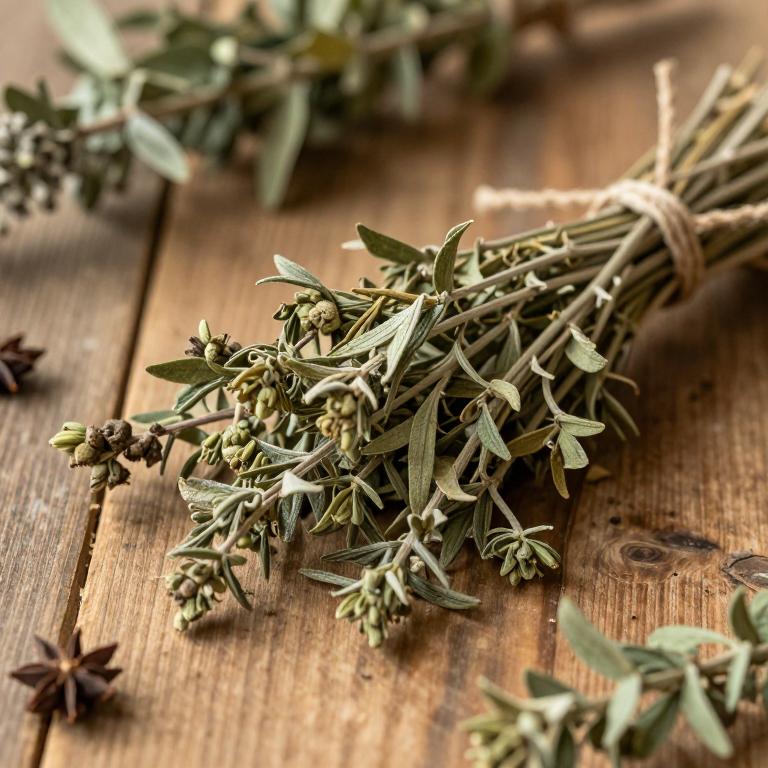
Names and Synonyms
Common Names
- Willow-leaf Sweet Box
- willow-leaf sweet-box
Scientific Names
Accepted name
Sarcococca salignaSynonyms
- Sarcococca laurifolius
- Sarcococca nepalensis
- Sarcococca salicifolia
- Sarcococca sumatrana
- Sarcococca pruniformis var. angustifolia
- Lepidopelma podocarpifolia
- Sarcococca zollingeri
- Buxus saligna
- Sarcococca philippinensis
Sources: Wikidata, Catalogue of Life
Taxonomical Classification
This plant belongs to the kingdom Plantae and the phylum Streptophyta, falling under the class Equisetopsida and subclass Magnoliidae. Within the order Buxales, it is classified under the family Buxaceae. Ultimately, its scientific identity is defined by the genus Sarcococca, specifically the species Sarcococca saliigna.
| Rank | Classification |
|---|---|
| Kingdom | Plantae |
| Phylum | Streptophyta |
| Class | Equisetopsida |
| Subclass | Magnoliidae |
| Order | Buxales |
| Family | Buxaceae |
| Genus | Sarcococca |
Sources: The World Checklist of Vascular Plants (WCVP)
Distribution
This plant exhibits a broad geographical distribution across several key regions in Asia. In China, it can be specifically found growing within the Tibet region. Its presence extends to Eastern Asia, where it is documented in Taiwan. Within the Indian Subcontinent, the species is native to Assam, Nepal, and Pakistan. These diverse locations highlight the plant's ability to thrive in varied subtropical and mountainous environments.
| Region | Area |
|---|---|
| China | Tibet |
| Eastern Asia | Taiwan |
| Indian Subcontinent | Assam |
| Indian Subcontinent | Nepal |
| Indian Subcontinent | Pakistan |
| Indian Subcontinent | West Himalaya |
| Indo-China | Myanmar |
| Malesia | Jawa |
| Malesia | Lesser Sunda Is. |
| Malesia | Philippines |
Sources: The World Checklist of Vascular Plants (WCVP)
Botanical Identification
Ecology
The ecology of Sarcococca saliigna is characterized by its preference for specific montane environments, where it thrives within a defined altitudinal gradient. This species is typically found in high-altitude habitats, occupying an elevational range that begins at 1500 m AMSL and extends up to a maximum of 2800 m AMSL. Within this vertical distribution, the plant adapts to the unique climatic conditions and soil compositions found in these mid-to-high elevation zones, playing a specialized role in the local ecosystem of its native mountainous regions.
- Elevational range max:
- 2800 m AMSL
- Elevational range min:
- 1500 m AMSL
Life history
The life history of Sarcococca saligna is characterized by a perennial lifecycle, meaning the plant persists through multiple growing seasons rather than completing its cycle in a single year. As a long-lived species, it establishes a stable presence within its ecosystem, undergoing various stages of vegetative growth and seasonal maturation over many years. This perennial nature allows the plant to develop robust structures capable of enduring environmental fluctuations, ensuring its continued survival and ability to reproduce across extended temporal scales.
- Lifecycle :
- perennial
Morphology
The morphology of Sarcococca saligna is characterized by a woody growth form, primarily manifesting as a shrub or subshrub. As a self-supporting plant, it does not exhibit climbing behaviors such as lianas or vines, nor does it function as an obligatory or facultative climber. The species is strictly terrestrial in its habitat, lacking aquatic or semiaquatic tendencies, and it does not exist as an epiphyte. Furthermore, it is an independent organism that does not exhibit parasitic life strategies, maintaining a robust, woody structure throughout its development.
- Aquatic :
- terrestrial
- Climber :
- self-supporting
- Epiphyte :
- terrestrial
- Growth form :
- shrub
- Parasite :
- independent
- Woodiness :
- woody
Reproduction
The reproduction of Sarcococca saligna is characterized by a distinct flowering period and specific seed morphology. The plant's flowering cycle begins in May and continues through until October, though the timing can be variable depending on environmental conditions. Following successful pollination, the plant produces seeds with a highly consistent mass; the seed mass is measured at a uniform 0.026 g, with the mean, maximum, and minimum values all reaching this identical weight.
- Flowering time :
- May
- Flowering time :
- Oct
- Seed mass mean:
- 0.026 g
Sources: Global Inventory of Floras and Traits (GIFT)
Plant Parts
Sarcococca saligna has 3 reported plant parts identified across 6 scientific publications and several other databases that are studied for medicinal purposes. The most consistently reported plant part include stem, root, leaf.
| Plant part | Supporting sources | Consensus |
|---|---|---|
| Stem | 3 supporting sources | ★★☆☆☆ |
| Root | 2 supporting sources | ★☆☆☆☆ |
| Leaf | 1 supporting sources | ★☆☆☆☆ |
Stem
- Phytochemistry
- Planta medica
- Journal of natural products
Root
- Phytochemistry
- Journal of natural products
Leaf
- Planta medica
Chemicals
Sarcococca saligna has 1 reported phytochemicals identified across 6 scientific publications and several other databases. The most consistently reported chemicals include Salonine C.
| Chemical | Supporting sources | Consensus |
|---|---|---|
| Salonine C | 1 supporting sources | ★☆☆☆☆ |
Salonine C
- ACS omega
Activities
Sarcococca saligna has 1 reported activities identified across 6 scientific publications and several other databases. The most consistently reported activities include Cytotoxic.
| Activity | Supporting sources | Consensus |
|---|---|---|
| Cytotoxic | 1 supporting sources | ★☆☆☆☆ |
Cytotoxic
- Planta medica
Conditions
Sarcococca saligna has 4 reported investigations on conditions identified across 6 scientific publications and several other databases. The most consistently reported conditions include colon cancer, tumors, ulcers, wounds.
| Condition | Supporting sources | Consensus |
|---|---|---|
| Colon cancer | 1 supporting sources | ★☆☆☆☆ |
| Tumors | 1 supporting sources | ★☆☆☆☆ |
| Ulcers | 1 supporting sources | ★☆☆☆☆ |
| Wounds | 1 supporting sources | ★☆☆☆☆ |
Colon cancer
- ACS omega
Tumors
- ACS omega
Ulcers
- ACS omega
Wounds
- ACS omega
Preparations
Sarcococca saligna has 3 reported preparations identified across 6 scientific publications and several other databases. The most consistently reported preparations include EtOH extracts of the roots and stems, aqueous-methanolic extract, ethanolic extract of the roots and stems.
| Preparation | Supporting sources | Consensus |
|---|---|---|
| Etoh extracts of the roots and stems | 1 supporting sources | ★☆☆☆☆ |
| Aqueous-methanolic extract | 1 supporting sources | ★☆☆☆☆ |
| Ethanolic extract of the roots and stems | 1 supporting sources | ★☆☆☆☆ |
Etoh extracts of the roots and stems
- Journal of natural products
Aqueous-methanolic extract
- Archives of pharmacal research
Ethanolic extract of the roots and stems
- Phytochemistry