Santolina oblongifolia
Santolina oblongifolia · Accepted scientific name
Scientific literature: Very Sparse (7 studies) · ★☆☆☆☆
Santolina oblongifolia, scientifically known as Santolina oblongifolia, is a resilient, aromatic shrub prized in traditional herbal medicine. Characterized by its silvery-green foliage and bright yellow blooms, this plant is frequently utilized for its antiseptic and digestive properties, offering a natural approach to wellness through its potent essential oils.
- Family
- Asteraceae
- Native range
- Europe
- Parts used
- Not available
- Common names
- Not available
- Scientific synonyms
- Santolina Oblongifolia Var. Obtusifolia · Santolina Heterophylla · 3 more
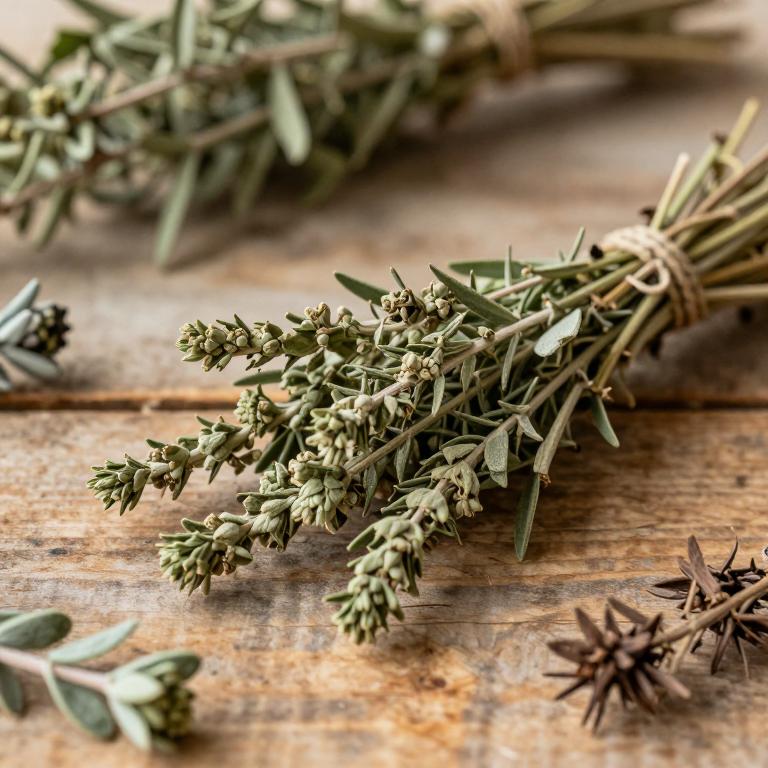
Names and Synonyms
Scientific Names
Accepted name
Santolina oblongifoliaSynonyms
- Santolina oblongifolia var. obtusifolia
- Santolina heterophylla
- Santolina oblongifolia subsp. obtusifolia
- Santolina oblongifolia var. ceratophylla
- Santolina rosmarinifolia subsp. ceratophylla
Regional and Traditional Names
Spanish:
- Manzanilla de Gredos
- Santolina
- Manzanilla de Gredos
- Santolina
Sources: Wikidata, Catalogue of Life
Taxonomical Classification
This plant belongs to the kingdom Plantae within the phylum Streptophyta and is classified under the class Equisetopsida and subclass Magnoliidae. Following the order Asterales, it is a member of the Asteraceae family. Finally, it is taxonomically identified under the genus Santolina.
| Rank | Classification |
|---|---|
| Kingdom | Plantae |
| Phylum | Streptophyta |
| Class | Equisetopsida |
| Subclass | Magnoliidae |
| Order | Asterales |
| Family | Asteraceae |
| Genus | Santolina |
Sources: The World Checklist of Vascular Plants (WCVP)
Distribution
This plant is primarily found within the specific region of Southwestern Europe. Its natural occurrence is notably concentrated in the country of Spain. Within this territory, it inhabits particular ecological niches that support its growth. The geographical range of Santolina oblongifolia is therefore quite restricted to these Mediterranean landscapes. Consequently, understanding its distribution is essential for studying its local environmental requirements.
| Region | Area |
|---|---|
| Southwestern Europe | Spain |
Sources: The World Checklist of Vascular Plants (WCVP)
Chemicals
Santolina oblongifolia has 7 reported phytochemicals identified across 0 scientific publications and several other databases. The most consistently reported chemicals include Aesculetin, Herniarin, Scopolin, apigenin, luteolin.
| Chemical | Supporting sources | Consensus |
|---|---|---|
| Aesculetin | 1 supporting sources | ★☆☆☆☆ |
| Herniarin | 1 supporting sources | ★☆☆☆☆ |
| Scopolin | 1 supporting sources | ★☆☆☆☆ |
| apigenin | 1 supporting sources | ★☆☆☆☆ |
| luteolin | 1 supporting sources | ★☆☆☆☆ |
| quercetin | 1 supporting sources | ★☆☆☆☆ |
| scopoletin | 1 supporting sources | ★☆☆☆☆ |
Aesculetin
- Inflammopharmacology
Herniarin
- Inflammopharmacology
Scopolin
- Inflammopharmacology
apigenin
- Inflammopharmacology
luteolin
- Inflammopharmacology
quercetin
- Inflammopharmacology
scopoletin
- Inflammopharmacology