Corsican lavender-cotton
Santolina corsica · Accepted scientific name
Scientific literature: Very Sparse (10 studies) · ★☆☆☆☆
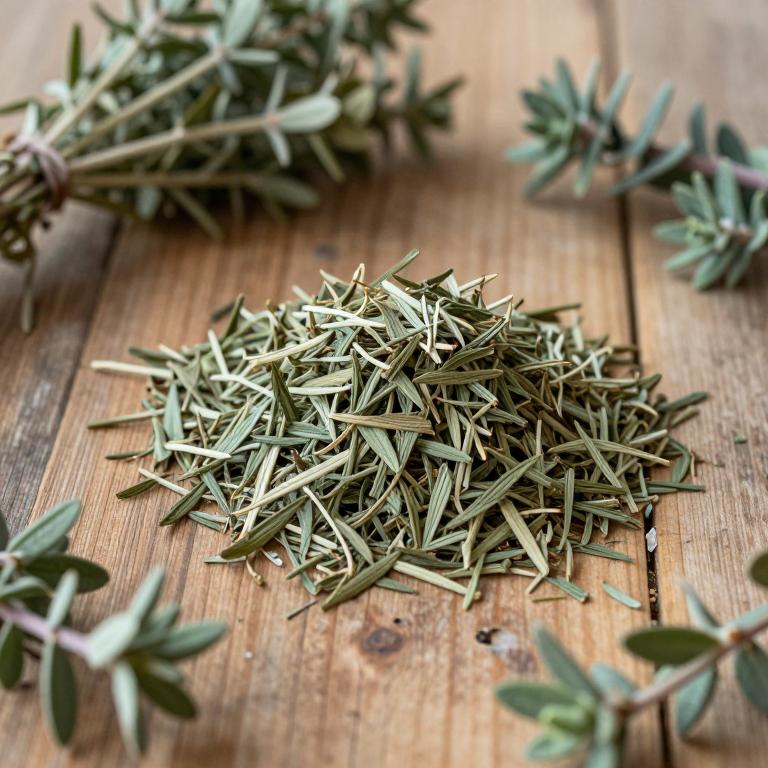
Corsican lavender-cotton, scientifically known as Santolina corsica, is a charming evergreen shrub native to the Mediterranean. Renowned for its silvery-grey foliage and bright yellow blooms, this aromatic plant thrives in sunny, rocky soils. It is widely cherished in landscaping for its drought tolerance and unique, fragrant texture.
- Family
- Asteraceae
- Native range
- Europe
- Parts used
- Not available
- Common names
- Corsican Lavender-Cotton
- Scientific synonyms
- Santolina Chamaecyparissus Subsp. Insularis · Santolina Insularis · 4 more
Names and Synonyms
Common Names
- Corsican lavender-cotton
Scientific Names
Accepted name
Santolina corsicaSynonyms
- Santolina chamaecyparissus subsp. insularis
- Santolina insularis
- Santolina chamaecyparissus f. insularis
- Santolina chamaecyparissus f. insularis
- Santolina chamaecyparissus subvar. corsica
- Santolina chamaecyparissus var. corsica
Regional and Traditional Names
French:
- santoline de Corse
- Santoline de Corse
Sources: Wikidata, Catalogue of Life
Taxonomical Classification
This plant belongs to the kingdom Plantae and the phylum Streptophyta, falling under the class Equisetopsida and subclass Magnoliidae. Within the order Asterales, it is classified under the family Asteraceae and the genus Santolina.
| Rank | Classification |
|---|---|
| Kingdom | Plantae |
| Phylum | Streptophyta |
| Class | Equisetopsida |
| Subclass | Magnoliidae |
| Order | Asterales |
| Family | Asteraceae |
| Genus | Santolina |
Sources: The World Checklist of Vascular Plants (WCVP)
Distribution
This plant is primarily found within the specific regions of Southwestern Europe. Its native range is quite restricted to a few Mediterranean islands. Specifically, it grows naturally on the island of Corse. Additionally, its distribution extends to the nearby island of Sardegna. These two locations define the core geographical footprint of the species.
| Region | Area |
|---|---|
| Southwestern Europe | Corse |
| Southwestern Europe | Sardegna |
Sources: The World Checklist of Vascular Plants (WCVP)
Botanical Identification
Reproduction
The reproduction of Santolina corsica is characterized by the production of specialized seeds that exhibit highly uniform physical properties. Based on morphological data, the seed mass is remarkably consistent across the population, showing no variation between the minimum and maximum recorded values. Specifically, the seed mass mean, maximum, and minimum are all documented at exactly 0.00039 g. This precise uniformity in seed mass suggests a highly stabilized reproductive output, where each individual seed carries a consistent amount of biological material, a trait that likely plays a role in the plant's dispersal and germination efficiency within its natural habitat.
- Seed mass mean:
- 0.00039 g
Sources: Global Inventory of Floras and Traits (GIFT)
Chemicals
Santolina corsica has 6 reported phytochemicals identified across 0 scientific publications and several other databases. The most consistently reported chemicals include Artemisia ketone, BETA-PHELLANDRENE, BETA-PINENE, MYRCENE, Santolina triene.
| Chemical | Supporting sources | Consensus |
|---|---|---|
| Artemisia ketone | 1 supporting sources | ★☆☆☆☆ |
| BETA-PHELLANDRENE | 1 supporting sources | ★☆☆☆☆ |
| BETA-PINENE | 1 supporting sources | ★☆☆☆☆ |
| MYRCENE | 1 supporting sources | ★☆☆☆☆ |
| Santolina triene | 1 supporting sources | ★☆☆☆☆ |
| cis-Chrysanthemol | 1 supporting sources | ★☆☆☆☆ |
Artemisia ketone
- Phytochemistry
BETA-PHELLANDRENE
- Phytochemistry
BETA-PINENE
- Phytochemistry
MYRCENE
- Phytochemistry
Santolina triene
- Phytochemistry
cis-Chrysanthemol
- Phytochemistry
Activities
Santolina corsica has 2 reported activities identified across 0 scientific publications and several other databases. The most consistently reported activities include Antibacterial, Antiviral.
| Activity | Supporting sources | Consensus |
|---|---|---|
| Antibacterial | 1 supporting sources | ★☆☆☆☆ |
| Antiviral | 1 supporting sources | ★☆☆☆☆ |
Antibacterial
- Phytochemistry
Antiviral
- Phytochemistry
Preparations
Santolina corsica has 1 reported preparations identified across 0 scientific publications and several other databases. The most consistently reported preparations include essential oils.
| Preparation | Supporting sources | Consensus |
|---|---|---|
| Essential oils | 1 supporting sources | ★☆☆☆☆ |
Essential oils
- Journal of ethnopharmacology