Santolina canescens
Santolina canescens · Accepted scientific name
Scientific literature: Very Sparse (6 studies) · ★☆☆☆☆
, scientifically known as Santolina canescens, is a perennial subshrub cherished in traditional medicine and ornamental gardening. Renowned for its silvery-grey foliage and aromatic yellow blooms, this hardy plant offers therapeutic properties, including antimicrobial and digestive benefits, making it a versatile addition to both herbal remedies and landscapes.
- Family
- Asteraceae
- Native range
- Europe
- Parts used
- Not available
- Common names
- Not available
- Scientific synonyms
- Santolina Rosmarinifolia Subsp. Canescens
Names and Synonyms
Scientific Names
Accepted name
Santolina canescensSynonyms
- Santolina rosmarinifolia subsp. canescens
Sources: Wikidata
Taxonomical Classification
This plant belongs to the kingdom Plantae within the phylum Streptophyta and the class Equisetopsida. Following its classification through the subclass Magnoliidae and order Asterales, it is a member of the family Asteraceae. Finally, its specific taxonomic designation is placed within the genus Santolina.
| Rank | Classification |
|---|---|
| Kingdom | Plantae |
| Phylum | Streptophyta |
| Class | Equisetopsida |
| Subclass | Magnoliidae |
| Order | Asterales |
| Family | Asteraceae |
| Genus | Santolina |
Sources: The World Checklist of Vascular Plants (WCVP)
Distribution
This plant exhibits a specific geographical distribution concentrated within the Mediterranean region. It is primarily found across Southwestern Europe, with a notable presence in Spain. Additionally, its natural habitat extends into Northern Africa. Within this African territory, the species is specifically documented in Morocco. Consequently, its range is limited to these distinct coastal and continental areas.
| Region | Area |
|---|---|
| Southwestern Europe | Spain |
| Northern Africa | Morocco |
Sources: The World Checklist of Vascular Plants (WCVP)
Botanical Identification
Ecology
The ecology of Santolina canescens is characterized by its adaptation to specific altitudinal zones and environmental conditions within its native habitat. This species typically occupies an elevational range that allows it to thrive in diverse mountainous or hilly terrains, with a calculated elevational range mean of 1306 m AMSL. Within these ecological niches, the plant is often found in well-drained, rocky, or sandy soils, where it can manage varying levels of solar exposure and moisture availability. Its distribution is closely tied to these specific altitudinal gradients, which influence the local microclimate, temperature fluctuations, and the surrounding community of flora and fauna that interact with it in its natural ecosystem.
- Elevational range mean:
- 1306 m AMSL
Life history
The life history of Santolina canescens is characterized by its status as a perennial plant, allowing it to persist through multiple growing seasons. As a long-lived species, it establishes a stable presence in its habitat, often developing woody bases over time that facilitate its survival across successive years. Its developmental cycle involves an initial establishment phase followed by seasonal cycles of vegetative growth and reproductive flowering, ensuring its continued presence in the ecosystem through long-term persistence rather than the rapid, single-season completion seen in annuals.
- Lifecycle :
- perennial
Morphology
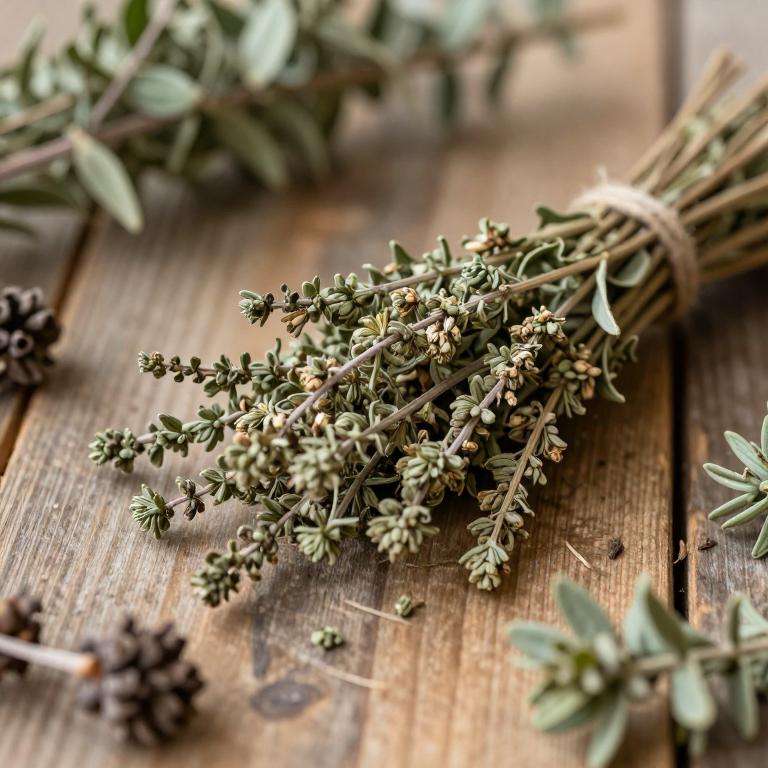
The morphology of Santolina canescens is characterized by a predominantly woody growth habit, forming compact, rounded, or cushion-like shrubs. The stems are sturdy and lignified at the base, exhibiting a woody texture that provides structural support for the dense foliage. The leaves are typically small, often linear or lanceolate, and are frequently covered in fine, silvery-white tomentose hairs, giving the plant a characteristic grayish-green appearance. The inflorescence consists of numerous small, discoid flower heads arranged in terminal clusters, which are often bright yellow. The overall architecture of the plant is determined by its perennial, woody nature, which allows it to maintain a mounded form throughout its life cycle.
- Woodiness :
- woody
Reproduction
The reproduction of Santolina canescens is characterized by specific dispersal mechanisms that facilitate the movement of its seeds within its environment. The primary dispersal syndrome exhibited by this plant is anemochorous, meaning its seeds are primarily dispersed by the wind. This anemochorous strategy is further specified as a dominant mode of propagation, ensuring that seeds can travel across distances through air currents to colonize new areas. Consequently, the plant relies on wind-driven movement as its central method for seed distribution.
- Dispersal syndrome :
- anemochorous
Sources: Global Inventory of Floras and Traits (GIFT)
Chemicals
Santolina canescens has 1 reported phytochemicals identified across 0 scientific publications and several other databases. The most consistently reported chemicals include santolindiacetylene.
| Chemical | Supporting sources | Consensus |
|---|---|---|
| santolindiacetylene | 1 supporting sources | ★☆☆☆☆ |
santolindiacetylene
- Journal of natural products
Activities
Santolina canescens has 2 reported activities identified across 0 scientific publications and several other databases. The most consistently reported activities include Antioxidant, Hepatoprotective.
| Activity | Supporting sources | Consensus |
|---|---|---|
| Antioxidant | 1 supporting sources | ★☆☆☆☆ |
| Hepatoprotective | 1 supporting sources | ★☆☆☆☆ |
Antioxidant
- Journal of natural products
Hepatoprotective
- Journal of natural products