Sambucus sieboldiana
Sambucus sieboldiana · Accepted scientific name
Scientific literature: Very Sparse (5 studies) · ★☆☆☆☆
Sambucus sieboldiana, scientifically known as Sambucus sieboldiana, is a resilient deciduous shrub native to East Asia. Renowned for its clusters of creamy white flowers and dark berries, this plant holds significant value in traditional medicine, often utilized for its immune-boosting properties and potential anti-inflammatory benefits in herbal remedies.
- Family
- Viburnaceae
- Native range
- Europe
- Parts used
- Stem
- Common names
- Not available
- Scientific synonyms
- Sambucus Sieboldiana Var. Glabrescens · Sambucus Racemosa Subsp. Sieboldiana · 20 more
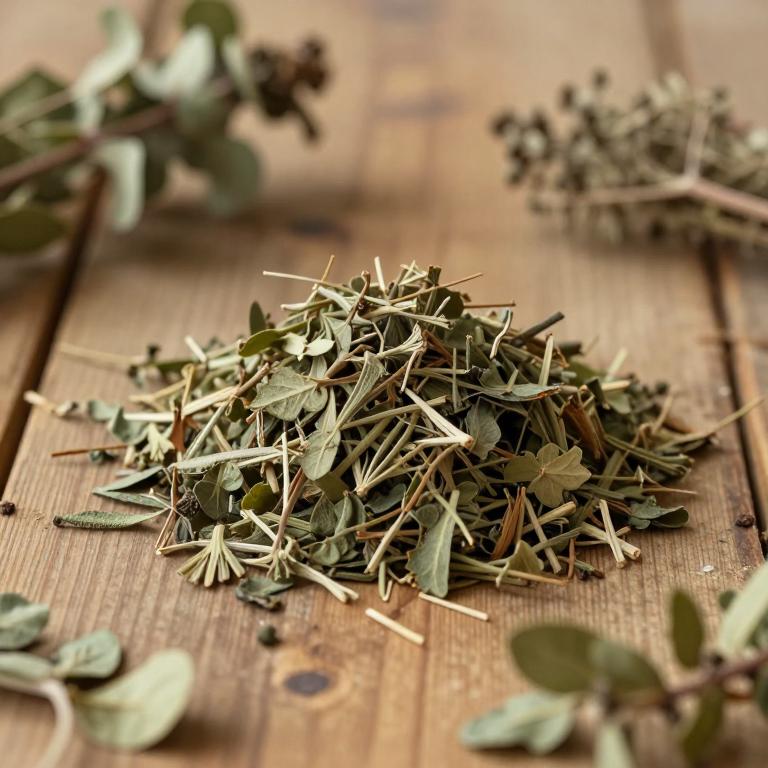
Names and Synonyms
Scientific Names
Accepted name
Sambucus sieboldianaSynonyms
- Sambucus sieboldiana var. glabrescens
- Sambucus racemosa subsp. sieboldiana
- Sambucus sieboldiana var. glaberrima
- Sambucus racemosa f. macrophylla
- Sambucus racemosa var. major
- Sambucus sieboldiana f. latifolia
- Sambucus racemosa f. ovatifolia
- Sambucus sieboldiana var. xanthocarpa
- Sambucus racemosa var. stenophylla
- Sambucus sieboldiana f. xanthocarpa
- Sambucus racemosa f. aurantiaca
- Sambucus racemosa var. sieboldiana
- Sambucus racemosa f. nakaiana
- Sambucus sieboldiana var. aurantiaca
- Sambucus racemosa f. stenophylla
- Sambucus racemosa f. glaberrima
- Sambucus sieboldiana f. glaberrima
- Sambucus glabrescens
- Sambucus sieboldiana var. major
- Sambucus sieboldiana var. latifolia
- Sambucus sieboldiana var. pubescens
- Sambucus sieboldiana var. stenophylla
Sources: Wikidata
Taxonomical Classification
This plant belongs to the kingdom Plantae within the phylum Streptophyta and the class Equisetopsida. Following the subclass Magnoliidae, it is categorized under the order Dipsacales and the family Viburnaceae. Finally, it is classified under the genus Sambucus as the species Sambucus sieboldiana.
| Rank | Classification |
|---|---|
| Kingdom | Plantae |
| Phylum | Streptophyta |
| Class | Equisetopsida |
| Subclass | Magnoliidae |
| Order | Dipsacales |
| Family | Viburnaceae |
| Genus | Sambucus |
Sources: The World Checklist of Vascular Plants (WCVP)
Distribution
This plant exhibits a wide geographical range across several distinct regions of the Northern Hemisphere. In Northern Europe, its presence can be noted within Great Britain. Moving toward the Russian Far East, it is found inhabiting both the Kuril Islands and Sakhalin. The species is also widely distributed throughout Eastern Asia, specifically throughout Japan. Finally, its range extends across the Korean Peninsula.
| Region | Area |
|---|---|
| Northern Europe | Great Britain |
| Russian Far East | Kuril Is. |
| Russian Far East | Sakhalin |
| Eastern Asia | Japan |
| Eastern Asia | Korea |
| Eastern Asia | Nansei-shoto |
Sources: The World Checklist of Vascular Plants (WCVP)
Botanical Identification
Ecology
The ecology of Sambucus sieboldiana is characterized by its preference for transitional environments, specifically thriving within forest edges where it can access varying levels of light and moisture. These edge habitats provide a unique ecological niche, offering a balance between the dense, shaded interior of a woodland and the more exposed, sun-drenched conditions of open clearings. By occupying these margins, the species benefits from increased solar radiation compared to the deep forest floor, which facilitates its growth and flowering processes, while still maintaining the protective microclimate and soil moisture retention provided by the adjacent forest canopy. This positioning allows the plant to interact dynamically with the surrounding flora and fauna, playing a role in the structural complexity and biodiversity of temperate forest boundaries.
- Habitat :
- forest edges
Morphology
The morphology of Sambucus sieboldiana is characterized by a perennial growth form classified as a shrub. This plant exhibits a distinctly woody structure, developing firm, lignified stems that support its architectural development. In terms of scale, it is a substantial specimen capable of reaching a maximum plant height of approximately 8 meters.
- Growth form :
- shrub
- Plant height max:
- 8 m
- Woodiness :
- woody
Physiology
The physiology of Sambucus sieboldiana is characterized by its metabolic adaptations to temperate environments, most notably its utilization of the C3 photosynthetic pathway. As a C3 plant, its carbon fixation process relies on the enzyme RuBisCO to incorporate atmospheric carbon dioxide directly into a three-carbon molecule during the Calvin cycle. This pathway is highly efficient under the cool to moderate temperature regimes and high moisture availability typical of its natural habitats, allowing the plant to optimize energy production through standard light-dependent and light-independent reactions. This photosynthetic framework supports the plant's overall energy requirements for secondary metabolite synthesis, contributing to the complex biochemical profile that defines its medicinal properties.
- Photosynthetic pathway :
- C3
Reproduction
The reproduction of Sambucus sieboldiana is characterized by a specific seasonal flowering window that facilitates its reproductive cycle. The plant initiates its flowering process with a start time typically occurring in June, a period that marks the onset of its blooming phase. This reproductive activity reaches its conclusion within the same month, as the flowering end is also observed in June. This concentrated period of floral development is essential for the plant's pollination and subsequent seed production processes.
- Flowering time :
- Jun
Sources: Global Inventory of Floras and Traits (GIFT)
Plant Parts
Sambucus sieboldiana has 1 reported plant parts identified across 1 scientific publications and several other databases that are studied for medicinal purposes. The most consistently reported plant part include stem.
| Plant part | Supporting sources | Consensus |
|---|---|---|
| Stem | 1 supporting sources | ★☆☆☆☆ |
Stem
- Biological & pharmaceutical bulletin
Chemicals
Sambucus sieboldiana has 3 reported phytochemicals identified across 1 scientific publications and several other databases. The most consistently reported chemicals include CONIFERYL ALCOHOL, Vanillic acid, vanillin.
| Chemical | Supporting sources | Consensus |
|---|---|---|
| CONIFERYL ALCOHOL | 1 supporting sources | ★☆☆☆☆ |
| Vanillic acid | 1 supporting sources | ★☆☆☆☆ |
| vanillin | 1 supporting sources | ★☆☆☆☆ |
CONIFERYL ALCOHOL
- Biological & pharmaceutical bulletin
Vanillic acid
- Biological & pharmaceutical bulletin
vanillin
- Biological & pharmaceutical bulletin
Conditions
Sambucus sieboldiana has 1 reported investigations on conditions identified across 1 scientific publications and several other databases. The most consistently reported conditions include bone resorption.
| Condition | Supporting sources | Consensus |
|---|---|---|
| Bone resorption | 1 supporting sources | ★☆☆☆☆ |
Bone resorption
- Biological & pharmaceutical bulletin
Preparations
Sambucus sieboldiana has 2 reported preparations identified across 1 scientific publications and several other databases. The most consistently reported preparations include extracts, methanolic extract.
| Preparation | Supporting sources | Consensus |
|---|---|---|
| Extracts | 1 supporting sources | ★☆☆☆☆ |
| Methanolic extract | 1 supporting sources | ★☆☆☆☆ |
Extracts
- Bioscience, biotechnology, and biochemistry
Methanolic extract
- Biological & pharmaceutical bulletin