Red-berried Elder
Sambucus racemosa · Accepted scientific name
Scientific literature: Very Sparse (29 studies) · ★☆☆☆☆
Red-berried Elder, scientifically known as Sambucus racemosa, is a deciduous shrub native to North America. Highly valued in traditional herbalism, its vibrant red berries and fragrant flowers possess potent antioxidant and anti-inflammatory properties. Often utilized to support immune health, this versatile plant remains a cornerstone of botanical medicine.
- Family
- Viburnaceae
- Native range
- Europe
- Parts used
- Not available
- Common names
- European Red Elder · European Red Elderberry · 8 more
- Scientific synonyms
- Not available
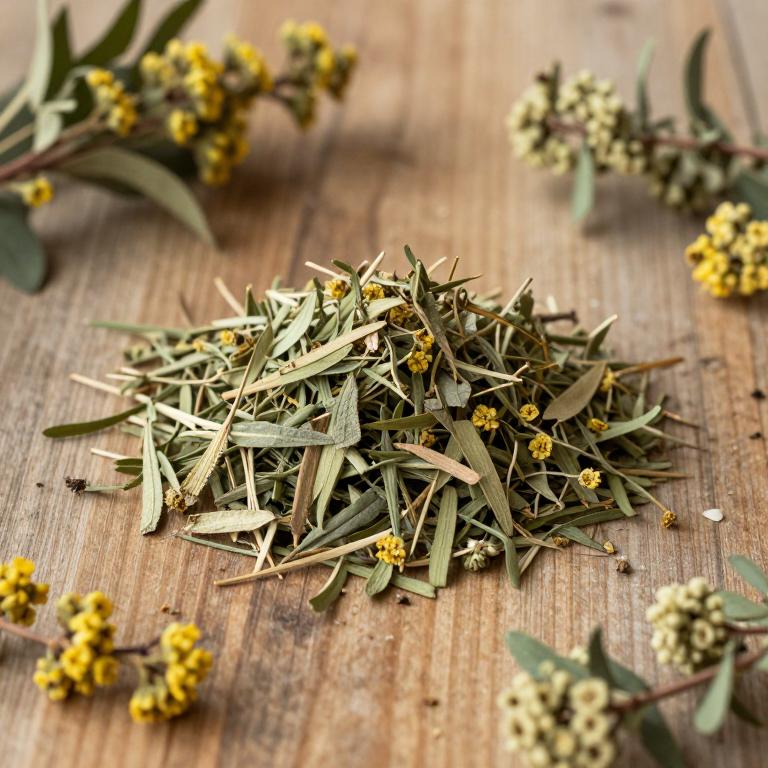
Names and Synonyms
Common Names
- European red elder
- European red elderberry
- Pacific coast red elder
- coastal red elderberry
- red elderberry
- red-berried elder
- scarlet elderberry
- red-berry elder
- American red elderberry
- Red Elder
Scientific Names
Accepted name
Sambucus racemosaRegional and Traditional Names
Spanish:
- Saúco rojo
- Sauco rojo
- saúco rojo
German:
- Roter Holunder
- Hirsch-Holunder
- Berg-Holunder
- Bergholler
- Trauben-Holunder
- sureau à grappes
- Roter Holunder
- Trauben-Holunder
- Bergholunder
- Hirsch-Holunder
- Traubenholunder
French:
- Sureau à grappes
- sureau de montagne
- sureau rameux
- sureau rouge1ou
- sureau rouge
- sureau à grappes
- Sureau a grappes
- sureau de montagne
- sureau rameux
Sources: Wikidata, Catalogue of Life
Taxonomical Classification
This plant belongs to the kingdom Plantae and is classified under the phylum Streptophyta and class Equisetopsida. Within the subclass Magnoliidae, it is organized under the order Dipsacales and the family Viburnaceae. Finally, it is identified by its genus, Sambucus.
| Rank | Classification |
|---|---|
| Kingdom | Plantae |
| Phylum | Streptophyta |
| Class | Equisetopsida |
| Subclass | Magnoliidae |
| Order | Dipsacales |
| Family | Viburnaceae |
| Genus | Sambucus |
Sources: The World Checklist of Vascular Plants (WCVP)
Distribution
This plant, known as red elderberry, exhibits a specific distribution across several regions of Northern Europe. It can be found growing within the borders of Denmark and Finland. The species also extends its range to include the islands of Great Britain and Ireland. Furthermore, its presence is documented throughout the rugged landscapes of Norway. Together, these locations define its primary geographical footprint within the northern territories.
| Region | Area |
|---|---|
| Northern Europe | Denmark |
| Northern Europe | Finland |
| Northern Europe | Great Britain |
| Northern Europe | Ireland |
| Northern Europe | Norway |
| Northern Europe | Sweden |
| Middle Europe | Austria |
| Middle Europe | Belgium |
| Middle Europe | Czechia-Slovakia |
| Middle Europe | Germany |
Sources: The World Checklist of Vascular Plants (WCVP)
Botanical Identification
Ecology
The ecology of Sambucus racemosa is characterized by its preference for moist, shaded environments typically found within forest ecosystems and along forest edges. It thrives in these transitional zones where it can access filtered sunlight and stable moisture levels provided by the surrounding canopy and edge vegetation. This species exhibits a broad vertical distribution across various landscapes, occupying an elevational range that extends up to a maximum of 2000 m AMSL. Such a range allows it to inhabit diverse montane and subalpine habitats, where it plays a functional role in the structural complexity of forest understories and riparian corridors.
- Elevational range max:
- 2000 m AMSL
- Habitat :
- forest, forest edges
Genetics
The genetics of Sambucus racemosa are characterized by a specific chromosomal constitution that defines its reproductive and evolutionary framework. The species exhibits a fundamental haploid number, represented by the ploidy level of n, which serves as the baseline for its genetic inheritance and meiotic processes. This genomic structure provides the blueprint for the complex biochemical pathways responsible for the synthesis of secondary metabolites, such as anthocyanins and phenolic compounds, which are central to its medicinal properties. The stability of this chromosomal state is essential for maintaining species integrity during sexual reproduction and governs the segregation of alleles that influence phenotypic variation within different populations.
- Ploidy :
- n
Life history
The life history of Sambucus racemosa is characterized by its status as a perennial plant, ensuring its long-term presence within its ecological niche. As a phanerophyte, it maintains its photosynthetic organs on elevated stems above the ground, specifically categorized under the phanerophyte life form. The plant exhibits a deciduous nature, meaning it undergoes a seasonal cycle where it sheds its foliage annually, typically in response to colder temperatures or changing environmental conditions.
- Deciduousness :
- deciduous
- Life form :
- phanerophyte
- Lifecycle :
- perennial
Morphology
The morphology of Sambucus racemosa is characterized by its woody growth form, functioning primarily as a shrub or a tree. It is a terrestrial, independent plant that does not exhibit parasitic or epiphytic behavior, maintaining a self-supporting structure rather than acting as a climber, liana, or vine. In terms of stature, the plant displays significant height variability; while individual specimens may reach a minimum height of 1 m, they typically grow as large shrubs or small trees, with a maximum height recorded at 6 m and an average plant height of approximately 7.855 m.
- Aquatic :
- terrestrial
- Climber :
- self-supporting
- Epiphyte :
- terrestrial
- Growth form :
- tree
- Growth form :
- shrub
- Parasite :
- independent
- Plant height max:
- 6 m
- Plant height mean:
- 7.855 m
- Plant height min:
- 1 m
- Woodiness :
- woody
Physiology
The physiology of Sambucus racemosa is characterized by a C3 photosynthetic pathway, which dictates its carbon fixation processes and metabolic efficiency. The plant is strictly non-carnivorous, relying entirely on autotrophic nutrient acquisition through its root system and foliage. Its foliar morphology is defined by a mean leaf size of approximately 127.52917 cm², with leaf lengths reaching a maximum of 9.5 cm. The leaves exhibit a consistent width, maintaining a mean, minimum, and maximum value of 3.8 cm. Furthermore, the plant demonstrates a mean Specific Leaf Area (SLA) of 287.51 cm²/g, reflecting the structural relationship between its leaf area and dry mass, which is indicative of its resource allocation strategies and leaf density.
- Carnivory :
- non-carnivorous
- Leaf length max:
- 9.5 cm
- Leaf size mean:
- 127.52917 cm²
- Leaf width mean:
- 3.8 cm
- Photosynthetic pathway :
- C3
- Specific Leaf Area (SLA) mean:
- 287.51 cm²/g
Reproduction
The reproduction of Sambucus racemosa is characterized by a sexual cycle that begins with a flowering period starting in April and concluding in July. The pollination process is primarily biotic, relying on an insect pollination syndrome to facilitate fertilization, as self-fertilization is noted to be absent. Following successful pollination, the plant produces fleshy, indehiscent fruits classified as drupes, which have an average length of 0.565 cm and an average width of 0.4833 cm. These fruits facilitate seed dispersal through a zoochorous syndrome, specifically via endozoochory, where animals consume the fruit and disperse the seeds. The seeds themselves are quite small, with a mean mass of approximately 0.00513 g (ranging from a minimum of 0.001232 g to a maximum of 0.006502 g) and a consistent mean length of 2 mm. The seed volume is recorded at a mean of 3 mm³, which serves as both the minimum and maximum value in this dataset. Notably, asexual reproduction is absent in this species, making sexual reproduction through these insect-mediated processes essential for its life cycle.
- Dehiscence :
- indehiscent
- Dispersal syndrome :
- zoochorous
- Dispersal syndrome :
- endozoochorous
- Flowering time :
- Apr
- Flowering time :
- Jul
- Fruit dryness :
- fleshy
- Fruit length mean:
- 0.565 cm
- Fruit type :
- drupe
- Fruit width mean:
- 0.483333333333333 cm
- Pollination syndrome :
- insect
- Pollination syndrome :
- biotic
- Reproduction asexual :
- absent
- Seed length mean:
- 2 mm
- Seed mass max:
- 0.006502 g
- Seed mass mean:
- 0.00513456818181818 g
- Seed mass min:
- 0.001232 g
- Seed volume max:
- 3 mm³
- Self fertilization :
- absent
Sources: Global Inventory of Floras and Traits (GIFT)
Chemicals
Sambucus racemosa has 3 reported phytochemicals identified across 0 scientific publications and several other databases. The most consistently reported chemicals include Betulin, Tannins, betulinic acid.
| Chemical | Supporting sources | Consensus |
|---|---|---|
| Betulin | 1 supporting sources | ★☆☆☆☆ |
| Tannins | 1 supporting sources | ★☆☆☆☆ |
| betulinic acid | 1 supporting sources | ★☆☆☆☆ |
Betulin
- Dr. Duke
Tannins
- Die Pharmazie
betulinic acid
- Dr. Duke
Activities
Sambucus racemosa has 23 reported activities identified across 0 scientific publications and several other databases. The most consistently reported activities include Anthelmintic, AntiHIV, Antibacterial, Anticancer, Anticarcinomic.
| Activity | Supporting sources | Consensus |
|---|---|---|
| Anthelmintic | 1 supporting sources | ★☆☆☆☆ |
| AntiHIV | 1 supporting sources | ★☆☆☆☆ |
| Antibacterial | 1 supporting sources | ★☆☆☆☆ |
| Anticancer | 1 supporting sources | ★☆☆☆☆ |
| Anticarcinomic | 1 supporting sources | ★☆☆☆☆ |
| Antiedemic | 1 supporting sources | ★☆☆☆☆ |
| Antifeedant | 1 supporting sources | ★☆☆☆☆ |
| Antiflu | 1 supporting sources | ★☆☆☆☆ |
| Antiinflammatory | 1 supporting sources | ★☆☆☆☆ |
| Antileukemic | 1 supporting sources | ★☆☆☆☆ |
Anthelmintic
- Dr. Duke
AntiHIV
- Dr. Duke
Antibacterial
- Dr. Duke
Anticancer
- Dr. Duke
Anticarcinomic
- Dr. Duke
Antiedemic
- Dr. Duke
Antifeedant
- Dr. Duke
Antiflu
- Dr. Duke
Antiinflammatory
- Dr. Duke
Antileukemic
- Dr. Duke
Conditions
Sambucus racemosa has 1 reported investigations on conditions identified across 0 scientific publications and several other databases. The most consistently reported conditions include respiratory syncytial virus.
| Condition | Supporting sources | Consensus |
|---|---|---|
| Respiratory syncytial virus | 1 supporting sources | ★☆☆☆☆ |
Respiratory syncytial virus
- Journal of ethnopharmacology
Preparations
Sambucus racemosa has 2 reported preparations identified across 0 scientific publications and several other databases. The most consistently reported preparations include bark, branch tip extract.
| Preparation | Supporting sources | Consensus |
|---|---|---|
| Bark | 1 supporting sources | ★☆☆☆☆ |
| Branch tip extract | 1 supporting sources | ★☆☆☆☆ |
Bark
- Journal of ethnopharmacology
Branch tip extract
- Journal of ethnopharmacology