sage
Salvia · Accepted scientific name
Scientific literature: Sparse (71 studies) · ★★☆☆☆
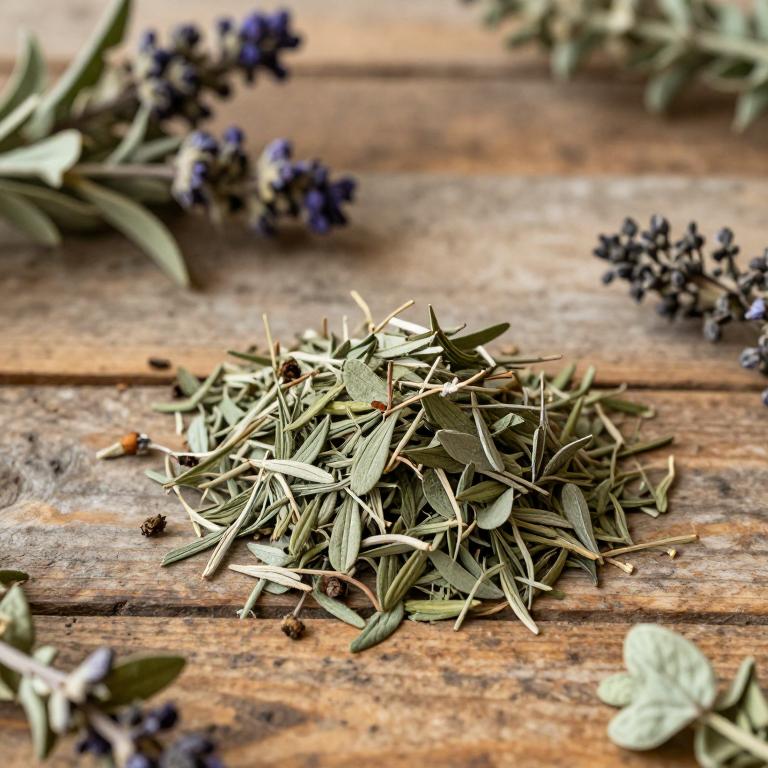
Sage, scientifically known as Salvia, is a versatile genus of flowering plants prized for centuries in traditional medicine. Renowned for its potent antioxidant and anti-inflammatory properties, it is frequently used to support cognitive function, soothe sore throats, and enhance digestive health, making it a staple in holistic wellness.
Names and Synonyms
Common Names
- sage
- rosemary
- Sages
Scientific Names
Accepted name
SalviaSynonyms
- Audibertiella
- Lesemia
- Crolocos
- Lasemia
- Plethiosphace
- Pleudia
- Terepis
- Epiadena
- Stiefia
- Enipea
- Stenarrhena
- Sobiso
- Schraderia
- Zhumeria
- Piaradena
- Perovskia
- Rosmarinus
- Ormiastis
- Ormilis
- Larnastyra
- Leonura
- Oboskon
- Kiosmina
- Elelis
- Gallitrichum
- Glutinaria
- Hemisphace
- Hematodes
- Melligo
- Euriples
- Melinum
- Flipanta
- Fenixanthes
- Drymosphace
- Dorystaechas
- Codanthera
- Calosphace
- Covola
- Aethiopis
- Belospis
- Arischrada
- Ramona
- Megyathus
- Aethyopys
- Aitopsis
- Meriandra
- Sclarea
- Pycnosphace
- Sphacopsis
- Polakia
- Rhodormis
- Rhodochlamys
Regional and Traditional Names
Spanish:
- salvias o mirtos
German:
- Salbei
- Salbei
French:
- sauge
- Sauges
- Sauge
Sources: Wikidata, Catalogue of Life
Taxonomical Classification
This plant belongs to the kingdom Plantae and is classified under the phylum Streptophyta within the class Equisetopsida. It is further organized into the subclass Magnoliidae and the order Lamiales, falling under the family Lamiaceae. Finally, its specific taxonomic designation is within the genus Salvia.
| Rank | Classification |
|---|---|
| Kingdom | Plantae |
| Phylum | Streptophyta |
| Class | Equisetopsida |
| Subclass | Magnoliidae |
| Order | Lamiales |
| Family | Lamiaceae |
| Genus | Salvia |
Sources: The World Checklist of Vascular Plants (WCVP)
Distribution
This plant exhibits a specific geographical distribution across several northern European territories. It can be found growing within the borders of Denmark. Additionally, its presence extends to the islands of Great Britain and Ireland. Moving further north, the species is also distributed throughout Norway. Finally, the range of this medicinal plant includes the country of Sweden.
| Region | Area |
|---|---|
| Northern Europe | Denmark |
| Northern Europe | Great Britain |
| Northern Europe | Ireland |
| Northern Europe | Norway |
| Northern Europe | Sweden |
| Middle Europe | Austria |
| Middle Europe | Belgium |
| Middle Europe | Czechia-Slovakia |
| Middle Europe | Germany |
| Middle Europe | Hungary |
Sources: The World Checklist of Vascular Plants (WCVP)
Plant Parts
Salvia has 1 reported plant parts identified across 1 scientific publications and several other databases that are studied for medicinal purposes. The most consistently reported plant part include root.
| Plant part | Supporting sources | Consensus |
|---|---|---|
| Root | 1 supporting sources | ★☆☆☆☆ |
Root
- Pharmacognosy magazine
Chemicals
Salvia has 29 reported phytochemicals identified across 1 scientific publications and several other databases. The most consistently reported chemicals include carnosol, Apigenin 7-O-glucoside, Apigenin 7-O-glucuronide, Carnosic acid, Hispidulin 7-O-glucoside.
| Chemical | Supporting sources | Consensus |
|---|---|---|
| carnosol | 3 supporting sources | ★★☆☆☆ |
| Apigenin 7-O-glucoside | 2 supporting sources | ★☆☆☆☆ |
| Apigenin 7-O-glucuronide | 2 supporting sources | ★☆☆☆☆ |
| Carnosic acid | 2 supporting sources | ★☆☆☆☆ |
| Hispidulin 7-O-glucoside | 2 supporting sources | ★☆☆☆☆ |
| Hispidulin-7-O-glucuronide | 2 supporting sources | ★☆☆☆☆ |
| rosmarinic acid | 2 supporting sources | ★☆☆☆☆ |
| 12,16-Epoxycarnosol | 1 supporting sources | ★☆☆☆☆ |
| 16-Hydroxyrosmanol | 1 supporting sources | ★☆☆☆☆ |
| 16-hydroxycarnosol | 1 supporting sources | ★☆☆☆☆ |
carnosol
- Journal of diabetes and metabolic disorders
- Journal of natural products
- Journal of pharmaceutical and biomedical analysis
Apigenin 7-O-glucoside
- Journal of diabetes and metabolic disorders
- Journal of pharmaceutical and biomedical analysis
Apigenin 7-O-glucuronide
- Journal of diabetes and metabolic disorders
- Journal of pharmaceutical and biomedical analysis
Carnosic acid
- Phytochemistry
- Journal of diabetes and metabolic disorders
Hispidulin 7-O-glucoside
- Journal of diabetes and metabolic disorders
- Journal of pharmaceutical and biomedical analysis
Hispidulin-7-O-glucuronide
- Journal of diabetes and metabolic disorders
- Journal of pharmaceutical and biomedical analysis
rosmarinic acid
- Journal of diabetes and metabolic disorders
- Journal of pharmaceutical and biomedical analysis
12,16-Epoxycarnosol
- Journal of natural products
16-Hydroxyrosmanol
- Journal of natural products
16-hydroxycarnosol
- Journal of natural products
Activities
Salvia has 8 reported activities identified across 1 scientific publications and several other databases. The most consistently reported activities include Antioxidant, Antidiabetic, Antifungal, Antigiardial, Antimutagenic.
| Activity | Supporting sources | Consensus |
|---|---|---|
| Antioxidant | 2 supporting sources | ★☆☆☆☆ |
| Antidiabetic | 1 supporting sources | ★☆☆☆☆ |
| Antifungal | 1 supporting sources | ★☆☆☆☆ |
| Antigiardial | 1 supporting sources | ★☆☆☆☆ |
| Antimutagenic | 1 supporting sources | ★☆☆☆☆ |
| Antineoplastic | 1 supporting sources | ★☆☆☆☆ |
| Antiprotozoal | 1 supporting sources | ★☆☆☆☆ |
| Neuroprotective | 1 supporting sources | ★☆☆☆☆ |
Antioxidant
- Journal of traditional and complementary medicine
- Journal of pharmaceutical and biomedical analysis
Antidiabetic
- Pharmacognosy magazine
Antifungal
- Journal of traditional and complementary medicine
Antigiardial
- Veterinary parasitology
Antimutagenic
- Journal of traditional and complementary medicine
Antineoplastic
- Journal of traditional and complementary medicine
Antiprotozoal
- Molecules (Basel, Switzerland)
Neuroprotective
- BMC complementary medicine and therapies
Conditions
Salvia has 20 reported investigations on conditions identified across 1 scientific publications and several other databases. The most consistently reported conditions include inflammation, Alzheimer's disease, anxiety, attention, bronchitis.
| Condition | Supporting sources | Consensus |
|---|---|---|
| Inflammation | 2 supporting sources | ★☆☆☆☆ |
| Alzheimer's disease | 1 supporting sources | ★☆☆☆☆ |
| Anxiety | 1 supporting sources | ★☆☆☆☆ |
| Attention | 1 supporting sources | ★☆☆☆☆ |
| Bronchitis | 1 supporting sources | ★☆☆☆☆ |
| Cancer | 1 supporting sources | ★☆☆☆☆ |
| Dementia | 1 supporting sources | ★☆☆☆☆ |
| Depression | 1 supporting sources | ★☆☆☆☆ |
| Dermatitis | 1 supporting sources | ★☆☆☆☆ |
| Enzymes | 1 supporting sources | ★☆☆☆☆ |
Inflammation
- Psychogeriatrics : the official journal of the Japanese Psychogeriatric Society
- Medicines (Basel, Switzerland)
Alzheimer's disease
- Drugs in R&D
Anxiety
- Phytochemical analysis : PCA
Attention
- Drugs in R&D
Bronchitis
- Medicines (Basel, Switzerland)
Cancer
- Current drug targets
Dementia
- Drugs in R&D
Depression
- Phytochemical analysis : PCA
Dermatitis
- Medicines (Basel, Switzerland)
Enzymes
- Psychogeriatrics : the official journal of the Japanese Psychogeriatric Society
Preparations
Salvia has 6 reported preparations identified across 1 scientific publications and several other databases. The most consistently reported preparations include extracts, Compound Salvia injection, Essential oils, Salvia dye, plant extracts.
| Preparation | Supporting sources | Consensus |
|---|---|---|
| Extracts | 2 supporting sources | ★☆☆☆☆ |
| Compound salvia injection | 1 supporting sources | ★☆☆☆☆ |
| Essential oils | 1 supporting sources | ★☆☆☆☆ |
| Salvia dye | 1 supporting sources | ★☆☆☆☆ |
| Plant extracts | 1 supporting sources | ★☆☆☆☆ |
| Salvia injection | 1 supporting sources | ★☆☆☆☆ |
Extracts
- CNS & neurological disorders drug targets
- Molecules (Basel, Switzerland)
Compound salvia injection
- Zhongguo Zhong yao za zhi = Zhongguo zhongyao zazhi = China journal of Chinese materia medica
Essential oils
- Current medicinal chemistry
Salvia dye
- Scientific reports
Plant extracts
- Phytochemistry
Salvia injection
- Zhong yao cai = Zhongyaocai = Journal of Chinese medicinal materials