Perovskia atriplicifolia
Salvia yangii · Accepted scientific name
Scientific literature: Very Sparse (36 studies) · ★☆☆☆☆
Perovskia atriplicifolia, scientifically known as Salvia yangii, is a resilient, aromatic perennial native to North America. Often called Chia, this drought-tolerant shrub produces striking blue flowers. Beyond its ornamental beauty, it holds significant medicinal potential and historical importance, offering unique phytochemical properties used in traditional wellness practices.
- Family
- Lamiaceae
- Native range
- Europe
- Parts used
- Leaf
- Common names
- Russian Sage · Swanleaf Clouding Sage
- Scientific synonyms
- Perovskia Atriplicifolia · Perovskia Pamirica
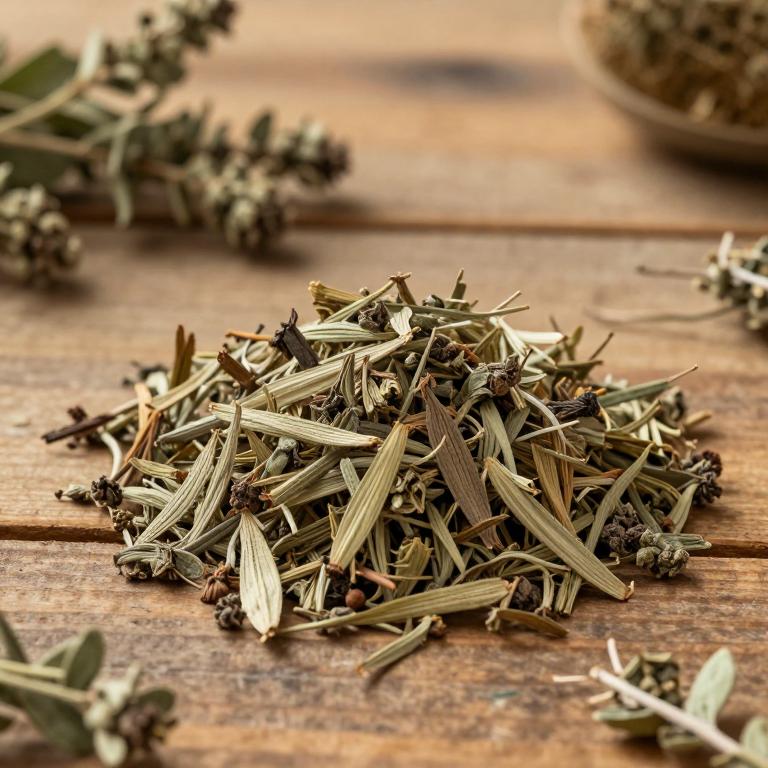
Names and Synonyms
Common Names
- Russian Sage
- Swanleaf Clouding Sage
Scientific Names
Accepted name
Salvia yangiiSynonyms
- Perovskia atriplicifolia
- Perovskia pamirica
Regional and Traditional Names
Spanish:
- Perovskia atriplicifolia
- Perovskia pamirica
- Salvia rusa
- Salvia rusa
German:
- Silber-Perowskie
French:
- Lavande d'Afghanistan
- Sauge d'Afghanistan
- Sauge de Russie
- Lavande d'Afghanistan
- Sauge d'Afghanistan
Sources: Wikidata, Catalogue of Life
Taxonomical Classification
This plant belongs to the kingdom Plantae and the phylum Streptophyta, falling under the class Equisetopsida and subclass Magnoliidae. It is further classified within the order Lamiales and the family Lamiaceae. Ultimately, it is identified by its genus name, Salvia.
| Rank | Classification |
|---|---|
| Kingdom | Plantae |
| Phylum | Streptophyta |
| Class | Equisetopsida |
| Subclass | Magnoliidae |
| Order | Lamiales |
| Family | Lamiaceae |
| Genus | Salvia |
Sources: The World Checklist of Vascular Plants (WCVP)
Distribution
This plant exhibits a broad and diverse geographical distribution across several continents. In Middle Europe, it can be found growing within the borders of Austria and Germany. Its range extends into Western Asia, where it is documented in Afghanistan. Within China, the species is located in the high-altitude regions of Tibet. Additionally, the plant is distributed across the expansive territory of Xinjiang.
| Region | Area |
|---|---|
| Middle Europe | Austria |
| Middle Europe | Germany |
| Western Asia | Afghanistan |
| China | Tibet |
| China | Xinjiang |
| Indian Subcontinent | Pakistan |
| Indian Subcontinent | West Himalaya |
| South-Central U.S.A. | New Mexico |
Sources: The World Checklist of Vascular Plants (WCVP)
Botanical Identification
Ecology
The ecology of Salvia yangii is characterized by its adaptation to diverse montane and subalpine environments, where it thrives across a significant altitudinal gradient. This species is primarily distributed within a specific elevational range, occupying habitats from a minimum of 900 m AMSL to a maximum of 3200 m AMSL. Such a broad vertical distribution indicates a high degree of ecological plasticity, allowing the plant to persist in various microclimates and soil conditions found throughout these different mountain strata. Its ability to inhabit these varied elevations suggests resilience to fluctuating temperature regimes and varying levels of solar radiation typical of high-altitude ecosystems.
- Elevational range max:
- 3200 m AMSL
- Elevational range min:
- 900 m AMSL
Life history
The life history of Salvia yangii is characterized by its specialized growth strategy as a perennial herb, specifically classified under the life form categories of chamaephyte (both as the primary Life_form_1 and Life_form_2 designation). This classification indicates that the plant maintains its perennating buds very close to the soil surface, often just above it, which allows it to survive seasonal environmental fluctuations and potential grazing or fire by keeping its vital regenerative structures protected near the ground. As a chamaephyte, it utilizes this low-growing habit to thrive in its native habitats, typically managing its energy reserves through a woody or semi-woody base that supports seasonal foliage and flowering cycles. This life strategy ensures resilience, as the proximity of its buds to the substrate provides a buffer against temperature extremes and desiccation, facilitating a robust reproductive cycle and long-term persistence in its ecological niche.
- Life form :
- chamaephyte
Morphology
The morphology of Salvia yangii is characterized by a non-woody growth habit, typically manifesting as a herbaceous structure. It functions as a self-supporting plant, meaning it does not require external support to maintain its upright stature within its environment. Furthermore, it is an independent species that does not exhibit parasitic behavior, nor does it function as an epiphyte; instead, it maintains a terrestrial life form, growing directly in the soil.
- Climber :
- self-supporting
- Epiphyte :
- terrestrial
- Parasite :
- independent
- Woodiness :
- non-woody
Sources: Global Inventory of Floras and Traits (GIFT)
Plant Parts
Salvia yangii has 1 reported plant parts identified across 1 scientific publications and several other databases that are studied for medicinal purposes. The most consistently reported plant part include leaf.
| Plant part | Supporting sources | Consensus |
|---|---|---|
| Leaf | 1 supporting sources | ★☆☆☆☆ |
Leaf
- Journal of natural products
Chemicals
Salvia yangii has 20 reported phytochemicals identified across 1 scientific publications and several other databases. The most consistently reported chemicals include rosmarinic acid, caffeic acid, 1,2-Didehydromiltirone, 1,2-Didehydrotanshinone IIA, 1,8-Cineol.
| Chemical | Supporting sources | Consensus |
|---|---|---|
| rosmarinic acid | 6 supporting sources | ★★★☆☆ |
| caffeic acid | 2 supporting sources | ★☆☆☆☆ |
| 1,2-Didehydromiltirone | 1 supporting sources | ★☆☆☆☆ |
| 1,2-Didehydrotanshinone IIA | 1 supporting sources | ★☆☆☆☆ |
| 1,8-Cineol | 1 supporting sources | ★☆☆☆☆ |
| 1-oxomiltirone | 1 supporting sources | ★☆☆☆☆ |
| Arucadiol | 1 supporting sources | ★☆☆☆☆ |
| Borneol | 1 supporting sources | ★☆☆☆☆ |
| Carnosic acid | 1 supporting sources | ★☆☆☆☆ |
| Cryptotanshinone | 1 supporting sources | ★☆☆☆☆ |
rosmarinic acid
- Biology
- International journal of molecular sciences
- Molecules (Basel, Switzerland)
- Natural product communications
- Genes
View 1 additional sources
- Pharmacognosy magazine
caffeic acid
- Biology
- Molecules (Basel, Switzerland)
1,2-Didehydromiltirone
- Natural product communications
1,2-Didehydrotanshinone IIA
- Natural product communications
1,8-Cineol
- Biology
1-oxomiltirone
- Natural product communications
Arucadiol
- Natural product communications
Borneol
- Biology
Carnosic acid
- Scientific reports
Cryptotanshinone
- Natural product communications
Activities
Salvia yangii has 4 reported activities identified across 1 scientific publications and several other databases. The most consistently reported activities include Antimicrobial, Antioxidant, Antidiabetic, Cytotoxic.
| Activity | Supporting sources | Consensus |
|---|---|---|
| Antimicrobial | 2 supporting sources | ★☆☆☆☆ |
| Antioxidant | 2 supporting sources | ★☆☆☆☆ |
| Antidiabetic | 1 supporting sources | ★☆☆☆☆ |
| Cytotoxic | 1 supporting sources | ★☆☆☆☆ |
Antimicrobial
- Molecules (Basel, Switzerland)
- Plants (Basel, Switzerland)
Antioxidant
- Molecules (Basel, Switzerland)
- Plants (Basel, Switzerland)
Antidiabetic
- Pharmacognosy magazine
Cytotoxic
- Plants (Basel, Switzerland)
Conditions
Salvia yangii has 1 reported investigations on conditions identified across 1 scientific publications and several other databases. The most consistently reported conditions include antioxidant.
| Condition | Supporting sources | Consensus |
|---|---|---|
| Antioxidant | 1 supporting sources | ★☆☆☆☆ |
Antioxidant
- Molecules (Basel, Switzerland)
Preparations
Salvia yangii has 3 reported preparations identified across 1 scientific publications and several other databases. The most consistently reported preparations include BuOH extract, hairy root cultures, leaves of Perovskia atriplicifolia.
| Preparation | Supporting sources | Consensus |
|---|---|---|
| Buoh extract | 1 supporting sources | ★☆☆☆☆ |
| Hairy root cultures | 1 supporting sources | ★☆☆☆☆ |
| Leaves of perovskia atriplicifolia | 1 supporting sources | ★☆☆☆☆ |
Buoh extract
- Chemistry & biodiversity
Hairy root cultures
- International journal of molecular sciences
Leaves of perovskia atriplicifolia
- Journal of natural products