wild clary
Salvia verbenaca · Accepted scientific name
Scientific literature: Very Sparse (20 studies) · ★☆☆☆☆
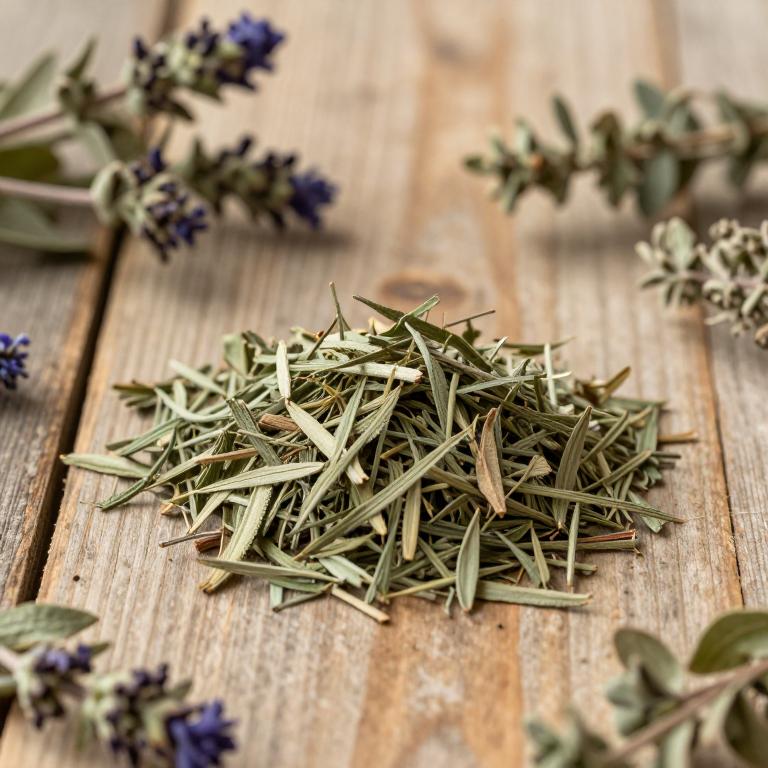
Wild clary, scientifically known as Salvia verbenaica, is a versatile perennial herb cherished in traditional herbalism. Renowned for its aromatic foliage and delicate blooms, this plant offers diverse therapeutic properties. Often used to support digestive health and ease inflammation, it remains a fascinating staple in botanical wellness practices worldwide.
Names and Synonyms
Common Names
- Wild Clary
- Wild Sage
- vervain sage
Scientific Names
Accepted name
Salvia verbenacaSynonyms
- Gallitrichum clandestinum
- Gallitrichum verbenacum
- Gallitrichum horminoides
- Gallitrichum pallidiflorum
- Horminum verbenacum
- Larnastyra verbenaca
- Sclarea verbenaca
- Salvia verbenaca var. oblongata
- Salvia clandestina var. pallidiflora
- Salvia clandestina var. obtusata
- Salvia verbenaca var. dubia
- Salvia linnaei
- Gallitrichum arvale
- Salvia candollei
- Salvia verbenaca subsp. foetens
- Salvia verbenaca subsp. battandieri
- Salvia verbenaca var. spielmannii
- Salvia weihaiensis
- Salvia spielmanniana
- Gallitrichum dichroanthum
- Gallitrichum anglicum
- Gallitrichum ptychophyllum
- Gallitrichum rosulatum
- Horminum parviflorum
- Horminum sylvestre
- Salvia subscaposa
- Salvia verbenaca subsp. claudi
- Salvia verbenaca var. bicolor
- Salvia verbenaca var. integrifolia
- Larnastyra claytonii
- Salvia verbenaca subsp. controversa
- Salvia verbenaca var. laxispica
- Salvia verbenaca var. praecox
- Salvia verbenaca var. oblongifolia
- Salvia verbenaca var. sabulicola
- Salvia verbenaca var. serrata
- Salvia verbenaca var. disermas
- Salvia verbenaca subsp. ochroleuca
- Salvia sennenii var. acanthifolia
- Salvia verbenaca subsp. horminoides
- Salvia clandestina var. controversa
- Salvia verbenaca subsp. sabulicola
- Salvia horminoides var. pinnatiloba
- Salvia verbenaca subsp. oblongata
- Salvia linnaei subsp. clandestina
- Salvia verbenaca var. anglica
- Salvia linnaei subsp. horminoides
- Salvia clandestina var. hiemalis
- Salvia polymorpha
- Salvia linnaei proles controversa
- Salvia clandestina subsp. multifida
- Salvia verbenaca subsp. clandestina
- Salvia clandestina var. multifida
- Salvia verbenaca var. ovatocrenata
- Salvia rhodantha
- Salvia verbenaca var. serotina
- Salvia theodori
- Salvia verbenaca var. sinuata
- Salvia verbenaca var. amplifrons
- Salvia verbenaca var. clandestina
- Salvia verbenaca var. horminoides
- Salvia sennenii
- Salvia verbenaca var. multifida
- Salvia sabulicola
- Salvia verbenaca subsp. multifida
- Salvia verbenaca var. controversa
- Salvia verbenaca var. vernalis
- Salvia verbenaca var. australis
- Salvia ochroleuca
- Salvia pallidiflora
- Salvia neglecta
- Salvia multifida
- Salvia multifida var. delicatula
- Salvia mediterranea
- Salvia lowei
- Salvia intricata
- Salvia illyrica
- Salvia anglica
- Salvia anselmii
- Salvia byzantina
- Salvia barcinonensis
- Salvia basilii
- Salvia acutata
- Salvia cleistogama
- Salvia clandestina
- Salvia clandestinoides
- Salvia controversa
- Salvia fontii
- Salvia electa
- Salvia erosa
- Salvia domenechii
- Salvia hiemalis
- Salvia horminoides
- Salvia verbenaca var. delicatula
- Salvia verbenacoides
- Salvia verbenifolia
- Salvia variabilis
- Salvia vivianii
- Sclarea rhodantha
- Sclarea decidua
- Sclarea viscosissima
- Gallitrichum rubellum
- Gallitrichum stereocaulon
- Gallitrichum virgatum
- Gallitrichum candollei
- Gallitrichum maculatum
- Salvia laciniata
Regional and Traditional Names
Spanish:
- Horminum verbenacum
- Larnastyra verbenaca
- Gallitrichum verbenacum
- Sclarea verbenaca
- Salvia pyrenaica
- Salvia clandestina
- Salvia horminioides
- Sclarea viscosissima
- Sclarea decidua
- Salvia verbenifolia
- Salvia praecox
- Salvia oblongata
- Salvia verbenacoides
- Salvia multifida
- Salvia spielmanniana
- Salvia illyrica
- Salvia spielmannii
- Salvia polymorpha
- Salvia laciniata
- Salvia erosa
- Salvia acutata
- Salvia claytonii
- Salvia parviflora
- Salvia clandestinoides
- Horminum sylvestre
- Salvia pallidiflora
- Salvia hiemalis
- Salvia vivianii
- Salvia neglecta
- Salvia controversa
- Salvia variabilis
- Salvia dubia
- Flipanta ovata
- Larnastyra claytonii
- Salvia lowei
- Salvia rugosissima
- Gallitrichum rubellum
- Gallitrichum stereocaulon
- Salvia cleistogama
- Gallitrichum anglicum
- Gallitrichum arvale
- Gallitrichum clandestinum
- Gallitrichum dichroanthum
- Gallitrichum maculatum
- Gallitrichum pallidiflorum
- Gallitrichum ptychophyllum
- Gallitrichum rosulatum
- Gallitrichum virgatum
- Gallitrichum candollei
- Gallitrichum horminioides
- Salvia candollei
- Salvia ochroleuca
- Salvia sabulicola
- Salvia anglica
- Salvia clandestina var. hiemalis
- Salvia clandestina subsp. multifida
- Salvia clandestina var. obtusata
- Salvia clandestina var. pallidiflora
- Salvia linnaei
- Salvia domenechii
- Salvia multifida var. delicatula
- Salvia sennenii
- Salvia rhodantha
- Sclarea rhodantha
- Balsamilla
- Balsamilla de Aragón
- Cáñamo de campo
- Crespogallo
- Crespo gallo
- Cresta de gallina
- Crestagallo
- Crestas de gallo
- Hierba de las golondrina
- Gallocresta común
- Gallocristo
- Dornillos
- Gallicresta
- Gallocrespo
- Hierba de la Santa Lucía
- Grana de cresta de gallo
- Hierba de ciego
- Hierba de la cruz
- Hierba motera
- Hierba del ciego
- Horminio
- Hormino silvestre
- Ormino salvaje
- Maro negro sevillano
- Maro sevillano
- Mata salamanquesa
- Ormino
- Ormino silvestre
- Oropeso
- Tabaco domingo
- Tabaco domingué
- Yerba de la cruz
- Tabaco mataquintos
- Tarrax
- Trigo de gallina
- Verbenaca
- Yerba de gallina
- Yerba de los ojos
- Yerba-motera
- Gallocresta comun
- Balsamilla de Aragon
- Tabaco domingue
- Hierba de la Santa Lucia
- Cánamo de campo
- Cañamo de campo
- Canamo de campo
- Salvia clandestina subsp multifida
- Salvia clandestina var hiemalis
- Salvia clandestina var obtusata
- Salvia clandestina var pallidiflora
- Salvia multifida var delicatula
- Yerba motera
- Verbenaca
- Gallocresta
German:
- Eisenkraut-Salbei
- Eisenkrautsalbei
- Eisenkraut-Salbei
French:
- sauge verveine
- Sauge a petites fleurs
- Sauge fausse-verveine
- Sauge à feuilles de verveine
Sources: Wikidata, Catalogue of Life
Taxonomical Classification
This plant belongs to the kingdom Plantae and is classified under the phylum Streptophyta and class Equisetopsida. Within the subclass Magnoliidae, it is placed in the order Lamiales and the family Lamiaceae. Finally, it is categorized under the genus Salvia.
| Rank | Classification |
|---|---|
| Kingdom | Plantae |
| Phylum | Streptophyta |
| Class | Equisetopsida |
| Subclass | Magnoliidae |
| Order | Lamiales |
| Family | Lamiaceae |
| Genus | Salvia |
Sources: The World Checklist of Vascular Plants (WCVP)
Distribution
This plant exhibits a specific distribution across several regions of Europe. In Northern Europe, its presence is documented in both Great Britain and Ireland. Moving toward Middle Europe, the species can be found throughout Germany and the Netherlands. Additionally, it is located within the Czechia-Slovakia region. These areas collectively define the known geographical range for Salvia verbenaica.
| Region | Area |
|---|---|
| Northern Europe | Great Britain |
| Northern Europe | Ireland |
| Middle Europe | Czechia-Slovakia |
| Middle Europe | Germany |
| Middle Europe | Netherlands |
| Southwestern Europe | Baleares |
| Southwestern Europe | Corse |
| Southwestern Europe | France |
| Southwestern Europe | Portugal |
| Southwestern Europe | Sardegna |
Sources: The World Checklist of Vascular Plants (WCVP)
Botanical Identification
Ecology
The ecology of Salvia verbenaica is characterized by its broad adaptability across diverse landscapes and altitudinal gradients. This species thrives in a variety of habitats, including meadows, mountain regions, limestone formations, and even disturbed areas such as crop fields. Its ecological distribution is extensive, spanning an elevational range from sea level (0 m AMSL) up to a maximum altitude of 2500 m AMSL.
- Elevational range max:
- 2500 m AMSL
- Elevational range min:
- 0 m AMSL
- Habitat :
- crop fields, limestone, meadows, mountains
Life history
The life history of Salvia verbenaica is characterized by its classification as a perennial plant, allowing it to persist through multiple growing seasons. As a hemicryptophyte, its perennating buds are situated at or just below the soil surface, protected by leaf litter or surface debris during unfavorable conditions. The plant exhibits variable deciduousness, meaning its foliage may shed or remain depending on specific environmental pressures and seasonal changes. This combination of a perennial lifecycle and a hemicryptophytic life form enables the species to maintain a stable presence within its ecological niche, adapting its growth patterns to the shifting availability of resources.
- Deciduousness :
- variable
- Life form :
- hemicryptophyte
- Lifecycle :
- perennial
Morphology
The morphology of Salvia verbenaica is characterized by a non-woody growth form, functioning primarily as a herb or forb. It is a self-supporting plant that does not exhibit climbing behavior, such as a vine or liana, and it operates as an independent organism rather than a parasite. This terrestrial species is neither aquatic nor an epiphyte, maintaining a standard land-based existence. In terms of stature, the plant displays a variable height, ranging from a minimum of 0.05 m to a maximum of 1 m, with an average plant height of approximately 0.425 m.
- Aquatic :
- terrestrial
- Climber :
- self-supporting
- Epiphyte :
- terrestrial
- Growth form :
- herb
- Growth form :
- forb
- Parasite :
- independent
- Plant height max:
- 1 m
- Plant height mean:
- 0.425 m
- Plant height min:
- 0.05 m
- Woodiness :
- non-woody
Physiology
The physiology of Salvia verbenaica is characterized by a C3 photosynthetic pathway, indicating a metabolic process optimized for environments where carbon dioxide fixation occurs directly through the enzyme Rubisco without specialized anatomical adaptations like those found in C4 or CAM plants. The plant is non-carnivorous and does not possess the physiological mechanisms required for nitrogen fixation, meaning it relies on the soil for its nitrogen requirements. Morphologically, its physiological functions are supported by an elliptic leaf form arranged in a rosette pattern. These leaves exhibit specific dimensional variations, with a minimum leaf length of 5 cm reaching a maximum of 10 cm, and a leaf width that ranges from a minimum of 2 cm to a maximum of 4 cm, maintaining a mean width of approximately 1.5 cm.
- Carnivory :
- non-carnivorous
- Leaf arrangement :
- rosette
- Leaf form :
- elliptic
- Leaf length max:
- 10 cm
- Leaf length min:
- 5 cm
- Leaf width max:
- 4 cm
- Leaf width mean:
- 1.5 cm
- Leaf width min:
- 2 cm
- Nitrogen fixer :
- no
- Photosynthetic pathway :
- C3
Reproduction
The reproduction of Salvia verbenaica is characterized by a sexual process through bisexual flowers, with asexual reproduction being absent. The flowering period is quite extensive, beginning in April and continuing through December. These flowers are blue in color and vary in length from a minimum of 0.3 cm to a maximum of 1.6 cm. The pollination syndrome is biotic, specifically relying on insects such as bees to facilitate fertilization; notably, self-fertilization is absent in this species. Following successful pollination, the plant produces dry, black fruits classified as achenes. These fruits are relatively small, ranging from 0.16 cm to 0.23 cm in width and 0.17 cm to 0.24 cm in length, and they are indehiscent. Each fruit is prolific, containing between 101 and 1000 seeds. The seeds themselves are minute, with a mean length of 2 mm, a mean volume of 1.8 mm³, and a mean mass of approximately 0.0027295 g (ranging from a minimum of 0.0006 g to a maximum of 0.00331 g). Dispersal is achieved via an autochorous syndrome, meaning the plant utilizes autochorous mechanisms to distribute its seeds.
- Dehiscence :
- indehiscent
- Dispersal syndrome :
- autochorous
- Flower colour :
- blue
- Flower length max:
- 1.6 cm
- Flower length min:
- 0.3 cm
- Flowering time :
- Apr
- Flowering time :
- Dec
- Fruit colour :
- black
- Fruit dryness :
- dry
- Fruit length max:
- 0.24 cm
- Fruit length min:
- 0.17 cm
- Fruit type :
- achene
- Fruit width max:
- 0.23 cm
- Fruit width min:
- 0.16 cm
- Pollination syndrome :
- insect
- Pollination syndrome :
- bee
- Pollination syndrome :
- biotic
- Reproduction asexual :
- absent
- Reproduction sexual :
- bisexual
- Seed length mean:
- 2 mm
- Seed mass max:
- 0.00331 g
- Seed mass mean:
- 0.0027295 g
- Seed mass min:
- 6e-04 g
- Seed volume max:
- 1.8 mm³
- Seeds_per_fruit :
- 101-1000
- Self fertilization :
- absent
Sources: Global Inventory of Floras and Traits (GIFT)
Plant Parts
Salvia verbenaca has 1 reported plant parts identified across 1 scientific publications and several other databases that are studied for medicinal purposes. The most consistently reported plant part include root.
| Plant part | Supporting sources | Consensus |
|---|---|---|
| Root | 1 supporting sources | ★☆☆☆☆ |
Root
- Turkish journal of pharmaceutical sciences
Chemicals
Salvia verbenaca has 6 reported phytochemicals identified across 1 scientific publications and several other databases. The most consistently reported chemicals include Fatty acids, Flavonoids, Sesquiterpenes, Sterols, Terpenoids.
| Chemical | Supporting sources | Consensus |
|---|---|---|
| Fatty acids | 1 supporting sources | ★☆☆☆☆ |
| Flavonoids | 1 supporting sources | ★☆☆☆☆ |
| Sesquiterpenes | 1 supporting sources | ★☆☆☆☆ |
| Sterols | 1 supporting sources | ★☆☆☆☆ |
| Terpenoids | 1 supporting sources | ★☆☆☆☆ |
| Verbenacine | 1 supporting sources | ★☆☆☆☆ |
Fatty acids
- BioMed research international
Flavonoids
- BioMed research international
Sesquiterpenes
- Natural product research
Sterols
- BioMed research international
Terpenoids
- BioMed research international
Verbenacine
- Zeitschrift fur Naturforschung. C, Journal of biosciences
Activities
Salvia verbenaca has 4 reported activities identified across 1 scientific publications and several other databases. The most consistently reported activities include Antibacterial, Anticancer, Antidiabetic, Antioxidant.
| Activity | Supporting sources | Consensus |
|---|---|---|
| Antibacterial | 1 supporting sources | ★☆☆☆☆ |
| Anticancer | 1 supporting sources | ★☆☆☆☆ |
| Antidiabetic | 1 supporting sources | ★☆☆☆☆ |
| Antioxidant | 1 supporting sources | ★☆☆☆☆ |
Antibacterial
- BioMed research international
Anticancer
- BioMed research international
Antidiabetic
- BioMed research international
Antioxidant
- BioMed research international
Conditions
Salvia verbenaca has 8 reported investigations on conditions identified across 1 scientific publications and several other databases. The most consistently reported conditions include antidiabetic, antioxidant, colitis, gastrointestinal disorders, neurodegenerative disorders.
| Condition | Supporting sources | Consensus |
|---|---|---|
| Antidiabetic | 1 supporting sources | ★☆☆☆☆ |
| Antioxidant | 1 supporting sources | ★☆☆☆☆ |
| Colitis | 1 supporting sources | ★☆☆☆☆ |
| Gastrointestinal disorders | 1 supporting sources | ★☆☆☆☆ |
| Neurodegenerative disorders | 1 supporting sources | ★☆☆☆☆ |
| Oxidative damage | 1 supporting sources | ★☆☆☆☆ |
| Wound healing | 1 supporting sources | ★☆☆☆☆ |
| Wounds | 1 supporting sources | ★☆☆☆☆ |
Antidiabetic
- BioMed research international
Antioxidant
- BioMed research international
Colitis
- Antioxidants (Basel, Switzerland)
Gastrointestinal disorders
- Antioxidants (Basel, Switzerland)
Neurodegenerative disorders
- BioMed research international
Oxidative damage
- Turkish journal of pharmaceutical sciences
Wound healing
- BioMed research international
Wounds
- Turkish journal of pharmaceutical sciences
Preparations
Salvia verbenaca has 1 reported preparations identified across 1 scientific publications and several other databases. The most consistently reported preparations include extract.
| Preparation | Supporting sources | Consensus |
|---|---|---|
| Extract | 1 supporting sources | ★☆☆☆☆ |
Extract
- Antioxidants (Basel, Switzerland)