Salvia trichoclada
Salvia trichoclada · Accepted scientific name
Scientific literature: Very Sparse (5 studies) · ★☆☆☆☆
Salvia trichoclada, scientifically known as Salvia trichoclada, is a distinctive medicinal herb native to specific subtropical regions. Renowned for its unique hairy foliage, this plant belongs to the Lamiaceae family. It is increasingly studied for its bioactive compounds, offering promising therapeutic potential in traditional and modern herbal medicine.
- Family
- Lamiaceae
- Native range
- Asia-Temperate
- Parts used
- Not available
- Common names
- Not available
- Scientific synonyms
- Not available
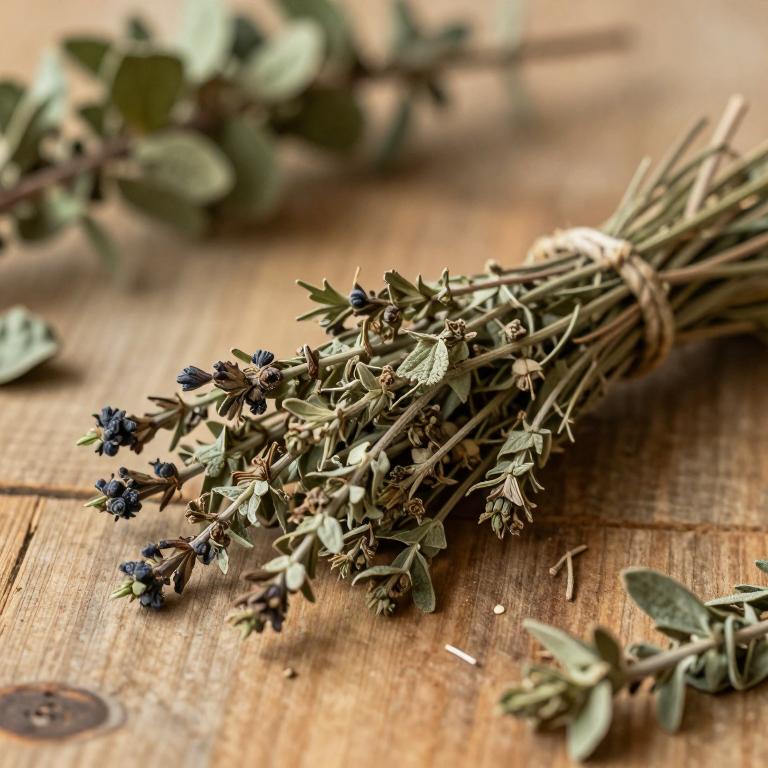
Names and Synonyms
Scientific Names
Accepted name
Salvia trichocladaSources: Wikidata, Catalogue of Life
Taxonomical Classification
This plant belongs to the kingdom Plantae and the phylum Streptophyta, falling under the class Equisetopsida and subclass Magnoliidae. It is classified within the order Lamiales and the family Lamiaceae. Finally, it is identified under the genus Salvia.
| Rank | Classification |
|---|---|
| Kingdom | Plantae |
| Phylum | Streptophyta |
| Class | Equisetopsida |
| Subclass | Magnoliidae |
| Order | Lamiales |
| Family | Lamiaceae |
| Genus | Salvia |
Sources: The World Checklist of Vascular Plants (WCVP)
Distribution
This plant, known scientifically as Salvia trichoclada, exhibits a specific distribution pattern across the Western Asian region. It can be found growing naturally within the borders of Iran. Additionally, its habitat extends into the territories of Iraq. The species is also documented to occur throughout Türkiye. Consequently, these three countries represent the primary geographical range for this medicinal species.
| Region | Area |
|---|---|
| Western Asia | Iran |
| Western Asia | Iraq |
| Western Asia | Türkiye |
Sources: The World Checklist of Vascular Plants (WCVP)
Botanical Identification
Life history
The life history of Salvia trichoclada is characterized by its classification as a chamaephyte, a life form where the regenerative buds are located close to the soil surface, often just above it, protected by the substrate or low-lying vegetation. This growth habit allows the plant to persist in its specific ecological niche, utilizing a perennial strategy to survive seasonal environmental fluctuations. As a member of the Lamiaceae family, its developmental cycle involves establishing a robust root system that supports its structural integrity and nutrient uptake, eventually leading to the production of characteristic inflorescences. The life cycle proceeds from germination and vegetative growth through to reproductive maturity, where it produces flowers and seeds to ensure the continuation of the species within its habitat.
- Life form :
- chamaephyte
Morphology
The morphology of Salvia trichoclada is characterized by its growth habit as a self-supporting climber, utilizing its structural development to ascend without requiring external hosts for stability. It functions as an independent organism, exhibiting no parasitic behavior toward other plants, and maintains a terrestrial lifestyle rather than living as an epiphyte.
- Climber :
- self-supporting
- Epiphyte :
- terrestrial
- Parasite :
- independent
Sources: Global Inventory of Floras and Traits (GIFT)
Chemicals
Salvia trichoclada has 1 reported phytochemicals identified across 0 scientific publications and several other databases. The most consistently reported chemicals include glochidone.
| Chemical | Supporting sources | Consensus |
|---|---|---|
| glochidone | 1 supporting sources | ★☆☆☆☆ |
glochidone
- The Journal of steroid biochemistry and molecular biology
Activities
Salvia trichoclada has 4 reported activities identified across 0 scientific publications and several other databases. The most consistently reported activities include Antibacterial, Anticancer, Antidiabetic, Antifungal.
| Activity | Supporting sources | Consensus |
|---|---|---|
| Antibacterial | 1 supporting sources | ★☆☆☆☆ |
| Anticancer | 1 supporting sources | ★☆☆☆☆ |
| Antidiabetic | 1 supporting sources | ★☆☆☆☆ |
| Antifungal | 1 supporting sources | ★☆☆☆☆ |
Antibacterial
- The Journal of steroid biochemistry and molecular biology
Anticancer
- The Journal of steroid biochemistry and molecular biology
Antidiabetic
- The Journal of steroid biochemistry and molecular biology
Antifungal
- The Journal of steroid biochemistry and molecular biology