Salvia tomentosa
Salvia tomentosa · Accepted scientific name
Scientific literature: Very Sparse (24 studies) · ★☆☆☆☆
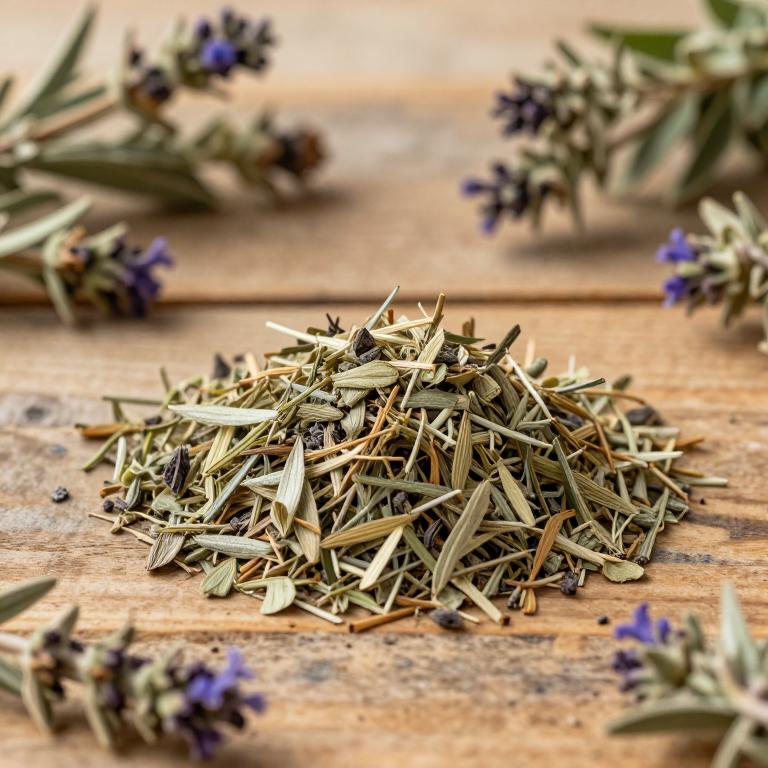
Salvia tomentoosa, scientifically known as Salvia tomentoza, is a striking perennial sage celebrated for its velvety, silver-green foliage and vibrant tubular flowers. Native to arid regions, this resilient plant is prized in traditional herbalism for its therapeutic properties and as an ornamental gem in Mediterranean-style gardens.
- Family
- Not available
- Native range
- Europe
- Parts used
- Not available
- Common names
- Not available
- Scientific synonyms
- Not available
Names and Synonyms
Scientific Names
Accepted name
Salvia tomentosaDistribution
This plant exhibits a diverse geographical distribution across several regions of the European continent. In Middle Europe, its presence can be documented within the borders of Germany. Moving toward the Balkan Peninsula, it is found throughout Southeastern Europe in countries such as Albania and Bulgaria. The species also extends its range into Greece, occupying various habitats in that region. Finally, its distribution reaches the European portion of Türkiye, completing its presence across these specific territories.
| Region | Area |
|---|---|
| Middle Europe | Germany |
| Southeastern Europe | Albania |
| Southeastern Europe | Bulgaria |
| Southeastern Europe | Greece |
| Southeastern Europe | Türkiye-in-Europe |
| Southeastern Europe | NW. Balkan Pen. |
| Eastern Europe | Krym |
| Caucasus | Transcaucasus |
| Western Asia | East Aegean Is. |
| Western Asia | Lebanon-Syria |
Sources: The World Checklist of Vascular Plants (WCVP)
Botanical Identification
Ecology
The ecology of Salvia tomentoza is characterized by its adaptability to diverse landscape types, primarily flourishing within forest environments, along forest edges, and throughout steppe ecosystems. By occupying these varied niches, the species benefits from different light availability and soil compositions, ranging from the sheltered, more humid conditions of forest interiors to the more exposed, arid, and sun-drenched stretches of the steppe. Its presence at forest edges suggests a preference for transitional ecotones where it can exploit the increased sunlight and structural diversity found between wooded areas and open grasslands.
- Habitat :
- forest, forest edges, steppe
Life history
The life history of Salvia tomentoza is characterized by its status as a perennial plant, allowing it to persist through multiple growing seasons. In terms of its growth habit and survival strategy, it is classified as a chamaephyte, a life form where the permanent buds are located close to the soil surface, often protected by leaf litter or organic matter. This classification is consistent across its structural life form descriptions, reinforcing its adaptation to maintain its reproductive and vegetative organs at a low height relative to the ground level.
- Life form :
- chamaephyte
- Lifecycle :
- perennial
Morphology
The morphology of Salvia tomentoza is characterized by a woody, subshrub growth form that functions as a self-supporting, independent plant. It is a terrestrial species that does not exhibit parasitic or epiphytic behavior. The plant typically maintains an ascending shoot orientation, reaching a height that varies between a minimum of 0.3 m and a maximum of 0.8 m, with an average plant height of approximately 0.5 m.
- Aquatic :
- terrestrial
- Climber :
- self-supporting
- Epiphyte :
- terrestrial
- Growth form :
- shrub
- Growth form :
- subshrub
- Parasite :
- independent
- Plant height max:
- 0.8 m
- Plant height mean:
- 0.5 m
- Plant height min:
- 0.3 m
- Shoot orientation :
- ascending
- Woodiness :
- woody
Reproduction
The reproduction of Salvia tomentoza is characterized by a specific flowering phenology and distinct seed morphology. The plant's flowering period is concentrated primarily in July, though the timing can exhibit variability. During the reproductive phase, the production of seeds follows a specific mass distribution; the mean seed mass is recorded at 0.00853 g, with individual seeds ranging from a minimum mass of 0.006 g to a maximum mass of 0.01106 g.
- Flowering time :
- Jul
- Seed mass max:
- 0.01106 g
- Seed mass mean:
- 0.00853 g
- Seed mass min:
- 0.006 g
Sources: Global Inventory of Floras and Traits (GIFT)
Chemicals
Salvia tomentosa has 3 reported phytochemicals identified across 0 scientific publications and several other databases. The most consistently reported chemicals include Carnosic acid, Cirsilineol, Diosmetin.
| Chemical | Supporting sources | Consensus |
|---|---|---|
| Carnosic acid | 1 supporting sources | ★☆☆☆☆ |
| Cirsilineol | 1 supporting sources | ★☆☆☆☆ |
| Diosmetin | 1 supporting sources | ★☆☆☆☆ |
Carnosic acid
- Dr. Duke
Cirsilineol
- Dr. Duke
Diosmetin
- Dr. Duke
Activities
Salvia tomentosa has 21 reported activities identified across 0 scientific publications and several other databases. The most consistently reported activities include Aldose-Reductase-Inhibitor, Antialzheimeran, Antidementia, Antiinflammatory, Antimalarial.
| Activity | Supporting sources | Consensus |
|---|---|---|
| Aldose-Reductase-Inhibitor | 1 supporting sources | ★☆☆☆☆ |
| Antialzheimeran | 1 supporting sources | ★☆☆☆☆ |
| Antidementia | 1 supporting sources | ★☆☆☆☆ |
| Antiinflammatory | 1 supporting sources | ★☆☆☆☆ |
| Antimalarial | 1 supporting sources | ★☆☆☆☆ |
| Antimutagenic | 1 supporting sources | ★☆☆☆☆ |
| Antioxidant | 1 supporting sources | ★☆☆☆☆ |
| Antirhinoviral | 1 supporting sources | ★☆☆☆☆ |
| Antispasmodic | 1 supporting sources | ★☆☆☆☆ |
| Antiviral | 1 supporting sources | ★☆☆☆☆ |
Aldose-Reductase-Inhibitor
- Dr. Duke
Antialzheimeran
- Dr. Duke
Antidementia
- Dr. Duke
Antiinflammatory
- Dr. Duke
Antimalarial
- Dr. Duke
Antimutagenic
- Dr. Duke
Antioxidant
- Dr. Duke
Antirhinoviral
- Dr. Duke
Antispasmodic
- Dr. Duke
Antiviral
- Dr. Duke