Texan Sage
Salvia texana · Accepted scientific name
Scientific literature: Very Sparse (3 studies) · ★☆☆☆☆
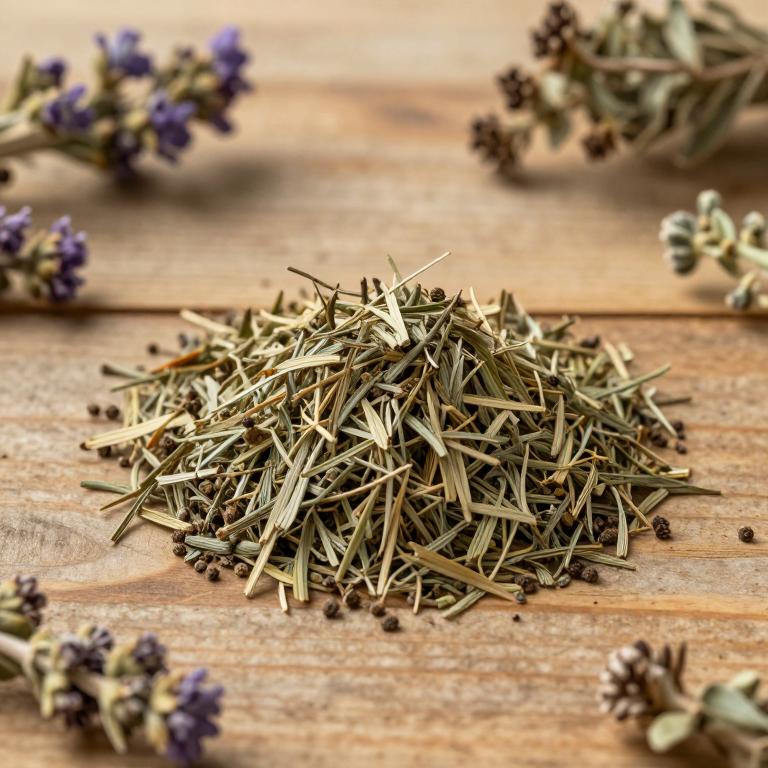
Texan Sage, scientifically known as Salvia texana, is a resilient perennial native to the rocky soils of Texas. Characterized by its striking violet-blue blooms and aromatic foliage, this hardy herb thrives in sun-drenched landscapes. It serves as a vital pollinator magnet, supporting bees and butterflies within native gardens.
- Family
- Lamiaceae
- Native range
- Northern America
- Parts used
- Not available
- Common names
- Texan Sage
- Scientific synonyms
- Salviastrum Texanum Var. Canescens · Salviastrum Canescens · 2 more
Names and Synonyms
Common Names
- Texan Sage
Scientific Names
Accepted name
Salvia texanaSynonyms
- Salviastrum texanum var. canescens
- Salviastrum canescens
- Salvia texana var. canescens
- Salviastrum texanum
Sources: Wikidata, Catalogue of Life
Taxonomical Classification
This plant belongs to the kingdom Plantae and is classified under the phylum Streptophyta and the class Equisetopsida. Within the subclass Magnoliidae, it falls under the order Lamiales and the family Lamiaceae. Finally, it is identified by the genus Salvia.
| Rank | Classification |
|---|---|
| Kingdom | Plantae |
| Phylum | Streptophyta |
| Class | Equisetopsida |
| Subclass | Magnoliidae |
| Order | Lamiales |
| Family | Lamiaceae |
| Genus | Salvia |
Sources: The World Checklist of Vascular Plants (WCVP)
Distribution
This plant exhibits a specific geographical range located primarily within the South-Central United States. In this region, it can be found growing in the state of New Mexico. Its distribution also extends significantly through the state of Texas. Beyond the United States, the species reaches into Mexico. Specifically, it is documented to inhabit the Northeast portion of Mexico.
| Region | Area |
|---|---|
| South-Central U.S.A. | New Mexico |
| South-Central U.S.A. | Texas |
| Mexico | Mexico Northeast |
Sources: The World Checklist of Vascular Plants (WCVP)
Botanical Identification
Life history
The life history of Salvia texana is characterized by its status as a perennial species, allowing it to persist through multiple growing seasons. As a perennial, the plant establishes a stable root system that enables it to survive dormancy periods and regrow annually. Its developmental cycle involves a period of vegetative growth where it establishes foliage, followed by a reproductive phase where it produces flowering structures to facilitate seed dispersal. Because of its perennial nature, the plant does not rely on a single season to complete its reproductive efforts, which contributes to its ability to maintain populations within its natural habitat over extended durations.
- Lifecycle :
- perennial
Morphology
The morphology of Salvia texana is characterized by its growth form as a non-woody herb, specifically classified as a forb. It is a self-supporting plant that does not function as a climber, liana, or vine, nor does it exhibit any climbing habits. The species is strictly terrestrial in its habitat, lacking aquatic or semiaquatic tendencies, and it does not act as an epiphyte. Furthermore, Salvia texana is an independent organism that does not exhibit parasitic behavior, maintaining a free-living existence within its ecological niche.
- Aquatic :
- terrestrial
- Climber :
- self-supporting
- Epiphyte :
- terrestrial
- Growth form :
- herb
- Growth form :
- forb
- Parasite :
- independent
- Woodiness :
- non-woody
Reproduction
Reproduction in Salvia texana is primarily driven by the production of small, specialized seeds that facilitate dispersal and colonization within its natural habitat. The reproductive cycle culminates in the development of seeds that exhibit highly consistent physical characteristics, indicating a uniform maturation process. Quantitative analysis of the seed morphology reveals that the seed mass is remarkably stable, with a mean mass of 0.002 g. This consistency is further evidenced by the fact that both the maximum and minimum recorded seed mass values are also 0.002 g, showing no variance across the sampled population. This uniformity in seed size suggests a highly regulated reproductive strategy aimed at producing standardized offspring for successful germination.
- Seed mass mean:
- 0.002 g
Sources: Global Inventory of Floras and Traits (GIFT)
Chemicals
Salvia texana has 1 reported phytochemicals identified across 0 scientific publications and several other databases. The most consistently reported chemicals include glucose.
| Chemical | Supporting sources | Consensus |
|---|---|---|
| glucose | 1 supporting sources | ★☆☆☆☆ |
glucose
- Cellular and molecular biology (Noisy-le-Grand, France)
Conditions
Salvia texana has 2 reported investigations on conditions identified across 0 scientific publications and several other databases. The most consistently reported conditions include HeLa cells, herpes simplex virus.
| Condition | Supporting sources | Consensus |
|---|---|---|
| Hela cells | 1 supporting sources | ★☆☆☆☆ |
| Herpes simplex virus | 1 supporting sources | ★☆☆☆☆ |
Hela cells
- Natural product research
Herpes simplex virus
- Natural product research
Preparations
Salvia texana has 1 reported preparations identified across 0 scientific publications and several other databases. The most consistently reported preparations include hydroalcoholic extract.
| Preparation | Supporting sources | Consensus |
|---|---|---|
| Hydroalcoholic extract | 1 supporting sources | ★☆☆☆☆ |
Hydroalcoholic extract
- Cellular and molecular biology (Noisy-le-Grand, France)