Coastal Blue Sage
Salvia scabra · Accepted scientific name
Scientific literature: Very Sparse (7 studies) · ★☆☆☆☆
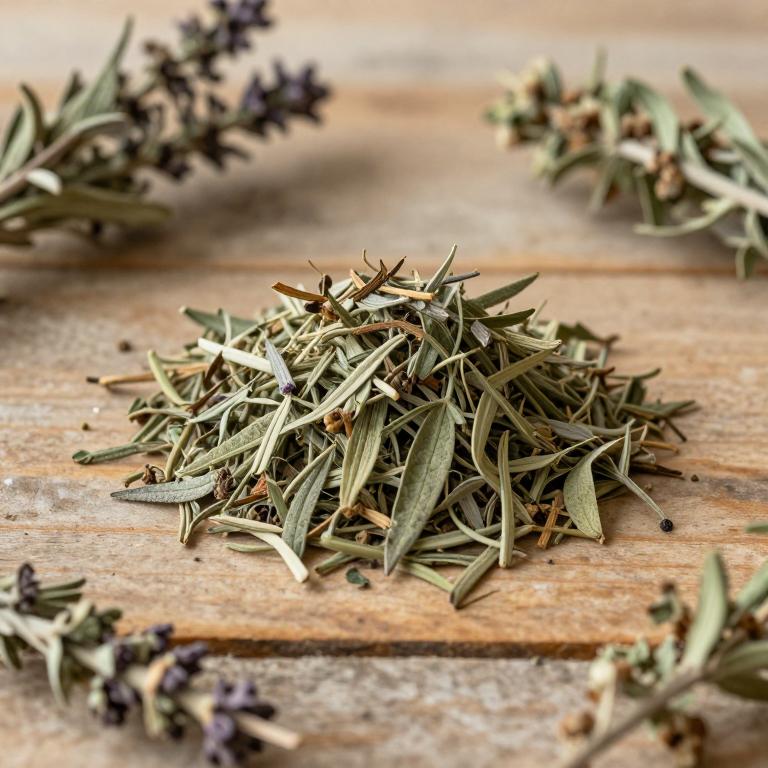
Coastal Blue Sage, scientifically known as Salvia scabra, is a resilient perennial native to the coastal regions of California. Characterized by its striking blue flowers and aromatic foliage, this hardy plant thrives in sandy soils. It serves as a vital nectar source for pollinators, enhancing local biodiversity and landscapes.
- Family
- Lamiaceae
- Native range
- Africa
- Parts used
- Not available
- Common names
- Coastal Blue Sage · Coastal Creeping Sage · 1 more
- Scientific synonyms
- Salvia Graciliflora
Names and Synonyms
Common Names
- Coastal Blue Sage
- Coastal Creeping Sage
- Longface Creeping Sage
Scientific Names
Accepted name
Salvia scabraSynonyms
- Salvia graciliflora
Sources: Wikidata, Catalogue of Life
Taxonomical Classification
This plant belongs to the kingdom Plantae and is classified under the phylum Streptophyta and class Equisetopsida. Within the subclass Magnoliidae, it falls under the order Lamiales and the family Lamiaceae. Finally, it is taxonomically identified as a member of the genus Salvia.
| Rank | Classification |
|---|---|
| Kingdom | Plantae |
| Phylum | Streptophyta |
| Class | Equisetopsida |
| Subclass | Magnoliidae |
| Order | Lamiales |
| Family | Lamiaceae |
| Genus | Salvia |
Sources: The World Checklist of Vascular Plants (WCVP)
Distribution
This plant is naturally found within the specific region of Southern Africa. Its distribution is primarily concentrated throughout the diverse landscapes of the Cape Provinces. Within these areas, it thrives in the unique environmental conditions offered by the local climate. Because of this limited range, the species is considered endemic to this particular part of the continent. Consequently, the Cape Provinces serve as the primary habitat for the survival of Salvia scabra.
| Region | Area |
|---|---|
| Southern Africa | Cape Provinces |
Sources: The World Checklist of Vascular Plants (WCVP)
Botanical Identification
Ecology
The ecology of Salvia scabra is defined by its specific altitudinal distribution, which dictates its preferred environmental conditions and habitat types. This species thrives within a defined elevational range, occupying diverse landscapes from low-lying areas up to mid-altitude terrains. Specifically, its ecological niche spans from a minimum elevation of 15 m AMSL to a maximum elevation of 450 m AMSL. This relatively low-altitude preference suggests that the plant is adapted to warmer, potentially more arid or subtropical climates often found in lowland regions, where it interacts with specific soil compositions and moisture levels characteristic of these lower elevations.
- Elevational range max:
- 450 m AMSL
- Elevational range min:
- 15 m AMSL
Life history
The life history of Salvia scabra is characterized by its status as a perennial plant, allowing it to persist through multiple growing seasons. As a perennial species, it does not complete its life cycle in a single year like annuals or two years like biennials, but instead maintains its biological functions over a longer duration, often developing robust root systems to support its survival through varying environmental conditions. This perennial nature enables the plant to undergo seasonal cycles of vegetative growth and reproductive phases, ensuring long-term presence within its ecological niche.
- Lifecycle :
- perennial
Morphology
The morphology of Salvia scabra is characterized by a growth form consisting of a non-woody herb, specifically classified as a herb and a forb. This species is a self-supporting plant that does not exhibit climbing behavior and functions as an independent organism rather than a parasite. It is a terrestrial plant, occupying habitats that range from aquatic to semiaquatic environments. In terms of stature, the plant maintains a relatively modest size, with a plant height that typically ranges from a minimum of 0.3 m to a maximum of 1 m.
- Aquatic :
- terrestrial
- Climber :
- self-supporting
- Epiphyte :
- terrestrial
- Growth form :
- herb
- Parasite :
- independent
- Plant height max:
- 1 m
- Plant height min:
- 0.3 m
- Woodiness :
- non-woody
Sources: Global Inventory of Floras and Traits (GIFT)
Chemicals
Salvia scabra has 1 reported phytochemicals identified across 0 scientific publications and several other databases. The most consistently reported chemicals include Germacrene D.
| Chemical | Supporting sources | Consensus |
|---|---|---|
| Germacrene D | 1 supporting sources | ★☆☆☆☆ |
Germacrene D
- Molecules (Basel, Switzerland)
Conditions
Salvia scabra has 5 reported investigations on conditions identified across 0 scientific publications and several other databases. The most consistently reported conditions include Aspergillus flavus, Aspergillus niger, Escherichia coli, H1N1 influenza virus, Staphylococcus aureus.
| Condition | Supporting sources | Consensus |
|---|---|---|
| Aspergillus flavus | 1 supporting sources | ★☆☆☆☆ |
| Aspergillus niger | 1 supporting sources | ★☆☆☆☆ |
| Escherichia coli | 1 supporting sources | ★☆☆☆☆ |
| H1n1 influenza virus | 1 supporting sources | ★☆☆☆☆ |
| Staphylococcus aureus | 1 supporting sources | ★☆☆☆☆ |
Aspergillus flavus
- Molecules (Basel, Switzerland)
Aspergillus niger
- Molecules (Basel, Switzerland)
Escherichia coli
- Molecules (Basel, Switzerland)
H1n1 influenza virus
- Molecules (Basel, Switzerland)
Staphylococcus aureus
- Molecules (Basel, Switzerland)