Salvia sahendica
Salvia sahendica · Accepted scientific name
Scientific literature: Very Sparse (8 studies) · ★☆☆☆☆
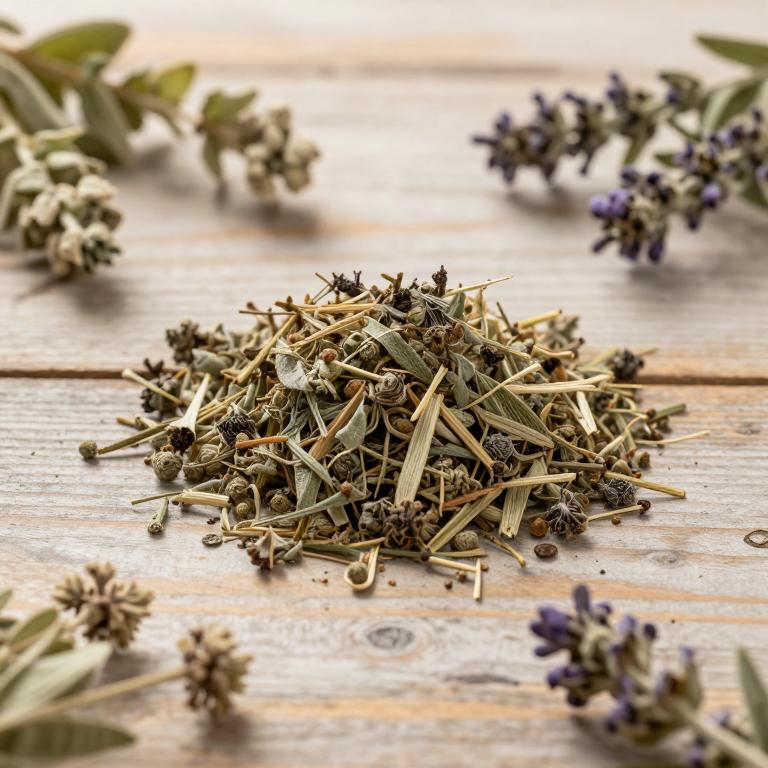
Salvia sahendica, scientifically known as Salvia sahendica, is a distinctive medicinal herb prized for its therapeutic properties. Often found in specific regional ecosystems, this plant contains bioactive compounds utilized in traditional healing practices. Its unique chemical profile offers significant potential for pharmacological research and natural wellness applications.
- Family
- Lamiaceae
- Native range
- Asia-Temperate
- Parts used
- Leaf · Root
- Common names
- Not available
- Scientific synonyms
- Not available
Names and Synonyms
Scientific Names
Accepted name
Salvia sahendicaSources: Wikidata
Taxonomical Classification
This plant belongs to the kingdom Plantae within the phylum Streptophyta and the class Equisetopsida. It is further classified under the subclass Magnoliidae and the order Lamiales, falling into the family Lamiaceae. Finally, its taxonomic position is completed within the genus Salvia.
| Rank | Classification |
|---|---|
| Kingdom | Plantae |
| Phylum | Streptophyta |
| Class | Equisetopsida |
| Subclass | Magnoliidae |
| Order | Lamiales |
| Family | Lamiaceae |
| Genus | Salvia |
Sources: The World Checklist of Vascular Plants (WCVP)
Distribution
This plant is characterized by a very specific and limited geographical range. Its natural habitat is found exclusively within the region of Western Asia. Specifically, the distribution of Salvia sahredica is confined to the territory of Iran. This localized presence suggests that the species is highly adapted to the unique environmental conditions of this particular area. Consequently, researchers focusing on this medicinal herb primarily concentrate their studies within the Iranian landscape.
| Region | Area |
|---|---|
| Western Asia | Iran |
Sources: The World Checklist of Vascular Plants (WCVP)
Botanical Identification
Life history
The life history of Salvia sahendica is characterized by its specific survival strategies adapted to its environmental niche, primarily defined by its classification as a hemicryptophyte. As a hemicryptophyte, the plant's perennating buds are located at the soil surface or just beneath it, protected by a layer of leaf litter or organic debris during unfavorable seasons. This life form ensures that the plant can endure periods of dormancy while maintaining the capacity to regrow rapidly when conditions become favorable. Within the broader spectrum of botanical life forms, its growth habit is strictly categorized under the hemicryptophyte group, distinguishing it from other strategies such as phanerophytes, chamaephytes, or therophytes. This specific physiological arrangement allows Salvia sahendica to manage its life cycle through seasonal transitions, relying on its protected buds to bridge the gap between active growing periods.
- Life form :
- hemicryptophyte
Morphology
The morphology of Salvia sahrendica is characterized by a growth habit that is strictly terrestrial, as it functions as a non-epiphytic organism. It does not exhibit any epiphytic tendencies, maintaining its development within the soil substrate rather than growing upon other plants. In terms of its structural support, the plant is classified as self-supporting, lacking the specialized climbing mechanisms found in obligate or facultative climbers. Furthermore, it is an independent organism, showing no parasitic behavior toward host plants, as it functions as a non-parasitic, free-living member of its ecosystem.
- Climber :
- self-supporting
- Epiphyte :
- terrestrial
- Parasite :
- independent
Sources: Global Inventory of Floras and Traits (GIFT)
Plant Parts
Salvia sahendica has 2 reported plant parts identified across 2 scientific publications and several other databases that are studied for medicinal purposes. The most consistently reported plant part include leaf, root.
| Plant part | Supporting sources | Consensus |
|---|---|---|
| Leaf | 1 supporting sources | ★☆☆☆☆ |
| Root | 1 supporting sources | ★☆☆☆☆ |
Leaf
- Natural product research
Root
- Scientific reports
Chemicals
Salvia sahendica has 6 reported phytochemicals identified across 2 scientific publications and several other databases. The most consistently reported chemicals include CHLOROGENIC ACID, Coumaric Acid, Gallic acid, OLEANOLIC ACID, Salvigenin.
| Chemical | Supporting sources | Consensus |
|---|---|---|
| CHLOROGENIC ACID | 1 supporting sources | ★☆☆☆☆ |
| Coumaric Acid | 1 supporting sources | ★☆☆☆☆ |
| Gallic acid | 1 supporting sources | ★☆☆☆☆ |
| OLEANOLIC ACID | 1 supporting sources | ★☆☆☆☆ |
| Salvigenin | 1 supporting sources | ★☆☆☆☆ |
| Sclareol | 1 supporting sources | ★☆☆☆☆ |
CHLOROGENIC ACID
- Scientific reports
Coumaric Acid
- Scientific reports
Gallic acid
- Scientific reports
OLEANOLIC ACID
- Natural product research
Salvigenin
- Natural product research
Sclareol
- Natural product research
Preparations
Salvia sahendica has 1 reported preparations identified across 2 scientific publications and several other databases. The most consistently reported preparations include n-hexane extract.
| Preparation | Supporting sources | Consensus |
|---|---|---|
| N-hexane extract | 1 supporting sources | ★☆☆☆☆ |
N-hexane extract
- Natural product research