meadow sage
Salvia pratensis · Accepted scientific name
Scientific literature: Very Sparse (8 studies) · ★☆☆☆☆
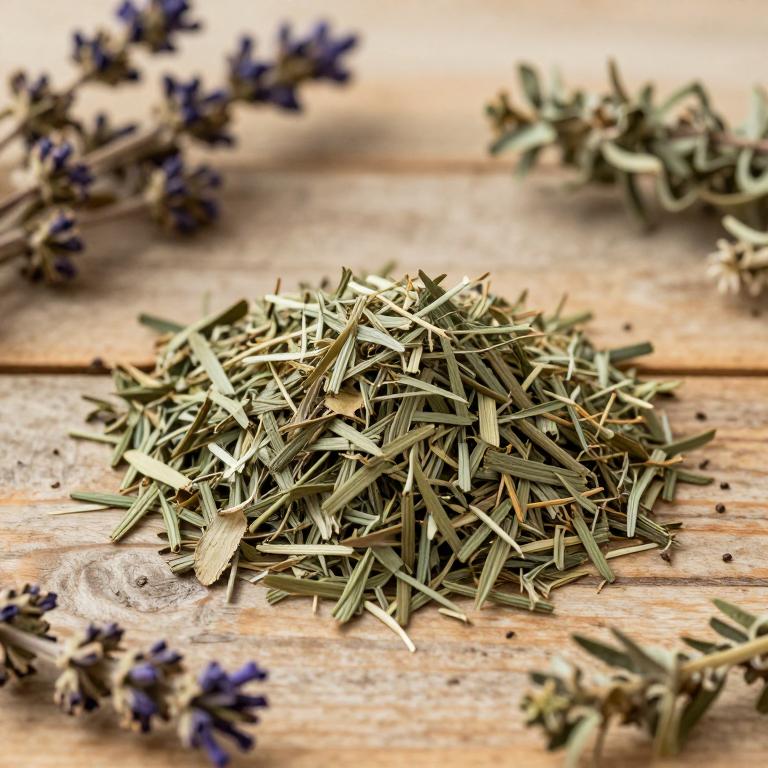
Meadow sage, scientifically known as Salvia pratensis, is a perennial herb celebrated for its striking violet flowers and medicinal potential. Native to Europe, this hardy plant contains bioactive compounds valued in traditional herbalism for their antioxidant and anti-inflammatory properties, offering a natural way to support holistic wellness and health.
Names and Synonyms
Common Names
- Meadow Sage
- prairie-meadow sage
- Meadow Clary
- Western Meadow Sage
- introduced sage
Scientific Names
Accepted name
Salvia pratensisSynonyms
- Gallitrichum pratense
- Plethiosphace pratensis
- Sclarea pratensis
Regional and Traditional Names
Spanish:
- Salvia haematodes
- Hormigon de prados
- Salvia de prados
- Gallocresta rustica
- Hormigón de prados
- Salvia lupinoides
- Gallitrichum pratense
- Salvia rubicunda
- Plethiosphace leistneriana
- Salvia de los prados
- Salvia agrestis
- Plethiosphace pratensis
- Salvia barrelieri
- Salvia variegata
- Salvia laciniosa
- Salvia de prado
- salvia de prado
German:
- Wiesensalbei
- Wiesen-Salbei
- sauge des prés
- Wiesen-Salbei
- Artengruppe Wiesen-Salbei
- Wiesensalbei
French:
- Sauge des pres
- Sauge des prés
- sauge des prés
- sauge des près
- Sauge des pres
- Sauge commune
Sources: Wikidata, Catalogue of Life
Taxonomical Classification
This plant belongs to the kingdom Plantae within the phylum Streptophyta and the class Equisetopsida. It is further classified under the subclass Magnoliidae and the order Lamiales, falling into the family Lamiaceae. Finally, its taxonomic identity is defined by the genus Salvia.
| Rank | Classification |
|---|---|
| Kingdom | Plantae |
| Phylum | Streptophyta |
| Class | Equisetopsida |
| Subclass | Magnoliidae |
| Order | Lamiales |
| Family | Lamiaceae |
| Genus | Salvia |
Sources: The World Checklist of Vascular Plants (WCVP)
Distribution
This plant exhibits a broad geographical range across several distinct regions of the European continent. In Northern Europe, its presence can be documented within the borders of Great Britain. Moving into Middle Europe, the species is widely distributed across several key nations. It can be found inhabiting the landscapes of Austria, Belgium, and Germany. Furthermore, its range extends through the central territories of Czechia and Slovakia.
| Region | Area |
|---|---|
| Northern Europe | Great Britain |
| Middle Europe | Austria |
| Middle Europe | Belgium |
| Middle Europe | Czechia-Slovakia |
| Middle Europe | Germany |
| Middle Europe | Hungary |
| Middle Europe | Netherlands |
| Middle Europe | Poland |
| Middle Europe | Switzerland |
| Southwestern Europe | Corse |
Sources: The World Checklist of Vascular Plants (WCVP)
Botanical Identification
Ecology
The ecology of Salvia pratensis is characterized by its high adaptability to disturbed environments, frequently colonizing Área Antrópica (anthropic areas) such as roadsides, pastures, abandoned agricultural lands, and urban meadows. This species thrives in open, sun-drenched landscapes where competition from dense forest canopies is minimal, allowing it to establish itself in nitrogen-rich, well-drained soils. It plays a vital role in these human-influenced ecosystems by serving as a significant nectar source for diverse pollinator communities, particularly long-tongued bees and butterflies, which facilitates its reproductive success through entomophily. Its ability to persist in modified landscapes makes it a resilient component of semi-natural grasslands and ruderal habitats subject to periodic human disturbance.
- Habitat :
- Área Antrópica
Life history
The life history of Salvia pratensis is characterized by its status as a perennial plant, allowing it to persist across multiple growing seasons. As a hemicryptophyte, it maintains its perennuating buds at the soil surface, protected by the leaf litter or soil during unfavorable periods. The species exhibits a deciduous nature, shedding its foliage as it enters a period of dormancy.
- Deciduousness :
- deciduous
- Life form :
- hemicryptophyte
- Lifecycle :
- perennial
Morphology
The morphology of Salvia pratensis is characterized by its growth form as a non-woody herb and forb. This self-supporting, independent plant lacks any parasitic or climbing tendencies, growing as a terrestrial species rather than an aquatic or epiphytic one. In terms of stature, it maintains a relatively low profile with a plant height that typically ranges from a minimum of 0.3 m to a maximum of 0.7 m, with an average height of approximately 0.442 m.
- Aquatic :
- terrestrial
- Climber :
- self-supporting
- Epiphyte :
- terrestrial
- Growth form :
- herb
- Growth form :
- forb
- Parasite :
- independent
- Plant height max:
- 0.7 m
- Plant height mean:
- 0.442 m
- Plant height min:
- 0.3 m
- Woodiness :
- non-woody
Physiology
The physiology of Salvia pratensis is characterized by a C3 photosynthetic pathway, which involves the direct fixation of carbon dioxide through the Calvin cycle without the specialized adaptations seen in C4 or CAM species. The plant is non-carnivorous, relying entirely on its root system and soil nutrients for mineral uptake rather than capturing prey. Morphologically, its foliage displays a mean leaf size of approximately 65.76 cm², reflecting its structural investment in light interception. Furthermore, the species exhibits a mean Specific Leaf Area (SLA) of 253.27 cm²/g, a physiological trait that indicates the relationship between its leaf area and dry mass, providing insight into its resource allocation strategies and leaf thickness.
- Carnivory :
- non-carnivorous
- Leaf size mean:
- 65.75938 cm²
- Photosynthetic pathway :
- C3
- Specific Leaf Area (SLA) mean:
- 253.27 cm²/g
Reproduction
The reproduction of Salvia pratensis is characterized by a sexual reproductive cycle that lacks both self-fertilization and asexual reproduction mechanisms. The flowering period typically occurs between May and July, during which the plant relies on biotic pollination syndromes. Specifically, pollination is driven by insects, with bees acting as primary pollinators to facilitate genetic exchange. Following successful fertilization, the plant produces dry fruits containing seeds with a highly variable mass, ranging from a minimum of 0.001 g to a maximum of 0.00389 g, with a mean seed mass of approximately 0.0025300835 g. The dispersal of these seeds is categorized as autochorous, meaning the plant employs an autochorous dispersal syndrome to distribute its offspring.
- Dispersal syndrome :
- autochorous
- Flowering time :
- May
- Flowering time :
- Jul
- Fruit dryness :
- dry
- Pollination syndrome :
- insect
- Pollination syndrome :
- bee
- Pollination syndrome :
- biotic
- Reproduction asexual :
- absent
- Seed mass max:
- 0.00389 g
- Seed mass mean:
- 0.0025300835 g
- Seed mass min:
- 0.001 g
- Self fertilization :
- absent
Sources: Global Inventory of Floras and Traits (GIFT)
Chemicals
Salvia pratensis has 4 reported phytochemicals identified across 0 scientific publications and several other databases. The most consistently reported chemicals include ANTHOCYANIN, Phenolic acid, Tannin, rosmarinic acid.
| Chemical | Supporting sources | Consensus |
|---|---|---|
| ANTHOCYANIN | 1 supporting sources | ★☆☆☆☆ |
| Phenolic acid | 1 supporting sources | ★☆☆☆☆ |
| Tannin | 1 supporting sources | ★☆☆☆☆ |
| rosmarinic acid | 1 supporting sources | ★☆☆☆☆ |
ANTHOCYANIN
- Plants (Basel, Switzerland)
Phenolic acid
- Plants (Basel, Switzerland)
Tannin
- Plants (Basel, Switzerland)
rosmarinic acid
- Plants (Basel, Switzerland)
Activities
Salvia pratensis has 1 reported activities identified across 0 scientific publications and several other databases. The most consistently reported activities include Antifungal.
| Activity | Supporting sources | Consensus |
|---|---|---|
| Antifungal | 1 supporting sources | ★☆☆☆☆ |
Antifungal
- Plant foods for human nutrition (Dordrecht, Netherlands)
Conditions
Salvia pratensis has 3 reported investigations on conditions identified across 0 scientific publications and several other databases. The most consistently reported conditions include Multiple sclerosis, antioxidant, hypoglycemic.
| Condition | Supporting sources | Consensus |
|---|---|---|
| Multiple sclerosis | 1 supporting sources | ★☆☆☆☆ |
| Antioxidant | 1 supporting sources | ★☆☆☆☆ |
| Hypoglycemic | 1 supporting sources | ★☆☆☆☆ |
Multiple sclerosis
- BMC complementary medicine and therapies
Antioxidant
- Plants (Basel, Switzerland)
Hypoglycemic
- Plants (Basel, Switzerland)