Himalayan Yellow Sage
Salvia nubicola · Accepted scientific name
Scientific literature: Very Sparse (2 studies) · ★☆☆☆☆
Himalayan Yellow Sage, scientifically known as Salvia nubicola, is a resilient perennial herb native to the high-altitude regions of the Himalayas. Characterized by its vibrant yellow blooms, this medicinal plant is valued in traditional practices for its potent antioxidant properties and its ability to support holistic wellness and vitality.
- Family
- Lamiaceae
- Native range
- Asia-Temperate
- Parts used
- Not available
- Common names
- Himalayan Yellow Sage · Yunsheng Danshen
- Scientific synonyms
- Salvia Glutinosa Subsp. Nubicola
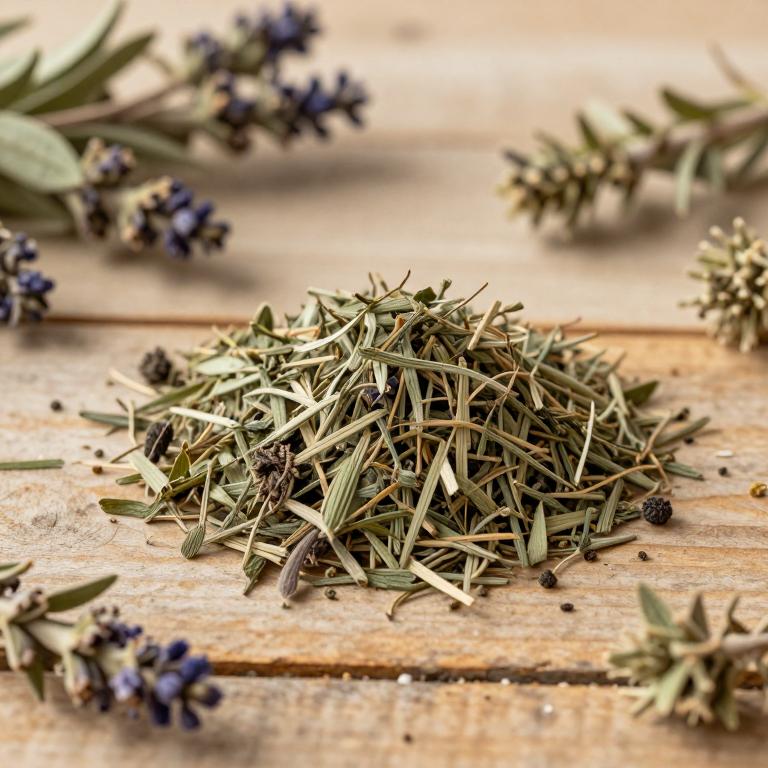
Names and Synonyms
Common Names
- Himalayan Yellow Sage
- Yunsheng Danshen
Scientific Names
Accepted name
Salvia nubicolaSynonyms
- Salvia glutinosa subsp. nubicola
Sources: Wikidata, Catalogue of Life
Taxonomical Classification
This plant belongs to the kingdom Plantae and the phylum Streptophyta, falling under the class Equisetopsida and subclass Magnoliidae. Within the order Lamiales and family Lamiaceae, it is specifically classified under the genus Salvia.
| Rank | Classification |
|---|---|
| Kingdom | Plantae |
| Phylum | Streptophyta |
| Class | Equisetopsida |
| Subclass | Magnoliidae |
| Order | Lamiales |
| Family | Lamiaceae |
| Genus | Salvia |
Sources: The World Checklist of Vascular Plants (WCVP)
Distribution
This plant exhibits a specific distribution across several key regions in Asia. In Western Asia, its presence is noted within the borders of Afghanistan. It can also be found in China, specifically within the high-altitude areas of Tibet. Within the Indian Subcontinent, the species inhabits the East Himalaya region as well as Nepal. Additionally, the plant extends its range into Pakistan.
| Region | Area |
|---|---|
| Western Asia | Afghanistan |
| China | Tibet |
| Indian Subcontinent | East Himalaya |
| Indian Subcontinent | Nepal |
| Indian Subcontinent | Pakistan |
| Indian Subcontinent | West Himalaya |
Sources: The World Checklist of Vascular Plants (WCVP)
Botanical Identification
Ecology
The ecology of Salvia nubicola is defined by its specialized adaptation to high-altitude montane environments, where it occupies a specific vertical niche within its native habitat. This species thrives across a significant altitudinal gradient, establishing itself in mountainous terrains at elevations ranging from a minimum of 1800 m AMSL to a maximum of 4000 m AMSL. This broad elevational range suggests a high degree of physiological plasticity, allowing the plant to persist in diverse microclimates ranging from mid-elevation montane forests to the harsher, more exposed conditions of the high-altitude alpine zones. Such an ecological distribution implies that the species is capable of managing varying levels of UV exposure, temperature fluctuations, and atmospheric pressure characteristic of these high-elevation ecosystems.
- Elevational range max:
- 4000 m AMSL
- Elevational range min:
- 1800 m AMSL
Life history
The life history of Salvia nubicola is characterized by a perennial lifecycle, allowing the plant to persist through multiple growing seasons. In terms of its structural development and survival strategy, the species functions as a hemicryptophyte, meaning its perennating buds are located at the soil surface, protected by leaf litter or organic matter during unfavorable conditions. This hemicryptophytic life form is consistently reflected in its classification, as it maintains its vegetative persistence through these surface-level buds, ensuring its longevity within its ecological niche.
- Life form :
- hemicryptophyte
- Lifecycle :
- perennial
Morphology
The morphology of Salvia nubicola is characterized by a growth form classified as a herb, exhibiting a non-woody structure throughout its vegetative body. This species is primarily terrestrial in its ecological habit, rather than being aquatic or epiphytic, and it functions as an independent organism without parasitic tendencies. In terms of its physical stature and support system, it is a self-supporting plant, lacking the climbing mechanisms associated with vines, lianas, or obligatory climbers.
- Aquatic :
- terrestrial
- Climber :
- self-supporting
- Epiphyte :
- terrestrial
- Growth form :
- herb
- Parasite :
- independent
- Woodiness :
- non-woody
Reproduction
The reproduction of Salvia nubicola is characterized by a specific flowering phenology and highly uniform seed production. The plant enters its flowering stage in July and continues through its reproductive cycle until October. Throughout this period, the seeds produced exhibit a remarkably consistent mass; both the mean, maximum, and minimum seed mass are recorded at 0.00276 g, indicating a lack of variance in the weight of the individual seeds generated during the reproductive cycle.
- Flowering time :
- Jul
- Flowering time :
- Oct
- Seed mass mean:
- 0.00276 g
Sources: Global Inventory of Floras and Traits (GIFT)
Chemicals
Salvia nubicola has 1 reported phytochemicals identified across 0 scientific publications and several other databases. The most consistently reported chemicals include rosmarinic acid.
| Chemical | Supporting sources | Consensus |
|---|---|---|
| rosmarinic acid | 1 supporting sources | ★☆☆☆☆ |
rosmarinic acid
- Food chemistry
Preparations
Salvia nubicola has 1 reported preparations identified across 0 scientific publications and several other databases. The most consistently reported preparations include methanol extracts.
| Preparation | Supporting sources | Consensus |
|---|---|---|
| Methanol extracts | 1 supporting sources | ★☆☆☆☆ |
Methanol extracts
- Food chemistry