Nile Sage
Salvia nilotica · Accepted scientific name
Scientific literature: Very Sparse (6 studies) · ★☆☆☆☆
Nile Sage, scientifically known as Salvia nilotica, is a perennial medicinal shrub native to the arid regions of Africa. Renowned for its aromatic foliage, this plant is traditionally utilized in various cultures for its potent antimicrobial, anti-inflammatory, and antioxidant properties, serving as a vital resource in natural healing practices.
- Family
- Lamiaceae
- Native range
- Africa
- Parts used
- Not available
- Common names
- Nile Sage
- Scientific synonyms
- Horminum Niloticum · Salvia Parviflora · 5 more
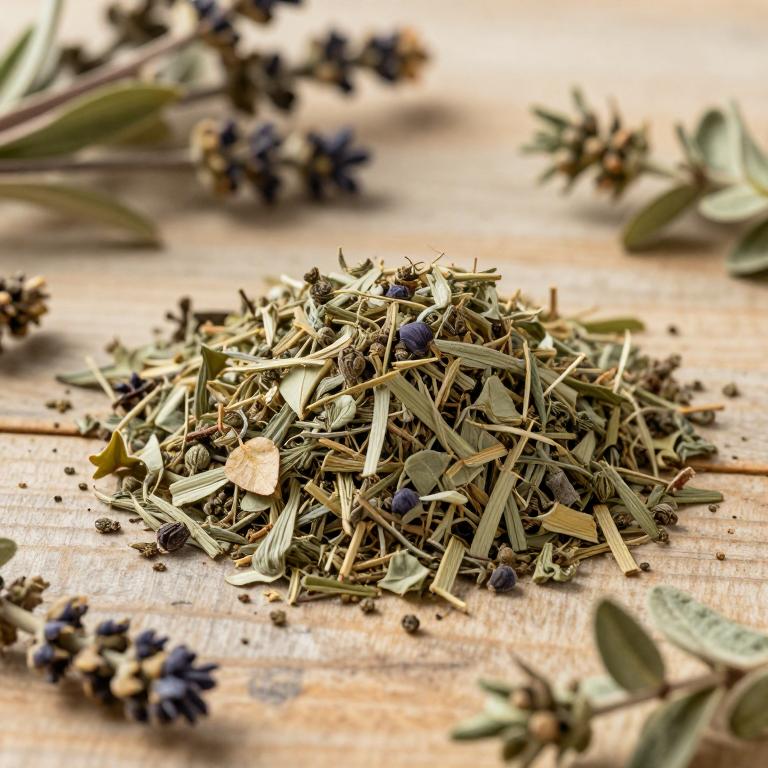
Names and Synonyms
Common Names
- Nile Sage
Scientific Names
Accepted name
Salvia niloticaSynonyms
- Horminum niloticum
- Salvia parviflora
- Salvia spinosa
- Salvia applanata
- Salvia hochstetteri
- Salvia macrorrhiza
- Salvia intermedia
Regional and Traditional Names
Spanish:
- Salvia applanata
- Salvia pungens
- Horminum niloticum
- Salvia macrorrhiza
- Salvia hochstetteri
- Salvia abyssinica
- Salvia spinosa
- Salvia intermedia
Sources: Wikidata, Catalogue of Life
Taxonomical Classification
This plant belongs to the kingdom Plantae and the phylum Streptophyta within the class Equisetopsida. Classified under the subclass Magnoliidae and the order Lamiales, it is a member of the family Lamiaceae. Finally, it is identified under the genus Salvia.
| Rank | Classification |
|---|---|
| Kingdom | Plantae |
| Phylum | Streptophyta |
| Class | Equisetopsida |
| Subclass | Magnoliidae |
| Order | Lamiales |
| Family | Lamiaceae |
| Genus | Salvia |
Sources: The World Checklist of Vascular Plants (WCVP)
Distribution
This plant exhibits a specific geographical distribution concentrated within the tropical regions of the African continent. In West-Central Tropical Africa, its presence is documented in Burundi, Rwanda, and the Democratic Republic of the Congo. Moving toward the eastern part of the continent, its range extends into Northeast Tropical Africa. Within this northeastern region, the species can be found in both Eritrea and Ethiopia. Consequently, the habitat of Salvia nilotica spans across diverse ecological zones from central to northeast Africa.
| Region | Area |
|---|---|
| West-Central Tropical Africa | Burundi |
| West-Central Tropical Africa | Rwanda |
| West-Central Tropical Africa | DR Congo |
| Northeast Tropical Africa | Eritrea |
| Northeast Tropical Africa | Ethiopia |
| Northeast Tropical Africa | Sudan-South Sudan |
| East Tropical Africa | Kenya |
| East Tropical Africa | Tanzania |
| East Tropical Africa | Uganda |
| South Tropical Africa | Malawi |
Sources: The World Checklist of Vascular Plants (WCVP)
Botanical Identification
Life history
The life history of Salvia nilotica is characterized by an annual lifecycle, meaning it completes its entire developmental process from germination to seed production within a single growing season. In terms of its structural growth habit and survival strategy, the species is classified as a hemicryphtophyte, a life form where the perennating buds are located at the soil surface, protected by a layer of leaf litter or soil. This specific morphological arrangement allows the plant to navigate its environmental conditions effectively during its annual period of activity.
- Life form :
- hemicryptophyte
- Lifecycle :
- annual
Morphology
The morphology of Salvia nilotica is characterized by its growth form as a herb, exhibiting a non-woody structure throughout its vegetative development. It functions as an independent organism, meaning it does not exhibit parasitic behavior, and it is strictly a terrestrial plant rather than an epiphyte. While its habit is primarily herbaceous, its structural arrangement allows it to act as a self-supporting climber, utilizing its own physical integrity to maintain its posture within its habitat.
- Climber :
- self-supporting
- Epiphyte :
- terrestrial
- Growth form :
- herb
- Parasite :
- independent
- Woodiness :
- non-woody
Reproduction
The reproduction of Salvia nilotica is characterized by a specific seasonal flowering window and the production of very fine seeds. The plant typically enters its flowering phase in May, with the blooming period concluding in June. The seeds produced during this cycle are remarkably uniform in size, with a recorded mean seed mass of 0.00076 g. This measurement remains consistent across the species' reproductive output, as both the minimum and maximum seed mass values are documented at exactly 0.00076 g, indicating a highly standardized seed development process.
- Flowering time :
- May
- Flowering time :
- Jun
- Seed mass mean:
- 0.00076 g
Sources: Global Inventory of Floras and Traits (GIFT)
Chemicals
Salvia nilotica has 6 reported phytochemicals identified across 0 scientific publications and several other databases. The most consistently reported chemicals include 12-Deoxy-6-hydroxy-6,7-dehydroroyleanone, 14-deoxycoleon U, 15-Deoxyfuerstione, Ferruginol, TAXODONE.
| Chemical | Supporting sources | Consensus |
|---|---|---|
| 12-Deoxy-6-hydroxy-6,7-dehydroroyleanone | 1 supporting sources | ★☆☆☆☆ |
| 14-deoxycoleon U | 1 supporting sources | ★☆☆☆☆ |
| 15-Deoxyfuerstione | 1 supporting sources | ★☆☆☆☆ |
| Ferruginol | 1 supporting sources | ★☆☆☆☆ |
| TAXODONE | 1 supporting sources | ★☆☆☆☆ |
| Taxodione | 1 supporting sources | ★☆☆☆☆ |
12-Deoxy-6-hydroxy-6,7-dehydroroyleanone
- Natural product research
14-deoxycoleon U
- Natural product research
15-Deoxyfuerstione
- Natural product research
Ferruginol
- Natural product research
TAXODONE
- Natural product research
Taxodione
- Natural product research