woodland sage
Salvia nemorosa · Accepted scientific name
Scientific literature: Very Sparse (19 studies) · ★☆☆☆☆
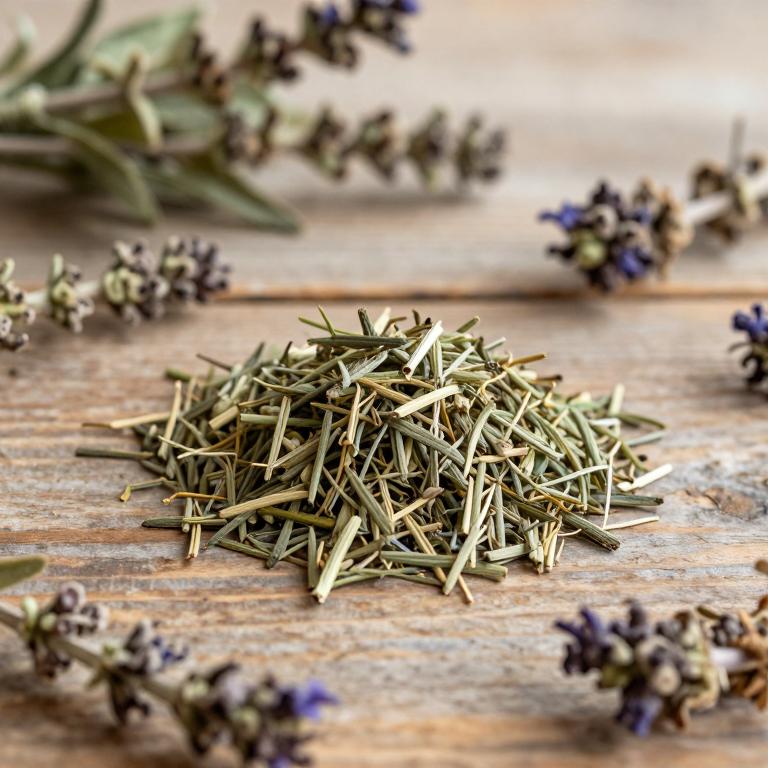
Woodland sage, scientifically known as Salvia nemorosa, is a charming perennial native to the shaded forest floors of Europe. Distinguished by its soft, velvety grey-green foliage and delicate violet flowers, this resilient herb thrives in dappled light, offering both aesthetic elegance and traditional medicinal value in herbal gardens.
- Family
- Lamiaceae
- Native range
- Europe
- Parts used
- Not available
- Common names
- Wood Sage · Woodland Sage · 1 more
- Scientific synonyms
- Sclarea Nemorosa · Salvia × Sylvestris Var. Nemorosa
Names and Synonyms
Common Names
- wood sage
- woodland sage
- Balkan Clary
Scientific Names
Accepted name
Salvia nemorosaSynonyms
- Sclarea nemorosa
- Salvia × sylvestris var. nemorosa
Regional and Traditional Names
German:
- Hain-Salbei
- Steppen-Salbei
- Hain-Salbei
French:
- sauge bleue
- sauge des bois
Sources: Wikidata, Catalogue of Life
Taxonomical Classification
This plant belongs to the kingdom Plantae and is classified under the phylum Streptophyta and class Equisetopsida. Within the subclass Magnoliidae, it falls under the order Lamiales and the family Lamiaceae. It is specifically identified by the genus Salvia.
| Rank | Classification |
|---|---|
| Kingdom | Plantae |
| Phylum | Streptophyta |
| Class | Equisetopsida |
| Subclass | Magnoliidae |
| Order | Lamiales |
| Family | Lamiaceae |
| Genus | Salvia |
Sources: The World Checklist of Vascular Plants (WCVP)
Distribution
This plant is primarily distributed throughout the central regions of the European continent. Within Middle Europe, it can be found growing in the landscapes of Austria. Its presence also extends across the territories of Czechia and Slovakia. Additionally, the species is established within the borders of Germany and Hungary. Finally, its geographical range includes the various natural habitats found in Poland.
| Region | Area |
|---|---|
| Middle Europe | Austria |
| Middle Europe | Czechia-Slovakia |
| Middle Europe | Germany |
| Middle Europe | Hungary |
| Middle Europe | Poland |
| Middle Europe | Switzerland |
| Southwestern Europe | France |
| Southwestern Europe | Spain |
| Southeastern Europe | Albania |
| Southeastern Europe | Bulgaria |
Sources: The World Checklist of Vascular Plants (WCVP)
Botanical Identification
Ecology
The ecology of Salvia nemorosa is characterized by its remarkable adaptability to diverse and varied environments, allowing it to thrive across a wide spectrum of landscapes. This species is commonly found in forest ecosystems, along riverbanks, and within shrubberies, but it also demonstrates a strong capacity to colonize open habitats such as steppes and sandy terrains. Furthermore, it can be found growing in stony places, suggesting a resilience to different soil compositions and textures. In terms of its vertical distribution, the plant reaches significant heights, with an average elevational range of approximately 2400 m AMSL, indicating an ability to survive in high-altitude montane conditions.
- Elevational range mean:
- 2400 m AMSL
- Habitat :
- forest, rivers, sand, shrubberies, steppe, stony places
Life history
The life history of Salvia nemorosa is characterized by its existence as a perennial plant, allowing it to persist through multiple growing seasons. Functioning as a hemicryptophyte, its perennable buds are located at or just below the soil surface, protected by leaf litter or surface debris during unfavorable periods. This species exhibits a deciduous nature, shedding its foliage in response to seasonal changes or environmental stress. Through its life cycle, it maintains a stable presence in its habitat, utilizing its hemicryptophytic structure to survive dormant phases before re-emerging to complete its reproductive stages.
- Deciduousness :
- deciduous
- Life form :
- hemicryptophyte
- Lifecycle :
- perennial
Morphology
The morphology of Salvia nemorosa is characterized by its growth form as a non-woody herb, manifesting as a self-supporting plant that does not climb or function as a liana. It is an independent species, neither a parasite nor an epiphyte, maintaining a strictly terrestrial habit. In terms of stature, the plant typically reaches a mean height of 0.35 m, with individual specimens ranging from a minimum of 0.3 m to a maximum height of 0.6 m.
- Aquatic :
- terrestrial
- Climber :
- self-supporting
- Epiphyte :
- terrestrial
- Growth form :
- herb
- Parasite :
- independent
- Plant height max:
- 0.6 m
- Plant height mean:
- 0.35 m
- Plant height min:
- 0.3 m
- Woodiness :
- non-woody
Physiology
The physiology of Salvia nemorosa is characterized by a C3 photosynthetic pathway, which dictates its carbon fixation processes and metabolic efficiency. The plant's foliar morphology exhibits significant structural parameters, with a mean leaf size of 15.05 cm² and a consistent leaf width that remains constant at a mean, minimum, and maximum of 2.3 cm. The leaves reach a maximum length of 6 cm, contributing to the overall leaf architecture. Furthermore, the plant demonstrates a mean Specific Leaf Area (SLA) of 231.4 cm²/g, reflecting the relationship between its leaf area and dry mass, which is a key indicator of its resource allocation and light-harvesting strategies.
- Leaf length max:
- 6 cm
- Leaf size mean:
- 15.05 cm²
- Leaf width mean:
- 2.3 cm
- Photosynthetic pathway :
- C3
- Specific Leaf Area (SLA) mean:
- 231.4 cm²/g
Reproduction
The reproduction of Salvia nemorosa involves both sexual and asexual processes, with asexual reproduction being present. The flowering period typically commences in June and extends through September. During the sexual phase, the plant relies on biotic pollination, specifically utilizing an insect-based pollination syndrome. Notably, self-fertilization is absent, necessitating external agents for successful fertilization. The resulting fruits are relatively small, with a mean length of 0.2 cm. The seeds produced are lightweight, characterized by a minimum mass of 0.00075 g, a mean mass of 0.000906 g, and a maximum mass of 0.00112 g. For the distribution of offspring, the plant employs a zoochorous dispersal syndrome, specifically through epizoochory, which involves the attachment of seeds or fruits to animals for transport.
- Dispersal syndrome :
- zoochorous
- Dispersal syndrome :
- epizoochorous
- Flowering time :
- Jun
- Flowering time :
- Sep
- Fruit length mean:
- 0.2 cm
- Pollination syndrome :
- insect
- Pollination syndrome :
- biotic
- Reproduction asexual :
- present
- Seed mass max:
- 0.00112 g
- Seed mass mean:
- 0.000906 g
- Seed mass min:
- 0.00075 g
- Self fertilization :
- absent
Sources: Global Inventory of Floras and Traits (GIFT)
Chemicals
Salvia nemorosa has 11 reported phytochemicals identified across 0 scientific publications and several other databases. The most consistently reported chemicals include rosmarinic acid, (6R,9R)-3-Oxo-alpha-ionol glucoside, (6R,9S)-3-Oxo-alpha-ionol glucoside, (6S,9R)-roseoside, ANTHOCYANIN.
| Chemical | Supporting sources | Consensus |
|---|---|---|
| rosmarinic acid | 2 supporting sources | ★☆☆☆☆ |
| (6R,9R)-3-Oxo-alpha-ionol glucoside | 1 supporting sources | ★☆☆☆☆ |
| (6R,9S)-3-Oxo-alpha-ionol glucoside | 1 supporting sources | ★☆☆☆☆ |
| (6S,9R)-roseoside | 1 supporting sources | ★☆☆☆☆ |
| ANTHOCYANIN | 1 supporting sources | ★☆☆☆☆ |
| Flavonoids | 1 supporting sources | ★☆☆☆☆ |
| Hydroxycinnamic Acids | 1 supporting sources | ★☆☆☆☆ |
| Phenolic acid | 1 supporting sources | ★☆☆☆☆ |
| Tannin | 1 supporting sources | ★☆☆☆☆ |
| blumeol C glucoside | 1 supporting sources | ★☆☆☆☆ |
rosmarinic acid
- Plant physiology and biochemistry : PPB
- Plants (Basel, Switzerland)
(6R,9R)-3-Oxo-alpha-ionol glucoside
- Phytochemistry
(6R,9S)-3-Oxo-alpha-ionol glucoside
- Phytochemistry
(6S,9R)-roseoside
- Phytochemistry
ANTHOCYANIN
- Plants (Basel, Switzerland)
Flavonoids
- Planta medica
Hydroxycinnamic Acids
- Planta medica
Phenolic acid
- Plants (Basel, Switzerland)
Tannin
- Plants (Basel, Switzerland)
blumeol C glucoside
- Phytochemistry
Conditions
Salvia nemorosa has 2 reported investigations on conditions identified across 0 scientific publications and several other databases. The most consistently reported conditions include antioxidant, hypoglycemic.
| Condition | Supporting sources | Consensus |
|---|---|---|
| Antioxidant | 1 supporting sources | ★☆☆☆☆ |
| Hypoglycemic | 1 supporting sources | ★☆☆☆☆ |
Antioxidant
- Plants (Basel, Switzerland)
Hypoglycemic
- Plants (Basel, Switzerland)
Preparations
Salvia nemorosa has 1 reported preparations identified across 0 scientific publications and several other databases. The most consistently reported preparations include essential oils.
| Preparation | Supporting sources | Consensus |
|---|---|---|
| Essential oils | 1 supporting sources | ★☆☆☆☆ |
Essential oils
- Cellular and molecular biology (Noisy-le-Grand, France)