Kurdish Basil
Salvia multicaulis · Accepted scientific name
Scientific literature: Very Sparse (41 studies) · ★☆☆☆☆
Kurdish Basil, scientifically known as Salvia multicaulis, is a fragrant perennial herb deeply rooted in Middle Eastern traditional medicine. Renowned for its aromatic leaves, this plant offers potent antioxidant and anti-inflammatory properties. It is widely utilized in folk remedies to support digestive health and alleviate various respiratory ailments.
- Family
- Lamiaceae
- Native range
- Asia-Temperate
- Parts used
- Root
- Common names
- Kurdish Basil
- Scientific synonyms
- Arischrada Multicaulis · Schraderia Acetabulosa · 5 more
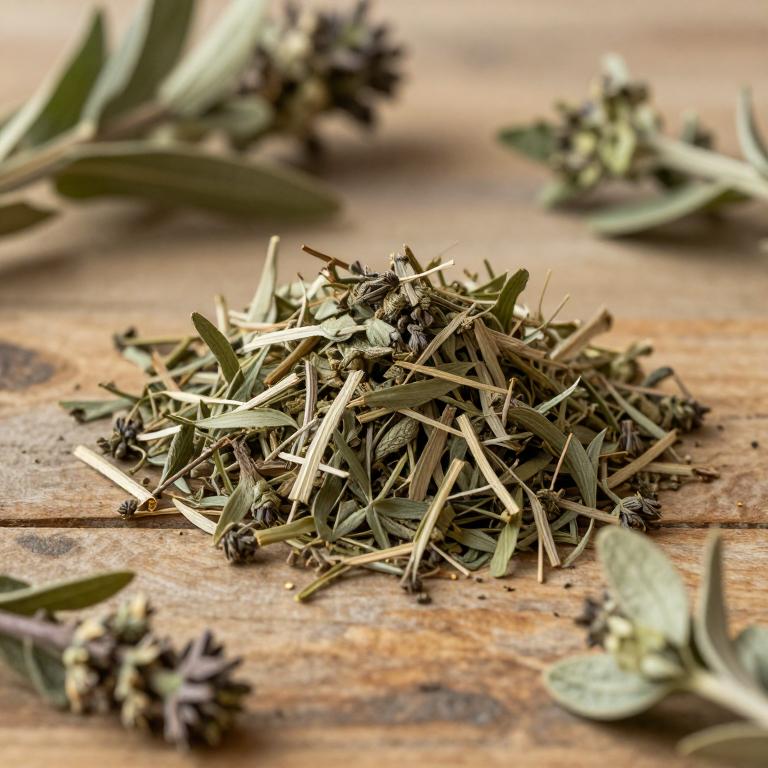
Names and Synonyms
Common Names
- Kurdish Basil
Scientific Names
Accepted name
Salvia multicaulisSynonyms
- Arischrada multicaulis
- Schraderia acetabulosa
- Salvia bodeana
- Stiefia multicaulis
- Salvia szovitsiana
- Salvia rascheyana
- Salvia pinardii
Sources: Wikidata, Catalogue of Life
Taxonomical Classification
This plant belongs to the kingdom Plantae within the phylum Streptophyta and the class Equisetopsida. It is further classified under the subclass Magnoliidae and the order Lamiales. Ultimately, it is a member of the family Lamiaceae and is identified by the genus Salvia.
| Rank | Classification |
|---|---|
| Kingdom | Plantae |
| Phylum | Streptophyta |
| Class | Equisetopsida |
| Subclass | Magnoliidae |
| Order | Lamiales |
| Family | Lamiaceae |
| Genus | Salvia |
Sources: The World Checklist of Vascular Plants (WCVP)
Distribution
This plant exhibits a specific geographical distribution concentrated throughout the Western Asian region. It can be found growing within the borders of Iran, spanning across various local habitats. The species is also documented to inhabit parts of Iraq, extending its presence into the Levant. Furthermore, its range includes the territories of Lebanon-Syria and Palestine. Finally, the distribution reaches into the Sinai Peninsula, completing its regional footprint.
| Region | Area |
|---|---|
| Western Asia | Iran |
| Western Asia | Iraq |
| Western Asia | Lebanon-Syria |
| Western Asia | Palestine |
| Western Asia | Sinai |
| Western Asia | Türkiye |
Sources: The World Checklist of Vascular Plants (WCVP)
Botanical Identification
Ecology
The ecology of Salvia multicaudis is characterized by its specialized adaptation to rugged, well-drained environments, specifically thriving in stony places. These rocky substrates provide the necessary drainage and mineral composition required for its growth, often positioning the species in niches where competition from more aggressive, moisture-dependent vegetation is minimal. By occupying these lithic habitats, the plant manages to withstand specific microclimatic conditions associated with exposed, stony terrain, which typically involves rapid water runoff and varying degrees of solar exposure.
- Habitat :
- stony places
Life history
The life history of Salvia multicauis is characterized by its classification as a perennial plant, allowing it to persist through multiple growing seasons. In terms of its structural growth habit and survival strategy, it is identified as a chamaephyte, a life form where the permanent shoots are located close to the soil surface, often protected by leaf litter or the substrate itself. This chamaephyte designation is consistent across its life form classification, indicating a low-growing stature that enables it to withstand various environmental pressures while maintaining its perennial lifecycle.
- Life form :
- chamaephyte
- Lifecycle :
- perennial
Morphology
The morphology of Salvia multicaudis is characterized by a woody, subshrub growth form that functions as a self-supporting plant. It typically exhibits a stature ranging from a minimum height of 0.15 m to a maximum height of 0.35 m. As an independent organism, it does not function as a parasite or an epiphyte, maintaining a terrestrial habitat rather than an aquatic or semiaquatic one.
- Aquatic :
- terrestrial
- Climber :
- self-supporting
- Epiphyte :
- terrestrial
- Growth form :
- shrub
- Growth form :
- subshrub
- Parasite :
- independent
- Plant height max:
- 0.35 m
- Plant height min:
- 0.15 m
- Woodiness :
- woody
Reproduction
The reproduction of Salvia multicaudis is characterized by a specific seasonal flowering window and highly consistent seed production metrics. The plant enters its flowering phase in June and continues through July, marking a relatively concentrated reproductive period within the summer months. During this cycle, the production of seeds is remarkably uniform, as evidenced by the seed mass data, which shows no variance between the minimum, maximum, and mean values. Each seed possesses a consistent mass of 0.0143 g, ensuring a standardized dispersal unit for the species.
- Flowering time :
- Jun
- Flowering time :
- Jul
- Seed mass mean:
- 0.0143 g
Sources: Global Inventory of Floras and Traits (GIFT)
Plant Parts
Salvia multicaulis has 1 reported plant parts identified across 1 scientific publications and several other databases that are studied for medicinal purposes. The most consistently reported plant part include root.
| Plant part | Supporting sources | Consensus |
|---|---|---|
| Root | 1 supporting sources | ★☆☆☆☆ |
Root
- Journal of natural products
Chemicals
Salvia multicaulis has 22 reported phytochemicals identified across 1 scientific publications and several other databases. The most consistently reported chemicals include Flavonoids, 1-Oxoferruginol, 18-Oxoferruginol, CATECHIN, CHLOROGENIC ACID.
| Chemical | Supporting sources | Consensus |
|---|---|---|
| Flavonoids | 2 supporting sources | ★☆☆☆☆ |
| 1-Oxoferruginol | 1 supporting sources | ★☆☆☆☆ |
| 18-Oxoferruginol | 1 supporting sources | ★☆☆☆☆ |
| CATECHIN | 1 supporting sources | ★☆☆☆☆ |
| CHLOROGENIC ACID | 1 supporting sources | ★☆☆☆☆ |
| Hinokione | 1 supporting sources | ★☆☆☆☆ |
| Horminone | 1 supporting sources | ★☆☆☆☆ |
| Lupeol | 1 supporting sources | ★☆☆☆☆ |
| Manool | 1 supporting sources | ★☆☆☆☆ |
| OLEANOLIC ACID | 1 supporting sources | ★☆☆☆☆ |
Flavonoids
- Natural product research
- BMC plant biology
1-Oxoferruginol
- Journal of natural products
18-Oxoferruginol
- Journal of natural products
CATECHIN
- Natural product research
CHLOROGENIC ACID
- Natural product research
Hinokione
- Journal of natural products
Horminone
- Journal of natural products
Lupeol
- Journal of natural products
Manool
- Journal of natural products
OLEANOLIC ACID
- BMC plant biology
Activities
Salvia multicaulis has 3 reported activities identified across 1 scientific publications and several other databases. The most consistently reported activities include Antimicrobial, Antioxidant, Cytotoxic.
| Activity | Supporting sources | Consensus |
|---|---|---|
| Antimicrobial | 1 supporting sources | ★☆☆☆☆ |
| Antioxidant | 1 supporting sources | ★☆☆☆☆ |
| Cytotoxic | 1 supporting sources | ★☆☆☆☆ |
Antimicrobial
- Natural product research
Antioxidant
- Natural product research
Cytotoxic
- Phytomedicine : international journal of phytotherapy and phytopharmacology
Conditions
Salvia multicaulis has 11 reported investigations on conditions identified across 1 scientific publications and several other databases. The most consistently reported conditions include Alzheimer's disease, Candida albicans, Escherichia coli, Staphylococcus aureus, atherosclerosis.
| Condition | Supporting sources | Consensus |
|---|---|---|
| Alzheimer's disease | 1 supporting sources | ★☆☆☆☆ |
| Candida albicans | 1 supporting sources | ★☆☆☆☆ |
| Escherichia coli | 1 supporting sources | ★☆☆☆☆ |
| Staphylococcus aureus | 1 supporting sources | ★☆☆☆☆ |
| Atherosclerosis | 1 supporting sources | ★☆☆☆☆ |
| Cancers | 1 supporting sources | ★☆☆☆☆ |
| Inflammation | 1 supporting sources | ★☆☆☆☆ |
| Leukemia | 1 supporting sources | ★☆☆☆☆ |
| Obesity | 1 supporting sources | ★☆☆☆☆ |
| Pneumonia | 1 supporting sources | ★☆☆☆☆ |
Alzheimer's disease
- 3 Biotech
Candida albicans
- Natural product research
Escherichia coli
- Natural product research
Staphylococcus aureus
- Natural product research
Atherosclerosis
- 3 Biotech
Cancers
- 3 Biotech
Inflammation
- 3 Biotech
Leukemia
- Phytomedicine : international journal of phytotherapy and phytopharmacology
Obesity
- 3 Biotech
Pneumonia
- 3 Biotech
Preparations
Salvia multicaulis has 1 reported preparations identified across 1 scientific publications and several other databases. The most consistently reported preparations include roots.
| Preparation | Supporting sources | Consensus |
|---|---|---|
| Roots | 1 supporting sources | ★☆☆☆☆ |
Roots
- Journal of natural products