Ladakhi Sage
Salvia moorcroftiana · Accepted scientific name
Scientific literature: Very Sparse (12 studies) · ★☆☆☆☆
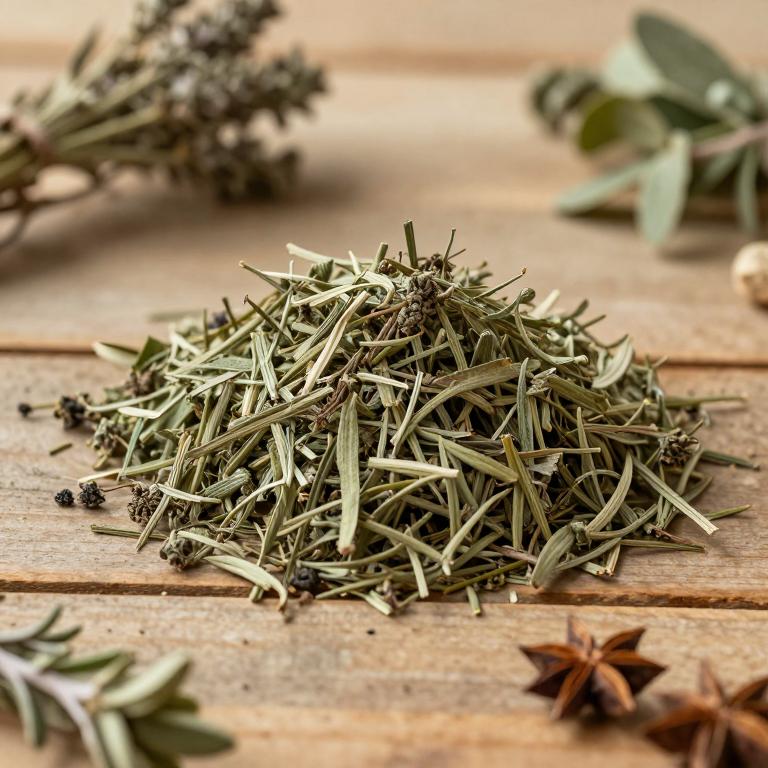
Ladakhi Sage, scientifically known as Salvia moorcroftiana, is a resilient perennial herb native to the high-altitude Himalayan regions. Renowned for its aromatic foliage, this medicinal powerhouse is deeply embedded in traditional Tibetan medicine, valued for its potent antioxidant, anti-inflammatory, and antimicrobial properties used to treat various ailments.
- Family
- Lamiaceae
- Native range
- Asia-Temperate
- Parts used
- Not available
- Common names
- Ladakhi Sage
- Scientific synonyms
- Not available
Names and Synonyms
Common Names
- Ladakhi Sage
Scientific Names
Accepted name
Salvia moorcroftianaSources: Wikidata, Catalogue of Life
Taxonomical Classification
This plant belongs to the kingdom Plantae and the phylum Streptophyta, falling under the class Equisetopsida and subclass Magnoliidae. It is classified within the order Lamiales and the family Lamiaceae. Finally, it is categorized under the genus Salvia.
| Rank | Classification |
|---|---|
| Kingdom | Plantae |
| Phylum | Streptophyta |
| Class | Equisetopsida |
| Subclass | Magnoliidae |
| Order | Lamiales |
| Family | Lamiaceae |
| Genus | Salvia |
Sources: The World Checklist of Vascular Plants (WCVP)
Distribution
This plant, Salvia moorcroftiana, exhibits a specific distribution across several key regions of Asia. In Western Asia, its presence is noted within the borders of Afghanistan. Moving into the Indian Subcontinent, it can be found growing in the country of Nepal. It also has a documented occurrence within Pakistan. Furthermore, the species is widely distributed across the West Himalaya region of the Indian Subcontinent.
| Region | Area |
|---|---|
| Western Asia | Afghanistan |
| Indian Subcontinent | Nepal |
| Indian Subcontinent | Pakistan |
| Indian Subcontinent | West Himalaya |
Sources: The World Checklist of Vascular Plants (WCVP)
Botanical Identification
Ecology
The ecology of Salvia moorcroftiana is defined by its specific niche within montane ecosystems, where it thrives across a distinct altitudinal gradient. This species is primarily distributed within an elevational range that begins at 1200 m AMSL and extends to a maximum of 2150 m AMSL. Within this vertical span, the plant adapts to the varying climatic conditions and soil compositions characteristic of mid-to-high altitude mountain environments. Its presence is closely tied to these specific elevation thresholds, which dictate the availability of moisture, temperature fluctuations, and sunlight exposure necessary for its growth and medicinal potency.
- Elevational range max:
- 2150 m AMSL
- Elevational range min:
- 1200 m AMSL
Life history
The life history of Salvia moorcroftiana is characterized by its status as a perennial plant, allowing it to persist through multiple growing seasons. In terms of its ecological strategy and structural adaptation to its environment, the species functions as a hemicryptophyte, maintaining its perennial presence by protecting its overwintering buds at or just below the soil surface. This hemicryptophytic life form ensures its survival and continued development within its specific habitat over successive years.
- Life form :
- hemicryptophyte
- Lifecycle :
- perennial
Morphology
The morphology of Salvia moorcroftiana is characterized by its growth form as a herb, specifically presenting as a non-woody herbaceous plant. It functions as an independent organism, meaning it does not exhibit parasitic behavior, and it maintains a terrestrial lifestyle rather than being epiphytic. While it possesses a self-supporting climbing habit, it does not rely on external structures for its primary orientation, maintaining its structural integrity through its herbaceous stems.
- Climber :
- self-supporting
- Epiphyte :
- terrestrial
- Growth form :
- herb
- Parasite :
- independent
- Woodiness :
- non-woody
Reproduction
Reproduction in Salvia moorcroftiana is primarily achieved through the production of seeds, which exhibit a highly consistent morphology regarding their physical weight. The reproductive output is characterized by a very uniform seed mass, with a recorded mean, maximum, and minimum value all stabilizing at 0.0033 g. This lack of variance in seed mass suggests a highly standardized developmental process during seed maturation, ensuring that each individual seed carries a consistent nutritional load and physical dimension for dispersal and subsequent germination.
- Seed mass mean:
- 0.0033 g
Sources: Global Inventory of Floras and Traits (GIFT)
Chemicals
Salvia moorcroftiana has 1 reported phytochemicals identified across 0 scientific publications and several other databases. The most consistently reported chemicals include Flavonoids.
| Chemical | Supporting sources | Consensus |
|---|---|---|
| Flavonoids | 1 supporting sources | ★☆☆☆☆ |
Flavonoids
- Fitoterapia
Activities
Salvia moorcroftiana has 4 reported activities identified across 0 scientific publications and several other databases. The most consistently reported activities include Antioxidant, Antiamnesic, Antibacterial, Anticholinesterase.
| Activity | Supporting sources | Consensus |
|---|---|---|
| Antioxidant | 2 supporting sources | ★☆☆☆☆ |
| Antiamnesic | 1 supporting sources | ★☆☆☆☆ |
| Antibacterial | 1 supporting sources | ★☆☆☆☆ |
| Anticholinesterase | 1 supporting sources | ★☆☆☆☆ |
Antioxidant
- Brain sciences
- PloS one
Antiamnesic
- Brain sciences
Antibacterial
- PloS one
Anticholinesterase
- Brain sciences
Conditions
Salvia moorcroftiana has 5 reported investigations on conditions identified across 0 scientific publications and several other databases. The most consistently reported conditions include Enterococcus faecalis, Klebsiella pneumoniae, Pseudomonas aeruginosa, Staphylococcus aureus, amnesia.
| Condition | Supporting sources | Consensus |
|---|---|---|
| Enterococcus faecalis | 1 supporting sources | ★☆☆☆☆ |
| Klebsiella pneumoniae | 1 supporting sources | ★☆☆☆☆ |
| Pseudomonas aeruginosa | 1 supporting sources | ★☆☆☆☆ |
| Staphylococcus aureus | 1 supporting sources | ★☆☆☆☆ |
| Amnesia | 1 supporting sources | ★☆☆☆☆ |
Enterococcus faecalis
- PloS one
Klebsiella pneumoniae
- PloS one
Pseudomonas aeruginosa
- PloS one
Staphylococcus aureus
- PloS one
Amnesia
- Brain sciences
Preparations
Salvia moorcroftiana has 6 reported preparations identified across 0 scientific publications and several other databases. The most consistently reported preparations include DMSO (in fraction), dimethyl sulfoxide (DMSO), fractionated DMSO extract, hexane, water.
| Preparation | Supporting sources | Consensus |
|---|---|---|
| Dmso (in fraction) | 1 supporting sources | ★☆☆☆☆ |
| Dimethyl sulfoxide (dmso) | 1 supporting sources | ★☆☆☆☆ |
| Fractionated dmso extract | 1 supporting sources | ★☆☆☆☆ |
| Hexane | 1 supporting sources | ★☆☆☆☆ |
| Water | 1 supporting sources | ★☆☆☆☆ |
| Whole aqueous extract | 1 supporting sources | ★☆☆☆☆ |
Dmso (in fraction)
- PloS one
Dimethyl sulfoxide (dmso)
- PloS one
Fractionated dmso extract
- PloS one
Hexane
- PloS one
Water
- PloS one
Whole aqueous extract
- PloS one