Salvia mirzayanii
Salvia mirzayanii · Accepted scientific name
Scientific literature: Sparse (56 studies) · ★★☆☆☆
Salvia mirzayanii, scientifically known as Salvia mirzayanii, is a noteworthy medicinal plant belonging to the Lamiaceae family. Endemic to specific mountainous regions, it is valued for its unique phytochemical profile. Research suggests its essential oils and bioactive compounds possess significant antioxidant and antimicrobial properties, offering promising therapeutic potential.
- Family
- Lamiaceae
- Native range
- Asia-Temperate
- Parts used
- Leaf
- Common names
- Not available
- Scientific synonyms
- Not available
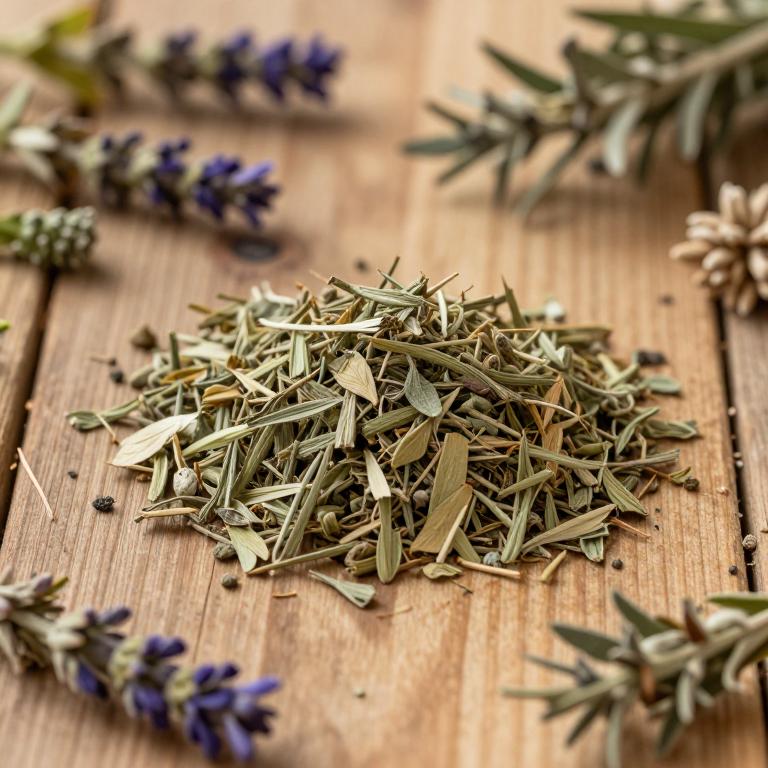
Names and Synonyms
Scientific Names
Accepted name
Salvia mirzayaniiSources: Wikidata, Catalogue of Life
Taxonomical Classification
This plant belongs to the kingdom Plantae within the phylum Streptophyta and the class Equisetopsida. It is further classified under the subclass Magnoliidae and the order Lamiales, falling within the family Lamiaceae. Ultimately, it is identified by the genus Salvia as the species Salvia mirzayanii.
| Rank | Classification |
|---|---|
| Kingdom | Plantae |
| Phylum | Streptophyta |
| Class | Equisetopsida |
| Subclass | Magnoliidae |
| Order | Lamiales |
| Family | Lamiaceae |
| Genus | Salvia |
Sources: The World Checklist of Vascular Plants (WCVP)
Distribution
This plant exhibits a specific distribution across several key regions in the Middle East. Primarily, Salvia mirzayanii is found within the borders of Iran in Western Asia. Its range also extends into the Arabian Peninsula, where it inhabits various Gulf States. Furthermore, the species can be located within the territory of Oman. These locations define the unique geographical footprint of this medicinal species.
| Region | Area |
|---|---|
| Western Asia | Iran |
| Arabian Peninsula | Gulf States |
| Arabian Peninsula | Oman |
Sources: The World Checklist of Vascular Plants (WCVP)
Botanical Identification
Life history
The life history of Salvia mirzayanii is characterized by its classification as a chamaephyte, a growth form where the majority of the plant's vegetative organs are located close to the soil surface, often protected by the substrate or leaf litter. Specifically, it functions as a chamaephyte in both its primary and secondary life form categorizations, meaning its buds are situated just above the ground level, allowing it to withstand environmental fluctuations and seasonal changes typical of its habitat. This life strategy enables the plant to maintain a low-lying profile, optimizing its survival through specialized bud positioning that bridges the gap between more permanent woody structures and ephemeral annual growth.
- Life form :
- chamaephyte
Morphology
The morphology of Salvia mirzayanii is characterized by its growth habit as a self-supporting climber, utilizing its structural integrity to ascend without reliance on external hosts for nutrient uptake. As an independent organism, it functions without any parasitic relationship, maintaining a non-parasitic lifestyle that distinguishes it from hetero-trophic climbing species. Furthermore, it is a terrestrial plant, establishing its root system and vegetative structure within the soil rather than growing as an epiphyte on other vegetation.
- Climber :
- self-supporting
- Epiphyte :
- terrestrial
- Parasite :
- independent
Sources: Global Inventory of Floras and Traits (GIFT)
Plant Parts
Salvia mirzayanii has 1 reported plant parts identified across 2 scientific publications and several other databases that are studied for medicinal purposes. The most consistently reported plant part include leaf.
| Plant part | Supporting sources | Consensus |
|---|---|---|
| Leaf | 2 supporting sources | ★☆☆☆☆ |
Leaf
- Journal of evidence-based complementary & alternative medicine
- Heliyon
Chemicals
Salvia mirzayanii has 25 reported phytochemicals identified across 2 scientific publications and several other databases. The most consistently reported chemicals include CAT, Linalool, POD, SOD, 1,8-Cineol.
| Chemical | Supporting sources | Consensus |
|---|---|---|
| CAT | 2 supporting sources | ★☆☆☆☆ |
| Linalool | 2 supporting sources | ★☆☆☆☆ |
| POD | 2 supporting sources | ★☆☆☆☆ |
| SOD | 2 supporting sources | ★☆☆☆☆ |
| 1,8-Cineol | 1 supporting sources | ★☆☆☆☆ |
| 1,8-Cineole | 1 supporting sources | ★☆☆☆☆ |
| CHLOROPHYLL B | 1 supporting sources | ★☆☆☆☆ |
| DECANE | 1 supporting sources | ★☆☆☆☆ |
| DODECANE | 1 supporting sources | ★☆☆☆☆ |
| Eudesm-7(11)-en-4-ol | 1 supporting sources | ★☆☆☆☆ |
CAT
- Plant physiology and biochemistry : PPB
- Chemosphere
Linalool
- Zeitschrift fur Naturforschung. C, Journal of biosciences
- Plant physiology and biochemistry : PPB
POD
- Plant physiology and biochemistry : PPB
- Chemosphere
SOD
- Plant physiology and biochemistry : PPB
- Chemosphere
1,8-Cineol
- Zeitschrift fur Naturforschung. C, Journal of biosciences
1,8-Cineole
- Journal of evidence-based complementary & alternative medicine
CHLOROPHYLL B
- Plant physiology and biochemistry : PPB
DECANE
- Plant physiology and biochemistry : PPB
DODECANE
- Plant physiology and biochemistry : PPB
Eudesm-7(11)-en-4-ol
- Plant physiology and biochemistry : PPB
Activities
Salvia mirzayanii has 5 reported activities identified across 2 scientific publications and several other databases. The most consistently reported activities include Antibacterial, Antioxidant, Antifungal, Antimicrobial, Tonic.
| Activity | Supporting sources | Consensus |
|---|---|---|
| Antibacterial | 3 supporting sources | ★★☆☆☆ |
| Antioxidant | 2 supporting sources | ★☆☆☆☆ |
| Antifungal | 1 supporting sources | ★☆☆☆☆ |
| Antimicrobial | 1 supporting sources | ★☆☆☆☆ |
| Tonic | 1 supporting sources | ★☆☆☆☆ |
Antibacterial
- Journal of evidence-based complementary & alternative medicine
- Scientific reports
- Bulletin of emergency and trauma
Antioxidant
- Journal of evidence-based complementary & alternative medicine
- Scientific reports
Antifungal
- Journal of evidence-based complementary & alternative medicine
Antimicrobial
- Journal of evidence-based complementary & alternative medicine
Tonic
- Journal of ethnopharmacology
Conditions
Salvia mirzayanii has 11 reported investigations on conditions identified across 2 scientific publications and several other databases. The most consistently reported conditions include AChE, Acinetobacter baumannii, Escherichia coli, Giardia lamblia, Staphylococcus aureus.
| Condition | Supporting sources | Consensus |
|---|---|---|
| Ache | 1 supporting sources | ★☆☆☆☆ |
| Acinetobacter baumannii | 1 supporting sources | ★☆☆☆☆ |
| Escherichia coli | 1 supporting sources | ★☆☆☆☆ |
| Giardia lamblia | 1 supporting sources | ★☆☆☆☆ |
| Staphylococcus aureus | 1 supporting sources | ★☆☆☆☆ |
| Gram-negative bacteria | 1 supporting sources | ★☆☆☆☆ |
| Gram-positive bacteria | 1 supporting sources | ★☆☆☆☆ |
| Hyperglycemia | 1 supporting sources | ★☆☆☆☆ |
| Infections | 1 supporting sources | ★☆☆☆☆ |
| Oxidative stress | 1 supporting sources | ★☆☆☆☆ |
Ache
- BMC complementary medicine and therapies
Acinetobacter baumannii
- Bulletin of emergency and trauma
Escherichia coli
- Scientific reports
Giardia lamblia
- Scientific reports
Staphylococcus aureus
- Scientific reports
Gram-negative bacteria
- Journal of evidence-based complementary & alternative medicine
Gram-positive bacteria
- Journal of evidence-based complementary & alternative medicine
Hyperglycemia
- Heliyon
Infections
- Journal of ethnopharmacology
Oxidative stress
- Chemosphere
Preparations
Salvia mirzayanii has 9 reported preparations identified across 2 scientific publications and several other databases. The most consistently reported preparations include CeO2 NPs, Salvia mirzayanii essential oil, demucilaged seeds, essential oil, extract.
| Preparation | Supporting sources | Consensus |
|---|---|---|
| Ceo2 nps | 1 supporting sources | ★☆☆☆☆ |
| Salvia mirzayanii essential oil | 1 supporting sources | ★☆☆☆☆ |
| Demucilaged seeds | 1 supporting sources | ★☆☆☆☆ |
| Essential oil | 1 supporting sources | ★☆☆☆☆ |
| Extract | 1 supporting sources | ★☆☆☆☆ |
| Intact (mucilaginous) seeds | 1 supporting sources | ★☆☆☆☆ |
| Methanolic extracts | 1 supporting sources | ★☆☆☆☆ |
| Petroleum ether fraction | 1 supporting sources | ★☆☆☆☆ |
| Young seedlings | 1 supporting sources | ★☆☆☆☆ |
Ceo2 nps
- Plant physiology and biochemistry : PPB
Salvia mirzayanii essential oil
- Journal of evidence-based complementary & alternative medicine
Demucilaged seeds
- Chemosphere
Essential oil
- Journal of evidence-based complementary & alternative medicine
Extract
- Natural product research
Intact (mucilaginous) seeds
- Chemosphere
Methanolic extracts
- Iranian journal of immunology : IJI
Petroleum ether fraction
- Pharmaceutical biology
Young seedlings
- Chemosphere