Grape-scented Sage
Salvia melissodora · Accepted scientific name
Scientific literature: Very Sparse (1 studies) · ★☆☆☆☆
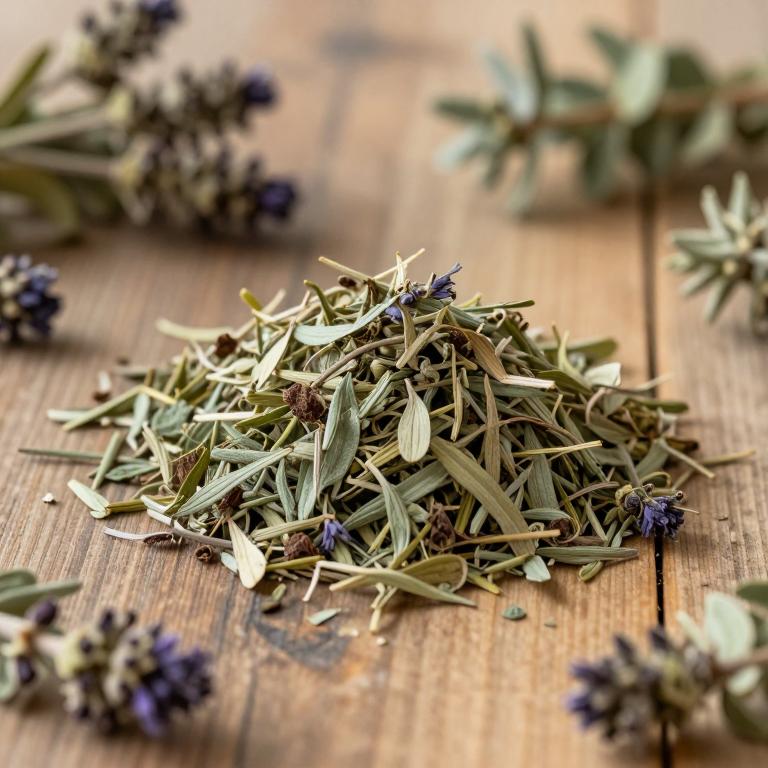
Grape-scented Sage, scientifically known as Salvia melissodora, is a captivating perennial herb native to Brazil. Renowned for its unique, fruity aroma and delicate purple flowers, this plant is prized in traditional herbalism. It offers therapeutic potential, often used for its soothing properties and distinct, refreshing aromatic profile.
- Family
- Lamiaceae
- Native range
- Northern America
- Parts used
- Not available
- Common names
- Grape-Scented Sage
- Scientific synonyms
- Salvia Rupicola · Salvia Scorodoniifolia · 1 more
Names and Synonyms
Common Names
- Grape-scented Sage
Scientific Names
Accepted name
Salvia melissodoraSynonyms
- Salvia rupicola
- Salvia scorodoniifolia
- Salvia scorodoniifolia var. crenaea
Regional and Traditional Names
Spanish:
- Mirto uva
Sources: Wikidata, Catalogue of Life
Taxonomical Classification
This plant belongs to the kingdom Plantae within the phylum Streptophyta and the class Equisetopsida. Under the subclass Magnoliidae, it is classified in the order Lamiales and the family Lamiaceae. Finally, it is identified by its genus, Salvia.
| Rank | Classification |
|---|---|
| Kingdom | Plantae |
| Phylum | Streptophyta |
| Class | Equisetopsida |
| Subclass | Magnoliidae |
| Order | Lamiales |
| Family | Lamiaceae |
| Genus | Salvia |
Sources: The World Checklist of Vascular Plants (WCVP)
Distribution
This plant is native to several distinct regions within the country of Mexico. Its geographical presence is notably documented across Mexico Central, where it thrives in various local ecosystems. Additionally, the species can be found extending into the areas of Mexico Northeast. The distribution also encompasses the humid environments characteristic of Mexico Gulf. Finally, the range of this medicinal species reaches as far as Mexico Southwest.
| Region | Area |
|---|---|
| Mexico | Mexico Central |
| Mexico | Mexico Northeast |
| Mexico | Mexico Gulf |
| Mexico | Mexico Southwest |
Sources: The World Checklist of Vascular Plants (WCVP)
Botanical Identification
Life history
The life history of Salvia melissodora is characterized by its specific growth habit and structural classification within its natural habitat. This species functions primarily as a phanerophyte, maintaining its persistent, woody stems above the ground level, which allows it to navigate its ecological niche effectively. Additionally, its developmental architecture can be categorized as a nanophanerophyte, reflecting a growth form where the permanent shoots are relatively short and stay close to the substrate. This combination of life forms enables the plant to maintain a stable presence through various seasonal cycles, utilizing its elevated stem structure to facilitate reproductive processes and environmental interaction.
- Life form :
- nanophanerophyte
- Life form :
- phanerophyte
Morphology
The morphology of Salvia melissodora is characterized by a self-supporting growth form, typically manifesting as a woody shrub. Unlike climbing vines or lianas, this species does not require external support, functioning as a self-supporting organism. It is an independent plant, lacking any parasitic tendencies, and is strictly terrestrial in its ecological habit rather than being aquatic, semiaquatic, or epiphytic. The structural integrity of the plant is defined by its woody nature, providing a robust framework for its development within its native habitat.
- Aquatic :
- terrestrial
- Climber :
- self-supporting
- Epiphyte :
- terrestrial
- Growth form :
- shrub
- Parasite :
- independent
- Woodiness :
- woody
Sources: Global Inventory of Floras and Traits (GIFT)
Activities
Salvia melissodora has 1 reported activities identified across 0 scientific publications and several other databases. The most consistently reported activities include Antioxidant.
| Activity | Supporting sources | Consensus |
|---|---|---|
| Antioxidant | 1 supporting sources | ★☆☆☆☆ |
Antioxidant
- Biological research
Preparations
Salvia melissodora has 1 reported preparations identified across 0 scientific publications and several other databases. The most consistently reported preparations include crude ethanolic extracts.
| Preparation | Supporting sources | Consensus |
|---|---|---|
| Crude ethanolic extracts | 1 supporting sources | ★☆☆☆☆ |
Crude ethanolic extracts
- Biological research