Mount Genu Sage
Salvia majdae · Accepted scientific name
Scientific literature: Very Sparse (23 studies) · ★☆☆☆☆
Mount Genu Sage, scientifically known as Salvia majdae, is a distinctive perennial herb native to high-altitude regions. Renowned for its striking floral displays and aromatic foliage, this medicinal plant offers unique therapeutic potential. It is increasingly studied for its bioactive compounds, providing valuable insights into natural pharmacological applications.
- Family
- Lamiaceae
- Native range
- Asia-Temperate
- Parts used
- Leaf · Root
- Common names
- Mount Genu Sage
- Scientific synonyms
- Zhumeria Majdae
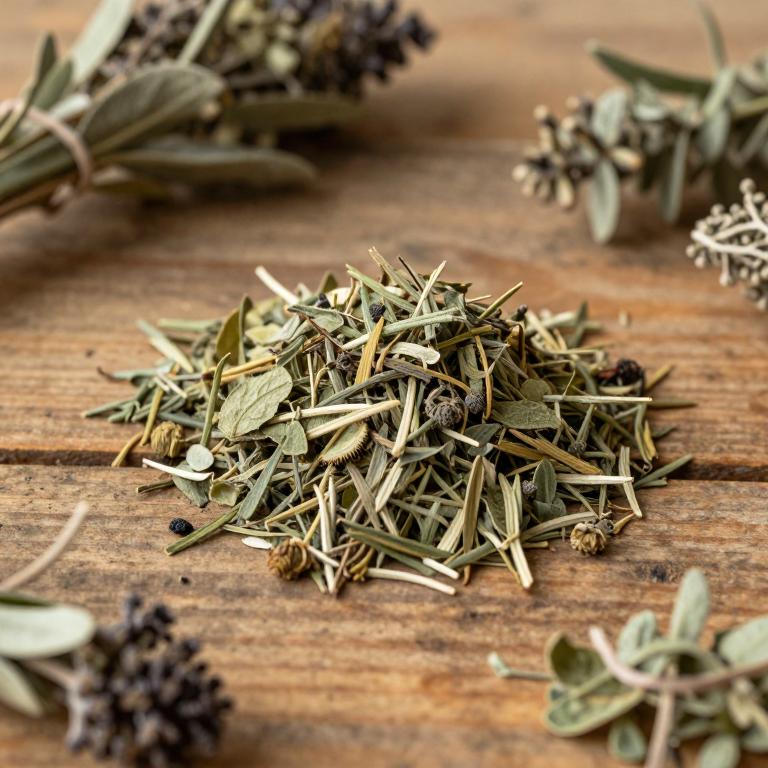
Names and Synonyms
Common Names
- Mount Genu Sage
Scientific Names
Accepted name
Salvia majdaeSynonyms
- Zhumeria majdae
Sources: Wikidata, Catalogue of Life
Taxonomical Classification
This plant belongs to the kingdom Plantae and is classified under the phylum Streptophyta within the class Equisetopsida. It is further organized into the subclass Magnoliidae and the order Lamiales, falling under the family Lamiaceae. Finally, it is identified by the genus Salvia.
| Rank | Classification |
|---|---|
| Kingdom | Plantae |
| Phylum | Streptophyta |
| Class | Equisetopsida |
| Subclass | Magnoliidae |
| Order | Lamiales |
| Family | Lamiaceae |
| Genus | Salvia |
Sources: The World Checklist of Vascular Plants (WCVP)
Distribution
This plant is characterized by a very specific and limited natural range. Its primary occurrence is found within the region of Western Asia. Specifically, the species is native to the country of Iran. Because of this localized presence, it is considered an endemic element of the Iranian flora. Understanding this concentrated distribution is essential for the conservation of the species.
| Region | Area |
|---|---|
| Western Asia | Iran |
Sources: The World Checklist of Vascular Plants (WCVP)
Botanical Identification
Life history
The life history of Salvia majdae is characterized by its specific ecological adaptation as a chamaephyte, a life form that dictates its growth strategy and survival mechanisms within its native habitat. As a chamaephyte, the plant maintains its perennating buds very close to the soil surface, often just above it, which allows it to withstand environmental fluctuations such as temperature changes or moderate herbivory. This classification indicates that while it does not possess the tall, woody structure of a phanerophyte or the purely ephemeral nature of a therophyte, it relies on these low-lying buds to ensure perennial regrowth. Consequently, its life cycle involves navigating seasonal shifts by utilizing these protected buds to re-emerge, balancing the structural stability required to persist in its niche with the resilience necessary to survive in its specific environmental context.
- Life form :
- chamaephyte
Morphology
The morphology of Salvia majdae is characterized by its growth habit as a self-supporting climber, utilizing its structural integrity to ascend without the need for external host support. It functions as an independent organism, showing no parasitic tendencies and maintaining its own nutritional processes without reliance on other plants. Furthermore, it is a terrestrial species, establishing its root system within the soil rather than growing as an epiphyte on other vegetation.
- Climber :
- self-supporting
- Epiphyte :
- terrestrial
- Parasite :
- independent
Sources: Global Inventory of Floras and Traits (GIFT)
Plant Parts
Salvia majdae has 2 reported plant parts identified across 2 scientific publications and several other databases that are studied for medicinal purposes. The most consistently reported plant part include leaf, root.
| Plant part | Supporting sources | Consensus |
|---|---|---|
| Leaf | 1 supporting sources | ★☆☆☆☆ |
| Root | 1 supporting sources | ★☆☆☆☆ |
Leaf
- Current medical mycology
Root
- Daru : journal of Faculty of Pharmacy, Tehran University of Medical Sciences
Chemicals
Salvia majdae has 8 reported phytochemicals identified across 2 scientific publications and several other databases. The most consistently reported chemicals include Linalool, camphor, 11,14-dihydroxy-8,11,13-abietatrien-7-one, Aethiopinone, Linarin.
| Chemical | Supporting sources | Consensus |
|---|---|---|
| Linalool | 2 supporting sources | ★☆☆☆☆ |
| camphor | 2 supporting sources | ★☆☆☆☆ |
| 11,14-dihydroxy-8,11,13-abietatrien-7-one | 1 supporting sources | ★☆☆☆☆ |
| Aethiopinone | 1 supporting sources | ★☆☆☆☆ |
| Linarin | 1 supporting sources | ★☆☆☆☆ |
| ethanol | 1 supporting sources | ★☆☆☆☆ |
| glutaraldehyde | 1 supporting sources | ★☆☆☆☆ |
| rosmarinic acid | 1 supporting sources | ★☆☆☆☆ |
Linalool
- Current medical mycology
- Journal de mycologie medicale
camphor
- Current medical mycology
- Journal de mycologie medicale
11,14-dihydroxy-8,11,13-abietatrien-7-one
- Daru : journal of Faculty of Pharmacy, Tehran University of Medical Sciences
Aethiopinone
- Phytochemistry
Linarin
- Pharmacognosy research
ethanol
- Analytical biochemistry
glutaraldehyde
- Analytical biochemistry
rosmarinic acid
- Pharmaceutics
Activities
Salvia majdae has 5 reported activities identified across 2 scientific publications and several other databases. The most consistently reported activities include Antibacterial, Anticancer, Antioxidant, Antiprotozoal, Antiseptic.
| Activity | Supporting sources | Consensus |
|---|---|---|
| Antibacterial | 1 supporting sources | ★☆☆☆☆ |
| Anticancer | 1 supporting sources | ★☆☆☆☆ |
| Antioxidant | 1 supporting sources | ★☆☆☆☆ |
| Antiprotozoal | 1 supporting sources | ★☆☆☆☆ |
| Antiseptic | 1 supporting sources | ★☆☆☆☆ |
Antibacterial
- RSC advances
Anticancer
- Pharmaceutics
Antioxidant
- RSC advances
Antiprotozoal
- Daru : journal of Faculty of Pharmacy, Tehran University of Medical Sciences
Antiseptic
- Current medical mycology
Preparations
Salvia majdae has 7 reported preparations identified across 2 scientific publications and several other databases. The most consistently reported preparations include essential oil, chemically fixed using glutaraldehyde, ethyl acetate, hexane extract from roots, hydroalcoholic extract.
| Preparation | Supporting sources | Consensus |
|---|---|---|
| Essential oil | 3 supporting sources | ★★☆☆☆ |
| Chemically fixed using glutaraldehyde | 1 supporting sources | ★☆☆☆☆ |
| Ethyl acetate | 1 supporting sources | ★☆☆☆☆ |
| Hexane extract from roots | 1 supporting sources | ★☆☆☆☆ |
| Hydroalcoholic extract | 1 supporting sources | ★☆☆☆☆ |
| Methanol | 1 supporting sources | ★☆☆☆☆ |
| Methanolic extracts | 1 supporting sources | ★☆☆☆☆ |
Essential oil
- Current medical mycology
- RSC advances
- Journal de mycologie medicale
Chemically fixed using glutaraldehyde
- Analytical biochemistry
Ethyl acetate
- Daru : journal of Faculty of Pharmacy, Tehran University of Medical Sciences
Hexane extract from roots
- Daru : journal of Faculty of Pharmacy, Tehran University of Medical Sciences
Hydroalcoholic extract
- RSC advances
Methanol
- Daru : journal of Faculty of Pharmacy, Tehran University of Medical Sciences
Methanolic extracts
- Indian journal of dental research : official publication of Indian Society for Dental Research