Desert Fever Sage
Salvia macrosiphon · Accepted scientific name
Scientific literature: Very Sparse (13 studies) · ★☆☆☆☆
Desert Fever Sage, scientifically known as Salvia macrosiphon, is a resilient perennial shrub native to the arid landscapes of the Southwestern United States. Renowned for its striking tubular flowers and aromatic foliage, this hardy plant plays a vital role in desert ecosystems, supporting pollinators while offering traditional medicinal properties.
- Family
- Lamiaceae
- Native range
- Asia-Temperate
- Parts used
- Not available
- Common names
- Desert Fever Sage · Lemon-Scented Sage
- Scientific synonyms
- Salvia Macrosiphonia · Salvia Nachiczevanica · 6 more
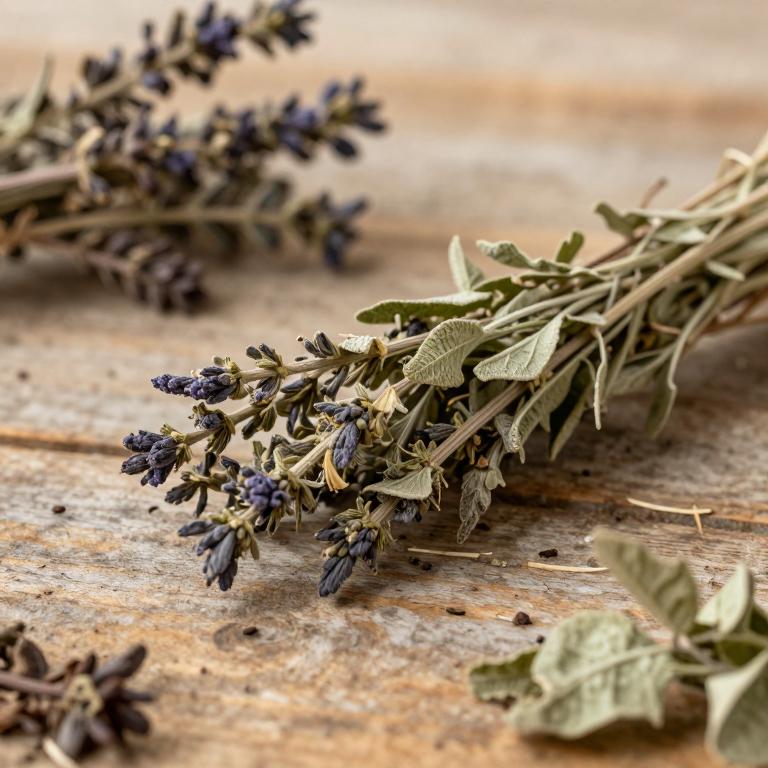
Names and Synonyms
Common Names
- Desert Fever Sage
- Lemon-scented Sage
Scientific Names
Accepted name
Salvia macrosiphonSynonyms
- Salvia macrosiphonia
- Salvia nachiczevanica
- Salvia albifrons
- Salvia cuspidatissima
- Salvia macrosiphon var. brachycalycina
- Salvia macrosiphon var. cabulica
- Salvia macrosiphon var. glandulosissima
- Salvia macrosiphon var. kotschyi
Sources: Wikidata, Catalogue of Life
Taxonomical Classification
This plant belongs to the kingdom Plantae within the phylum Streptophyta and the class Equisetopsida. It is further classified under the subclass Magnoliidae and the order Lamiales, falling into the family Lamiaceae. Ultimately, it is identified by the genus Salvia.
| Rank | Classification |
|---|---|
| Kingdom | Plantae |
| Phylum | Streptophyta |
| Class | Equisetopsida |
| Subclass | Magnoliidae |
| Order | Lamiales |
| Family | Lamiaceae |
| Genus | Salvia |
Sources: The World Checklist of Vascular Plants (WCVP)
Distribution
This plant is primarily found within the vast landscapes of Central Asia. Its natural range extends through the territory of Kazakhstan, where it occupies specific ecological niches. It can also be discovered growing in the diverse terrains of Kirgizstan. Furthermore, the species is distributed across the landscapes of Turkmenistan and Tadzhikistan. Finally, its presence is well-documented within the borders of Uzbekistan.
| Region | Area |
|---|---|
| Central Asia | Kazakhstan |
| Central Asia | Kirgizstan |
| Central Asia | Turkmenistan |
| Central Asia | Tadzhikistan |
| Central Asia | Uzbekistan |
| Caucasus | Transcaucasus |
| Western Asia | Afghanistan |
| Western Asia | Iran |
| Western Asia | Iraq |
| Western Asia | Türkiye |
Sources: The World Checklist of Vascular Plants (WCVP)
Botanical Identification
Ecology
The ecology of Salvia macrosiphon is characterized by its adaptability to diverse topographical features, commonly inhabiting hills, mountains, rivers, and stony places. This species occupies a broad vertical gradient within its environment, maintaining an elevational range that begins at 600 m AMSL and extends up to a maximum of 2300 m AMSL. Its presence in stony areas and near river systems suggests a preference for well-drained substrates or riparian margins where it can navigate the varied moisture levels and terrain typical of mountainous landscapes.
- Elevational range max:
- 2300 m AMSL
- Elevational range min:
- 600 m AMSL
- Habitat :
- hills, mountains, rivers, stony places
Life history
The life history of Salvia macrosiphon is characterized by its nature as a perennial plant, allowing it to persist through multiple growing seasons. As a hemicryptophyte, its perennating buds are located at or just below the soil surface, protected by leaf litter or the substrate during unfavorable environmental conditions. This life form enables the species to survive seasonal fluctuations by maintaining its regenerative structures close to the ground, ensuring its continued presence within its ecological niche over an extended lifespan.
- Life form :
- hemicryptophyte
- Lifecycle :
- perennial
Morphology
The morphology of Salvia macrosiphon is characterized by its growth form as a non-woody herb. This terrestrial plant reaches a height ranging from a minimum of 0.3 m to a maximum of 0.5 m. Its shoots exhibit an erect orientation and are self-supporting in nature, rather than being climbers. Functionally, the plant is an independent organism, meaning it does not function as a parasite.
- Climber :
- self-supporting
- Epiphyte :
- terrestrial
- Growth form :
- herb
- Parasite :
- independent
- Plant height max:
- 0.5 m
- Plant height min:
- 0.3 m
- Shoot orientation :
- erect
- Woodiness :
- non-woody
Reproduction
The reproduction of Salvia macrosiphon is characterized by a specific seasonal flowering pattern that dictates its reproductive cycle. The plant begins its flowering period in June, marking the onset of its reproductive phase. This flowering stage is relatively concentrated, as the period concludes within the same month of June. Because the flowering start and end are both aligned with this specific month, the reproductive window is brief and highly synchronized with the onset of the summer season.
- Flowering time :
- Jun
Sources: Global Inventory of Floras and Traits (GIFT)
Chemicals
Salvia macrosiphon has 4 reported phytochemicals identified across 0 scientific publications and several other databases. The most consistently reported chemicals include 13-epi-Manoyl oxide, 5-Hydroxy-7,4'-dimethoxyflavone, TFC, TPC.
| Chemical | Supporting sources | Consensus |
|---|---|---|
| 13-epi-Manoyl oxide | 1 supporting sources | ★☆☆☆☆ |
| 5-Hydroxy-7,4'-dimethoxyflavone | 1 supporting sources | ★☆☆☆☆ |
| TFC | 1 supporting sources | ★☆☆☆☆ |
| TPC | 1 supporting sources | ★☆☆☆☆ |
13-epi-Manoyl oxide
- BMC chemistry
5-Hydroxy-7,4'-dimethoxyflavone
- BMC chemistry
TFC
- Pakistan journal of pharmaceutical sciences
TPC
- Pakistan journal of pharmaceutical sciences
Activities
Salvia macrosiphon has 7 reported activities identified across 0 scientific publications and several other databases. The most consistently reported activities include Antibacterial, Antioxidant, Analgesic, Antiasthmatic, Antifungal.
| Activity | Supporting sources | Consensus |
|---|---|---|
| Antibacterial | 2 supporting sources | ★☆☆☆☆ |
| Antioxidant | 2 supporting sources | ★☆☆☆☆ |
| Analgesic | 1 supporting sources | ★☆☆☆☆ |
| Antiasthmatic | 1 supporting sources | ★☆☆☆☆ |
| Antifungal | 1 supporting sources | ★☆☆☆☆ |
| Antitumor | 1 supporting sources | ★☆☆☆☆ |
| Cytotoxic | 1 supporting sources | ★☆☆☆☆ |
Antibacterial
- Pakistan journal of pharmaceutical sciences
- BMC chemistry
Antioxidant
- Pakistan journal of pharmaceutical sciences
- Combinatorial chemistry & high throughput screening
Analgesic
- Combinatorial chemistry & high throughput screening
Antiasthmatic
- Combinatorial chemistry & high throughput screening
Antifungal
- Pakistan journal of pharmaceutical sciences
Antitumor
- Combinatorial chemistry & high throughput screening
Cytotoxic
- BMC chemistry