Lulling Sage
Salvia limbata · Accepted scientific name
Scientific literature: Very Sparse (23 studies) · ★☆☆☆☆
Lulling Sage, scientifically known as Salvia limbata, is a captivating perennial herb native to Southern Africa. Renowned for its striking, tubular flowers and aromatic foliage, this medicinal plant is traditionally utilized in various cultures to treat ailments ranging from digestive issues to skin irritations, showcasing its rich ethnobotanical significance.
- Family
- Lamiaceae
- Native range
- Asia-Temperate
- Parts used
- Flower
- Common names
- Lulling Sage
- Scientific synonyms
- Salvia Polyadenia · Salvia Chrysadenia · 1 more
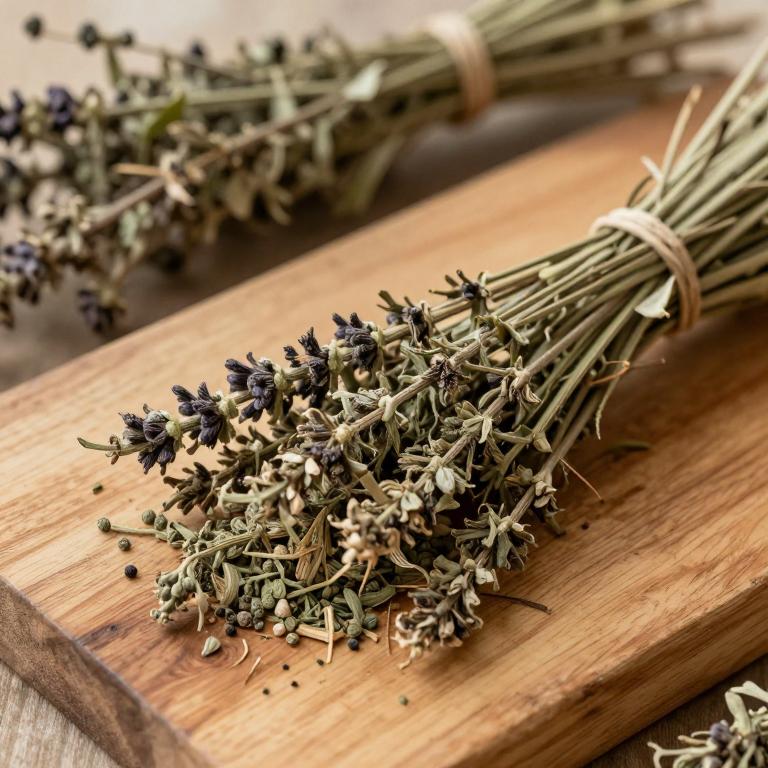
Names and Synonyms
Common Names
- Lulling Sage
Scientific Names
Accepted name
Salvia limbataSynonyms
- Salvia polyadenia
- Salvia chrysadenia
- Salvia flexuosa
Sources: Wikidata, Catalogue of Life
Taxonomical Classification
This plant, Salvia limbata, belongs to the kingdom Plantae and the phylum Streptophyta. Within the class Equisetopsida and subclass Magnoliidae, it is classified under the order Lamiales and the family Lamiaceae. Finally, it is categorized under the genus Salvia.
| Rank | Classification |
|---|---|
| Kingdom | Plantae |
| Phylum | Streptophyta |
| Class | Equisetopsida |
| Subclass | Magnoliidae |
| Order | Lamiales |
| Family | Lamiaceae |
| Genus | Salvia |
Sources: The World Checklist of Vascular Plants (WCVP)
Distribution
This plant, known scientifically as Salvia limbata, exhibits a specific range across several key regions. Its primary geographical distribution can be found within the Caucasus, specifically located in the Transcaucasus area. Furthermore, the species is widely documented across parts of Western Asia. Within this region, it is notably present in the country of Iran. Additionally, its habitat extends into Türkiye, marking another significant part of its natural range.
| Region | Area |
|---|---|
| Caucasus | Transcaucasus |
| Western Asia | Iran |
| Western Asia | Türkiye |
Sources: The World Checklist of Vascular Plants (WCVP)
Botanical Identification
Ecology
The ecology of Salvia limbata is characterized by its specialized adaptation to high-altitude environments, specifically within mountainous regions. This species thrives in rugged, stony places where the substrate is typically well-drained and composed of rocky or gravelly soil. Such habitats necessitate physiological resilience to withstand the climatic fluctuations common to montane ecosystems, including intense solar radiation and varying temperature extremes. By occupying these niche, lithic environments, the plant avoids competition with faster-growing species found in more nutrient-rich or moisture-heavy lowland habitats, relying instead on its ability to colonize sparse, rocky terrain.
- Habitat :
- mountains, stony places
Life history
The life history of Salvia limbata is characterized by its classification as a perennial plant, meaning it maintains its physiological functions and lives for multiple years rather than completing its cycle in a single season. In terms of its structural growth and survival strategy, the species functions as a hemicryptophyte. This life form indicates that its perenn Perennial buds are located at or just below the soil surface, protected by leaf litter or surface debris during unfavorable environmental conditions, allowing the plant to persist and regrow through successive growing seasons.
- Life form :
- hemicryptophyte
- Lifecycle :
- perennial
Morphology
The morphology of Salvia limbata is characterized by its growth form as a non-woody herb. This plant typically reaches a height ranging from a minimum of 0.3 m to a maximum of 0.6 m. It functions as a self-supporting species rather than a climber and grows as an independent organism without any parasitic tendencies. Furthermore, its ecological habit is strictly terrestrial, meaning it grows in soil rather than as an epiphyte.
- Climber :
- self-supporting
- Epiphyte :
- terrestrial
- Growth form :
- herb
- Parasite :
- independent
- Plant height max:
- 0.6 m
- Plant height min:
- 0.3 m
- Woodiness :
- non-woody
Reproduction
The reproduction of Salvia limbata is characterized by a specific seasonal flowering cycle that dictates its reproductive availability. The flowering period typically commences in May and extends through the summer months, reaching its conclusion in July. While the timing of these reproductive stages can be variable depending on environmental conditions, the primary window for bloom is concentrated within this mid-year timeframe.
- Flowering time :
- May
- Flowering time :
- Jul
Sources: Global Inventory of Floras and Traits (GIFT)
Plant Parts
Salvia limbata has 1 reported plant parts identified across 1 scientific publications and several other databases that are studied for medicinal purposes. The most consistently reported plant part include flower.
| Plant part | Supporting sources | Consensus |
|---|---|---|
| Flower | 1 supporting sources | ★☆☆☆☆ |
Flower
- Natural product research
Chemicals
Salvia limbata has 20 reported phytochemicals identified across 1 scientific publications and several other databases. The most consistently reported chemicals include APX, CAT, CO, Cirsiliol, GR.
| Chemical | Supporting sources | Consensus |
|---|---|---|
| APX | 1 supporting sources | ★☆☆☆☆ |
| CAT | 1 supporting sources | ★☆☆☆☆ |
| CO | 1 supporting sources | ★☆☆☆☆ |
| Cirsiliol | 1 supporting sources | ★☆☆☆☆ |
| GR | 1 supporting sources | ★☆☆☆☆ |
| H2O2 | 1 supporting sources | ★☆☆☆☆ |
| Luteolin 7-O-glucoside | 1 supporting sources | ★☆☆☆☆ |
| Luteolin 7-methyl ether | 1 supporting sources | ★☆☆☆☆ |
| MDA | 1 supporting sources | ★☆☆☆☆ |
| MG | 1 supporting sources | ★☆☆☆☆ |
APX
- Scientific reports
CAT
- Scientific reports
CO
- Scientific reports
Cirsiliol
- Natural product research
GR
- Scientific reports
H2O2
- Scientific reports
Luteolin 7-O-glucoside
- Natural product research
Luteolin 7-methyl ether
- Natural product research
MDA
- Scientific reports
MG
- Scientific reports
Preparations
Salvia limbata has 2 reported preparations identified across 1 scientific publications and several other databases. The most consistently reported preparations include air-dried samples, ethyl acetate and methanol extracts of the flowered aerial parts of S. limbata.
| Preparation | Supporting sources | Consensus |
|---|---|---|
| Air-dried samples | 1 supporting sources | ★☆☆☆☆ |
| Ethyl acetate and methanol extracts of the flowered aerial parts of s. limbata | 1 supporting sources | ★☆☆☆☆ |
Air-dried samples
- Biomedical chromatography : BMC
Ethyl acetate and methanol extracts of the flowered aerial parts of s. limbata
- Natural product research