Libyan Wild Clary
Salvia lanigera · Accepted scientific name
Scientific literature: Very Sparse (8 studies) · ★☆☆☆☆
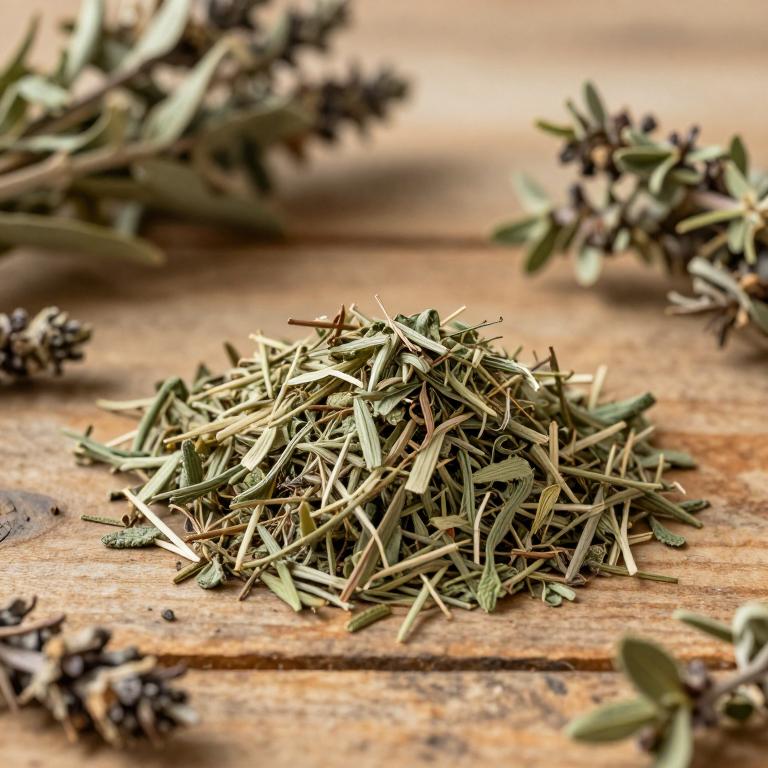
Libyan Wild Clary, scientifically known as Salvia lanigera, is a resilient, aromatic perennial native to the Mediterranean landscapes of Libya. Renowned for its soft, woolly foliage and delicate floral displays, this medicinal herb is highly valued in traditional practices for its soothing properties and potent essential oil extracts.
- Family
- Lamiaceae
- Native range
- Africa
- Parts used
- Not available
- Common names
- Libyan Wild Clary
- Scientific synonyms
- Salvia Rugosissima · Salvia Verbenaca Subsp. Lanigera
Names and Synonyms
Common Names
- Libyan Wild Clary
Scientific Names
Accepted name
Salvia lanigeraSynonyms
- Salvia rugosissima
- Salvia verbenaca subsp. lanigera
Regional and Traditional Names
Spanish:
- Salvia verbenaca subsp. lanigera
Sources: Wikidata, Catalogue of Life
Taxonomical Classification
This plant belongs to the kingdom Plantae and the phylum Streptophyta, falling under the class Equisetopsida and subclass Magnoliidae. Within the order Lamiales and the family Lamiaceae, it is classified under the genus Salvia.
| Rank | Classification |
|---|---|
| Kingdom | Plantae |
| Phylum | Streptophyta |
| Class | Equisetopsida |
| Subclass | Magnoliidae |
| Order | Lamiales |
| Family | Lamiaceae |
| Genus | Salvia |
Sources: The World Checklist of Vascular Plants (WCVP)
Distribution
This plant, known as Salvia lanigera, exhibits a specific distribution pattern across the northern reaches of the African continent. Its natural habitat is primarily concentrated within the diverse landscapes of Northern Africa. Specifically, the species can be found growing in the territories of Algeria and Egypt. Furthermore, its presence extends through the regions of Libya and Morocco. Finally, the geographical range of this medicinal plant is completed by its occurrence in Tunisia.
| Region | Area |
|---|---|
| Northern Africa | Algeria |
| Northern Africa | Egypt |
| Northern Africa | Libya |
| Northern Africa | Morocco |
| Northern Africa | Tunisia |
| Western Asia | Cyprus |
| Western Asia | Iran |
| Western Asia | Iraq |
| Western Asia | Lebanon-Syria |
| Western Asia | Palestine |
Sources: The World Checklist of Vascular Plants (WCVP)
Botanical Identification
Life history
The life history of Salvia lanigera is characterized by its status as a perennial plant, allowing it to persist through multiple growing seasons. As a hemicryptophyte, its perennating buds are located at the soil surface, protected by leaf litter or organic matter during unfavorable periods. This life form enables the species to maintain stability within its ecological niche while undergoing seasonal cycles of growth and dormancy.
- Life form :
- hemicryptophyte
- Lifecycle :
- perennial
Morphology
The morphology of Salvia lanigera is characterized by its growth form as a subshrub and an herb, presenting a non-woody structure that lacks significant lignification. As a self-supporting plant, it does not exhibit climbing tendencies and functions as an independent organism rather than a parasite. It is strictly a terrestrial species, lacking any aquatic, semiaquatic, or epiphytic characteristics, growing firmly within soil substrates.
- Aquatic :
- terrestrial
- Climber :
- self-supporting
- Epiphyte :
- terrestrial
- Growth form :
- herb
- Growth form :
- subshrub
- Parasite :
- independent
- Woodiness :
- non-woody
Reproduction
Reproduction in Salvia lanigera is characterized by the production of minute seeds that exhibit specific mass variations within the species. The seed mass typically averages 0.001473333 g, though individual seed weights can fluctuate depending on environmental factors and developmental conditions. Observed data indicates a range of seed sizes, with the smallest recorded mass being 0.001 g and the maximum mass reaching up to 0.00214 g. These small, lightweight seeds are essential for the plant's dispersal and subsequent establishment in its natural habitat.
- Seed mass max:
- 0.00214 g
- Seed mass mean:
- 0.001473333 g
- Seed mass min:
- 0.001 g
Sources: Global Inventory of Floras and Traits (GIFT)
Chemicals
Salvia lanigera has 5 reported phytochemicals identified across 0 scientific publications and several other databases. The most consistently reported chemicals include 1,8-Cineole, CHLOROGENIC ACID, Flavonoid, camphor, rosmarinic acid.
| Chemical | Supporting sources | Consensus |
|---|---|---|
| 1,8-Cineole | 1 supporting sources | ★☆☆☆☆ |
| CHLOROGENIC ACID | 1 supporting sources | ★☆☆☆☆ |
| Flavonoid | 1 supporting sources | ★☆☆☆☆ |
| camphor | 1 supporting sources | ★☆☆☆☆ |
| rosmarinic acid | 1 supporting sources | ★☆☆☆☆ |
1,8-Cineole
- Scientific reports
CHLOROGENIC ACID
- Scientific reports
Flavonoid
- Scientific reports
camphor
- Scientific reports
rosmarinic acid
- Scientific reports
Activities
Salvia lanigera has 1 reported activities identified across 0 scientific publications and several other databases. The most consistently reported activities include Antioxidant.
| Activity | Supporting sources | Consensus |
|---|---|---|
| Antioxidant | 1 supporting sources | ★☆☆☆☆ |
Antioxidant
- Scientific reports
Conditions
Salvia lanigera has 1 reported investigations on conditions identified across 0 scientific publications and several other databases. The most consistently reported conditions include neurodegenerative disorders.
| Condition | Supporting sources | Consensus |
|---|---|---|
| Neurodegenerative disorders | 1 supporting sources | ★☆☆☆☆ |
Neurodegenerative disorders
- Scientific reports
Preparations
Salvia lanigera has 4 reported preparations identified across 0 scientific publications and several other databases. The most consistently reported preparations include essential oil, extract, herb extract, total alcohol extracts.
| Preparation | Supporting sources | Consensus |
|---|---|---|
| Essential oil | 1 supporting sources | ★☆☆☆☆ |
| Extract | 1 supporting sources | ★☆☆☆☆ |
| Herb extract | 1 supporting sources | ★☆☆☆☆ |
| Total alcohol extracts | 1 supporting sources | ★☆☆☆☆ |
Essential oil
- Scientific reports
Extract
- Saudi pharmaceutical journal : SPJ : the official publication of the Saudi Pharmaceutical Society
Herb extract
- Scientific reports
Total alcohol extracts
- Journal of enzyme inhibition and medicinal chemistry