Salvia lachnostachys
Salvia lachnostachys · Accepted scientific name
Scientific literature: Very Sparse (17 studies) · ★☆☆☆☆
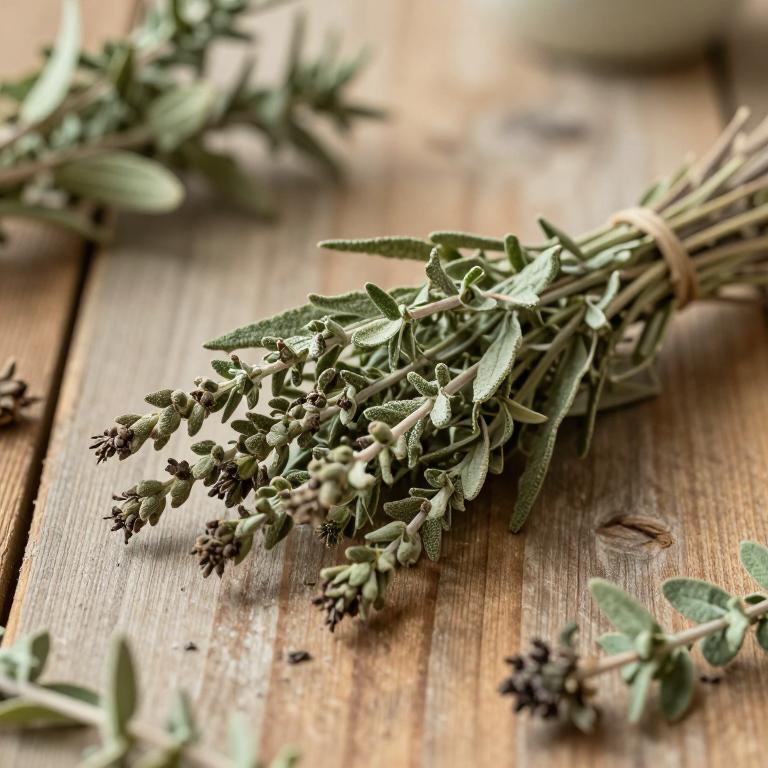
, scientifically known as Salvia lachnostachys, is a remarkable medicinal herb valued for its potent therapeutic properties. Native to specific regional ecosystems, this plant contains unique bioactive compounds used in traditional healing. It is primarily recognized for its antioxidant, anti-inflammatory, and antimicrobial effects, offering significant potential in natural pharmacology.
- Family
- Lamiaceae
- Native range
- Southern America
- Parts used
- Not available
- Common names
- Not available
- Scientific synonyms
- Not available
Names and Synonyms
Scientific Names
Accepted name
Salvia lachnostachysSources: Wikidata
Taxonomical Classification
This plant belongs to the kingdom Plantae and the phylum Streptophyta, falling under the class Equisetopsida and subclass Magnoliidae. Within the order Lamiales and the family Lamiaceae, it is classified under the genus Salvia.
| Rank | Classification |
|---|---|
| Kingdom | Plantae |
| Phylum | Streptophyta |
| Class | Equisetopsida |
| Subclass | Magnoliidae |
| Order | Lamiales |
| Family | Lamiaceae |
| Genus | Salvia |
Sources: The World Checklist of Vascular Plants (WCVP)
Distribution
This plant is a specific species of the Lamiaceae family known for its medicinal properties. Regarding its geographical distribution, it is primarily found within the borders of Brazil. More specifically, its natural habitat is concentrated in the southern regions of the country. This limited range suggests that the environmental conditions of Brazil South are essential for its survival. Consequently, researchers focusing on this species prioritize studies within these particular southern territories.
| Region | Area |
|---|---|
| Brazil | Brazil South |
Sources: The World Checklist of Vascular Plants (WCVP)
Botanical Identification
Ecology
The ecology of Salvia lacnothostachys is characterized by its specialization within the unique high-altitude ecosystems known as Campo de Altitude. This species is specifically adapted to these montane environments, occupying an altitudinal niche that spans from a minimum elevation of 900 m AMSL to a maximum elevation of 1200 m AMSL. Within this specific elevational range, the plant thrives in the distinct microclimates provided by these highland grasslands, which typically feature specialized soil compositions and environmental conditions characteristic of the Campo de Altitude habitat.
- Elevational range max:
- 1200 m AMSL
- Elevational range min:
- 900 m AMSL
- Habitat :
- Campo de Altitude
Morphology
The morphology of Salvia lacnothystachys is characterized by a non-woody, herbaceous growth form, specifically classified as a herb or forb. It functions as a self-supporting plant, lacking any climbing or parasitic tendencies, and operates as an independent organism. In terms of its habitat and ecological positioning, it is a terrestrial species rather than an aquatic or semiaquatic one, and it does not exhibit epiphytic behavior, maintaining a strictly terrestrial existence.
- Aquatic :
- terrestrial
- Climber :
- self-supporting
- Epiphyte :
- terrestrial
- Growth form :
- herb
- Parasite :
- independent
- Woodiness :
- non-woody
Sources: Global Inventory of Floras and Traits (GIFT)
Chemicals
Salvia lachnostachys has 5 reported phytochemicals identified across 0 scientific publications and several other databases. The most consistently reported chemicals include Fruticuline A, DODECANOIC ACID, OLEANOLIC ACID, Sesquiterpenes, Ursolic acid.
| Chemical | Supporting sources | Consensus |
|---|---|---|
| Fruticuline A | 2 supporting sources | ★☆☆☆☆ |
| DODECANOIC ACID | 1 supporting sources | ★☆☆☆☆ |
| OLEANOLIC ACID | 1 supporting sources | ★☆☆☆☆ |
| Sesquiterpenes | 1 supporting sources | ★☆☆☆☆ |
| Ursolic acid | 1 supporting sources | ★☆☆☆☆ |
Fruticuline A
- Pharmaceuticals (Basel, Switzerland)
- Microscopy research and technique
DODECANOIC ACID
- Microscopy research and technique
OLEANOLIC ACID
- Microscopy research and technique
Sesquiterpenes
- Microscopy research and technique
Ursolic acid
- Microscopy research and technique
Activities
Salvia lachnostachys has 3 reported activities identified across 0 scientific publications and several other databases. The most consistently reported activities include Antidepressant, Antipyretic, Anxiolytic.
| Activity | Supporting sources | Consensus |
|---|---|---|
| Antidepressant | 1 supporting sources | ★☆☆☆☆ |
| Antipyretic | 1 supporting sources | ★☆☆☆☆ |
| Anxiolytic | 1 supporting sources | ★☆☆☆☆ |
Antidepressant
- Pharmaceuticals (Basel, Switzerland)
Antipyretic
- Pharmaceuticals (Basel, Switzerland)
Anxiolytic
- Pharmaceuticals (Basel, Switzerland)
Conditions
Salvia lachnostachys has 6 reported investigations on conditions identified across 0 scientific publications and several other databases. The most consistently reported conditions include antidepressant, antipyretic, anxiolytic, edema, mechanical hyperalgesia.
| Condition | Supporting sources | Consensus |
|---|---|---|
| Antidepressant | 1 supporting sources | ★☆☆☆☆ |
| Antipyretic | 1 supporting sources | ★☆☆☆☆ |
| Anxiolytic | 1 supporting sources | ★☆☆☆☆ |
| Edema | 1 supporting sources | ★☆☆☆☆ |
| Mechanical hyperalgesia | 1 supporting sources | ★☆☆☆☆ |
| Pleurisy | 1 supporting sources | ★☆☆☆☆ |
Antidepressant
- Pharmaceuticals (Basel, Switzerland)
Antipyretic
- Pharmaceuticals (Basel, Switzerland)
Anxiolytic
- Pharmaceuticals (Basel, Switzerland)
Edema
- Pharmaceuticals (Basel, Switzerland)
Mechanical hyperalgesia
- Pharmaceuticals (Basel, Switzerland)
Pleurisy
- Pharmaceuticals (Basel, Switzerland)
Preparations
Salvia lachnostachys has 1 reported preparations identified across 0 scientific publications and several other databases. The most consistently reported preparations include essential oil.
| Preparation | Supporting sources | Consensus |
|---|---|---|
| Essential oil | 1 supporting sources | ★☆☆☆☆ |
Essential oil
- Microscopy research and technique